
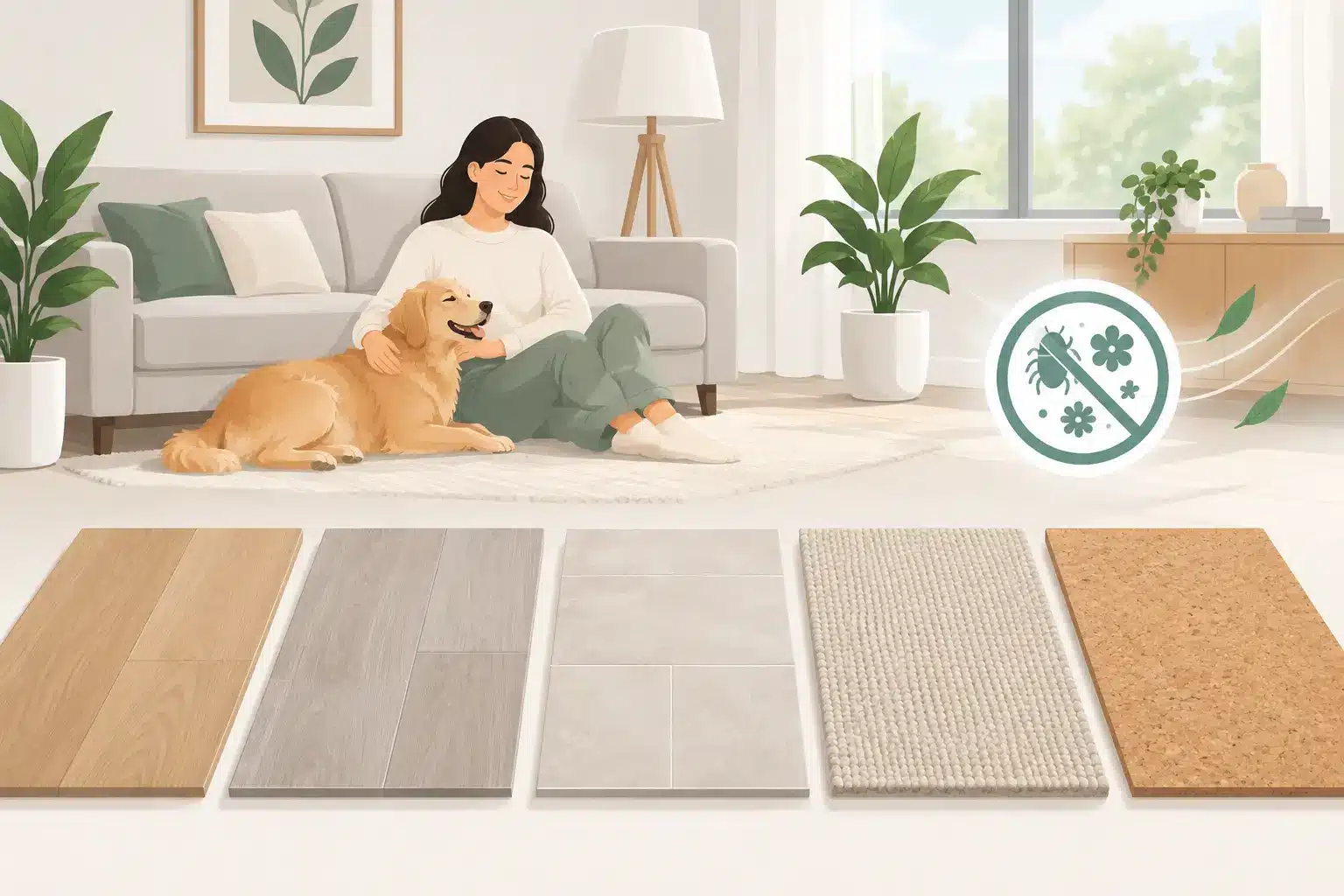
Phoenix dust has a way of finding every corner of a home, especially in carpet fibers, grout lines, and under furniture. For households managing allergies, asthma, pets, or frequent cleaning needs, the top hypoallergenic flooring choices are typically hard-surface materials that do not trap dust, dander, pollen, and other common indoor allergens. The best option still depends on the room, your budget, the amount of foot traffic, and how the floor will be installed.
A hypoallergenic floor is not a medical treatment, and no material makes a home completely allergen-free. What it can do is make routine cleaning more effective. When allergens stay on the surface instead of settling deep into fibers, regular sweeping and damp mopping can make a meaningful difference.
What Makes Flooring More Allergy-Friendly?
The most allergy-conscious floors share a few practical traits. They have a smooth or tightly sealed surface, require minimal deep cleaning, and can be installed with low-emission materials when indoor air quality is a priority. Floors with fewer seams and less texture are generally easier to keep clean.
Material matters, but installation matters too. Adhesives, underlayments, grout, sealers, and transition materials can affect both air quality and long-term maintenance. A quality installation helps prevent gaps where debris can collect and protects the floor from moisture problems that may contribute to mold growth.
For Phoenix-area homes, it also helps to consider desert conditions. Sand and grit can scratch some surfaces, while intense sunlight can fade or heat up others. The right flooring should support both a cleaner indoor environment and the way your home is actually used.
Top Hypoallergenic Flooring Choices to Consider
Porcelain and Ceramic Tile
Porcelain and ceramic tile are among the strongest choices for allergy-friendly homes. Their hard, nonporous surfaces do not hold pet hair, dust mites, or pollen the way carpeting can. A vacuum with a hard-floor setting, followed by occasional damp mopping, is usually enough to keep tile looking clean.
Porcelain is especially durable for busy entries, kitchens, bathrooms, and homes with pets. It handles moisture well and stands up to the fine grit that gets tracked in from Arizona patios and driveways. Ceramic tile can be a cost-effective option for lower-traffic areas and offers a wide range of colors, sizes, and styles.
The trade-off is grout. Traditional grout lines can collect dirt if they are not properly sealed and maintained. Larger-format tile and quality grout sealing reduce that cleaning burden. Tile can also feel hard and cool underfoot, though area rugs that can be regularly washed or cleaned can add comfort without creating a wall-to-wall allergen trap.
Natural Stone
Natural stone gives homeowners a durable, upscale flooring option with many of the same cleaning advantages as tile. Properly sealed travertine, marble, granite, and slate have solid surfaces that are easy to sweep and mop. Stone is a natural fit for entryways, living areas, kitchens, and spaces where a homeowner wants a distinct Arizona-inspired look.
Stone does require more attention than porcelain. Because many stone products are porous, sealing is essential to help prevent staining and keep the surface easier to clean. Some finishes and textured stones can also hold more dust than a polished surface. A flooring professional can help you select a stone finish that matches your maintenance expectations instead of choosing only by appearance.
Sealed Hardwood Flooring
Hardwood remains a popular option for homeowners who want warmth without the dust-holding qualities of broadloom carpet. A properly finished hardwood floor gives allergens fewer places to hide and can be cleaned quickly with a microfiber mop or vacuum designed for wood floors.
The key word is properly finished. Site-finished hardwood with a durable seal helps create a continuous surface, while prefinished options offer consistent factory-applied coatings and efficient installation. For allergy-conscious buyers, low-VOC finishes and adhesives are worth discussing during product selection.
Hardwood is not ideal for every room. Kitchens, laundry rooms, and bathrooms can expose wood to moisture, and pet nails or desert grit may create scratches over time. Wood also needs careful cleaning – excessive water can damage it. Still, for bedrooms, living rooms, and formal spaces, hardwood can be one of the most comfortable and attractive hypoallergenic choices.
Luxury Vinyl Plank and Vinyl Tile
Luxury vinyl plank, often called LVP, and luxury vinyl tile offer a practical balance of easy cleaning, durability, and value. These products have smooth, resilient surfaces that do not trap allergens, and they are comfortable underfoot compared with tile or stone. They also perform well in kitchens, bathrooms, rental properties, and commercial settings where moisture resistance is important.
Modern vinyl comes in realistic wood and stone visuals, making it easier to carry one look through multiple rooms. It is also a strong choice for families that want a lower-maintenance floor that can handle spills, pets, and everyday traffic.
Not every vinyl product is the same. Ask about product quality, wear layers, certifications, and installation methods. Lower-quality materials may have stronger odors after installation, while quality low-emission products and adhesives can be a better fit for buyers focused on indoor air quality. Subfloor preparation is equally important because an uneven surface can lead to gaps or premature wear.
Polished or Sealed Concrete
For contemporary homes, commercial interiors, and some remodels, polished or sealed concrete can be an excellent low-allergen surface. It has no fibers to hold dust and is exceptionally easy to sweep. Concrete also performs well in high-traffic spaces and can be paired with removable rugs for comfort and sound control.
The limitations are mostly comfort and existing conditions. Concrete can be hard underfoot, noisy, and cold during cooler months. It may also require crack repair or moisture testing before a new finish is applied. In the right setting, though, it is one of the lowest-maintenance floors available.
What About Carpet for Allergy Concerns?
Carpet is usually not the first recommendation for a highly allergy-sensitive household because it can retain dust, pet dander, and pollen between cleanings. That does not mean carpet is automatically off the table. Some homeowners need the warmth, sound control, and softness carpet provides in bedrooms or upstairs spaces.
If carpet is the preferred choice, look for a low-pile style rather than a deep, plush construction. Choose a product with low-emission backing and padding, and commit to regular vacuuming with a sealed HEPA-filter vacuum. Professional cleaning on a consistent schedule also matters. Carpet tile can be a practical alternative in certain settings because individual tiles can be replaced if a spill, pet accident, or stubborn stain occurs.
Do Not Overlook Installation Materials
A beautiful hard-surface floor can still disappoint if the installation materials are chosen without care. Adhesive odors, moisture issues, poor subfloor preparation, and unsealed grout can affect the final result. For buyers concerned about sensitivities, ask about low-VOC adhesives, sealers, finishes, and underlayments before the project begins.
This is also where professional guidance saves time. A free in-home estimate can identify conditions that are not obvious from a showroom sample, including slab moisture, uneven areas, existing-floor removal needs, and sunlight exposure. Those details often determine whether tile, hardwood, vinyl, or stone will perform as expected over the long term.
Choosing by Room and Lifestyle
The best material often changes from room to room. Tile or luxury vinyl is usually a sensible choice for bathrooms, kitchens, laundry areas, and active entries. Hardwood can bring comfort and value to bedrooms and living spaces. Stone may be the right fit for a high-impact main living area, while polished concrete can suit a modern commercial space or a home with a clean, minimalist design.
Pet owners should prioritize scratch resistance and quick cleanup. Rental property owners may place more weight on durability and replacement cost. Businesses need a surface that supports traffic, cleaning routines, and the look of the space. There is no single winner for every project, which is why comparing samples in your own lighting and discussing installation details is worthwhile.
For a cleaner, easier-to-maintain home, start with the floor that fits your daily routine rather than the one that simply looks best in a small sample. The right material, installed well and maintained consistently, can give your space a more comfortable foundation for years to come.




Leave A Comment