
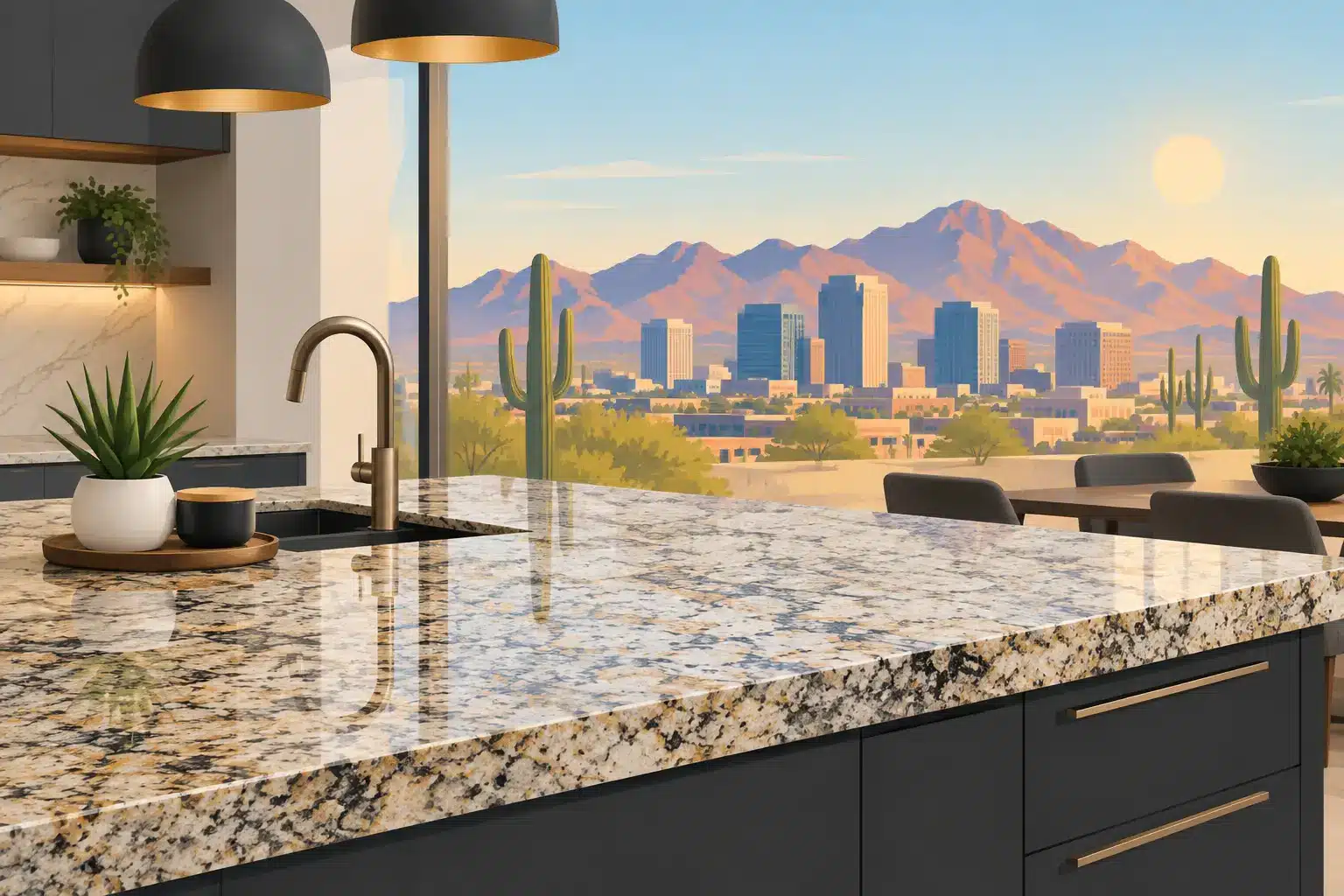
A kitchen countertop has to do more than look good under showroom lighting. It needs to handle busy mornings, family meals, spills, hot cookware, and the daily wear that comes with a lived-in home. Granite countertops remain a strong choice for Phoenix homeowners, remodelers, and commercial property owners because they combine natural beauty with dependable performance.
No two granite slabs are identical. That variation is part of the appeal, but it also means choosing the right material requires more than selecting a color from a sample. The slab, finish, edge profile, layout, and installation details all affect the final result.
Why Granite Countertops Work Well in Arizona
Granite is a natural stone formed under intense heat and pressure. Its dense surface gives it excellent resistance to scratching, normal kitchen wear, and heat. For households that cook often or properties that need durable finishes between tenant turnovers, granite offers a practical balance of performance and visual character.
It is also well suited to the bright, warm design preferences common across Phoenix and the East Valley. Light granite with soft gray, cream, or gold movement can keep a kitchen open and airy. Darker slabs can add contrast to white cabinets, warm wood flooring, or light porcelain tile. Dramatic veining can turn an island into the focal point of the room without requiring an overly complicated design.
Granite is not a uniform manufactured surface. A sample can show the general color family, but the full slab reveals the pattern, mineral deposits, and movement that will be visible across your counters. That is why slab selection matters, especially for a large island, a full-height backsplash, or a project with several connected countertop sections.
Choosing Granite Countertops for Your Space
Start with how the room is used, not just the color of the cabinets. A low-traffic guest bath may allow more freedom to prioritize a distinctive pattern. A family kitchen, rental property, break room, or service counter may call for a granite that is easier to coordinate, maintain, and replace if future work is needed.
Consider the level of movement
Granite can range from quiet and consistent to bold and heavily veined. A busier slab often works beautifully with simple cabinet doors, solid backsplash tile, and understated flooring. If the room already includes patterned tile, richly grained wood, or decorative lighting, a calmer granite may create a more balanced result.
Look at the slab in a larger format whenever possible. A small sample may make a stone appear more uniform than it actually is. Natural variation is expected, and the finished countertop should be planned around the slab’s strongest areas rather than treated like a printed pattern.
Select a finish that matches the project
Polished granite is the most familiar option. Its glossy surface reflects light and brings out the stone’s color and depth. It is a popular choice for kitchens and bathrooms because it has a clean, finished appearance and is easy to wipe down.
Honed granite has a softer, more matte look. It can fit modern, rustic, or understated designs, though it may show fingerprints, water marks, or surface oils more readily depending on the color and stone. Leathered finishes add texture and can help disguise everyday smudges, making them worth considering for darker or more active kitchen spaces.
Think through edges, seams, and overhangs
The edge profile can change the overall look more than many buyers expect. A simple eased edge feels clean and current, while a more detailed edge can complement traditional cabinetry. The right choice depends on the style of the room and the amount of maintenance you want around detailed contours.
Seams are normal on many installations, especially with large counters or long runs. A qualified installer plans seam locations to make them as discreet as possible while accounting for slab size, cabinet layout, and structural support. Islands, bar tops, and overhangs may also need additional support. These details should be addressed before fabrication, not after the countertop arrives.
Granite Countertop Cost: What Affects the Price
Granite pricing is based on more than square footage. The rarity and availability of the slab, thickness of the material, amount of fabrication, edge detail, cutouts, and installation conditions all influence the final estimate. A simple galley kitchen with straight runs generally requires less labor than a kitchen with a large island, several sink openings, waterfall edges, or a full-height stone backsplash.
The least expensive slab is not always the best value. A lower-priced stone with a difficult layout or significant fabrication needs may cost more installed than a mid-range option that fits the design efficiently. Conversely, a premium slab may be worth the investment when it becomes the defining feature of a remodel or helps elevate a high-value property.
For commercial buyers and landlords, consistency and lead time can matter as much as the exact pattern. If multiple units or locations require similar surfaces, ask about availability and whether a coordinating material can be sourced again later.
Caring for Granite Countertops
Granite is durable, but it is still natural stone. Most granite countertops should be sealed to help reduce the absorption of moisture and staining substances. How often sealing is needed depends on the specific stone, the sealer used, and how heavily the surface is used. A professional can recommend a care schedule based on the material selected.
For daily cleaning, use a soft cloth or sponge with warm water and a stone-safe cleaner. Avoid abrasive pads, harsh powders, and acidic household products such as vinegar, lemon-based cleaners, or bathroom cleaners not intended for natural stone. These can dull the finish or affect the sealer over time.
Wipe up cooking oils, wine, juice, and other spills promptly. Granite handles heat well, but trivets are still a smart habit. They protect the finish, reduce the chance of thermal stress near seams or edges, and keep hot cookware from damaging nearby surfaces or cabinetry.
Granite is highly scratch resistant, but it should not replace a cutting board. Knives can wear down before the stone does, and cutting directly on the countertop is not ideal for food preparation.
Professional Measuring and Installation Make the Difference
A countertop project can look straightforward until walls, cabinets, plumbing, appliances, and slab layout enter the picture. Accurate measuring is essential. Cabinets need to be level and properly secured, sink specifications must be confirmed, and cooktop or faucet cutouts need to match the actual products being installed.
Professional installation also protects your investment. Granite is heavy, and proper handling helps prevent chips, cracks, and problems at seams or unsupported overhangs. Experienced installers can identify concerns early, coordinate timing with other trades, and make sure the finished countertop fits the room as planned.
At Premium Carpet Tile Stone and Wood, LLC, customers can receive practical guidance based on their design goals, budget, and project needs. A free in-home estimate gives you the opportunity to discuss measurements, material options, and installation considerations before making a final decision.
Make the Selection Personal
Granite is a strong option when you want a surface with real depth, natural variation, and long-term durability. It may not be the best fit for every project. Buyers who want a completely uniform appearance or the lowest possible maintenance may prefer another material. But for homeowners and property owners who value an individual look and a surface built for everyday use, granite can be a smart investment.
Bring cabinet colors, flooring samples, backsplash ideas, and photos of the room to your selection appointment. Seeing the full combination together is often the simplest way to choose a granite slab you will be happy to live with for years.




Leave A Comment