
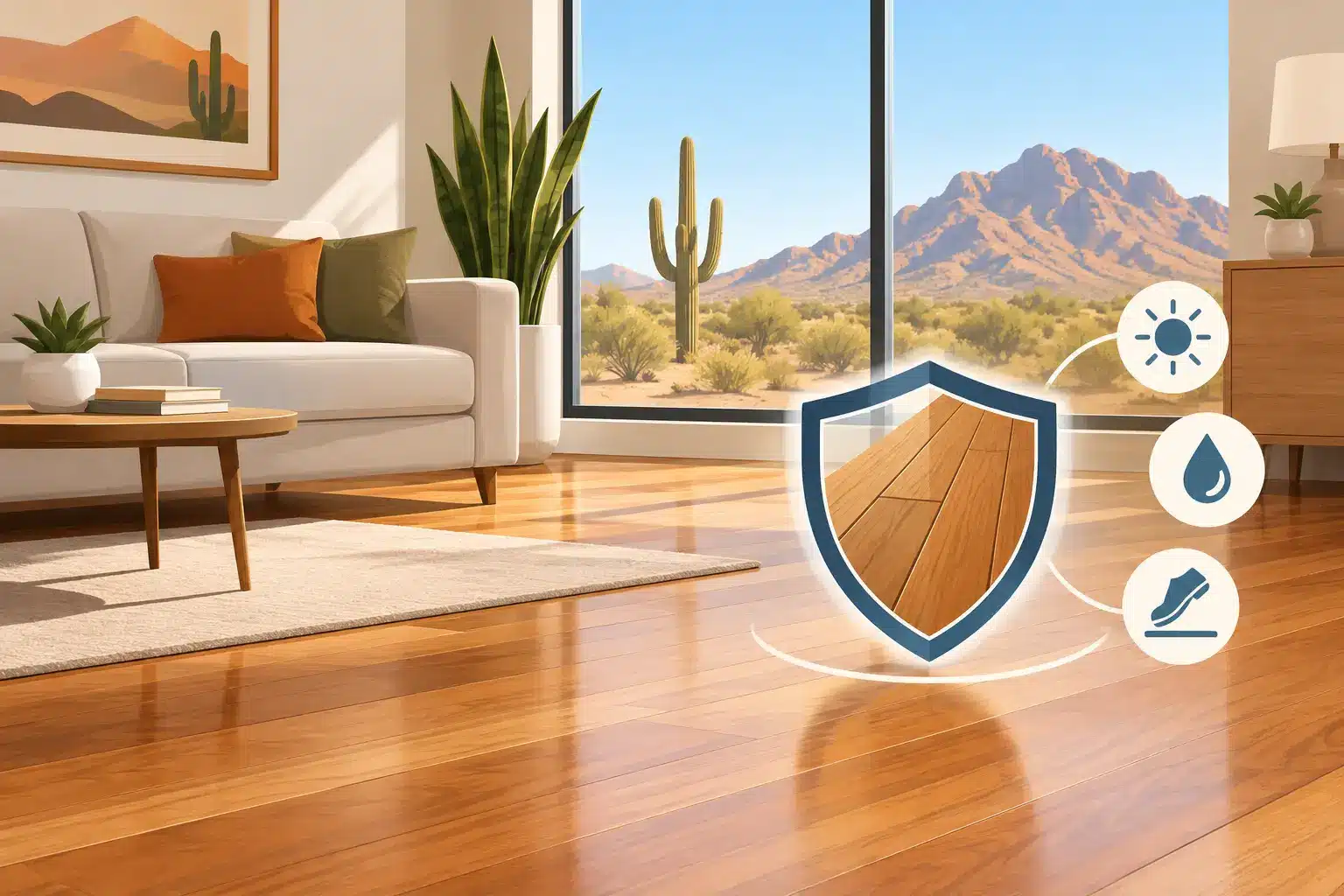
Hardwood gives a Phoenix home warmth, character, and long-term value, but it needs the right protection to hold up in a dry, sunny climate. Learning how to protect hardwood floors starts with addressing the everyday causes of wear: grit at exterior doors, intense UV exposure, pet nails, chair movement, and spills that sit too long. A few consistent habits can preserve the finish and help your floor look better between professional maintenance or refinishing.
Start With the Right Protection at Every Entrance
Arizona dust is abrasive. When it is tracked indoors on shoes, it can act like fine sandpaper underfoot, gradually dulling the finish and creating small scratches in high-traffic areas. This is especially common near front doors, patio doors, garages, and hallways connecting to frequently used exterior spaces.
Use a durable outdoor mat to catch heavier dirt before it enters, followed by an indoor mat or washable runner just inside the door. Choose mats with a non-staining, breathable backing made for hard surfaces. Rubber, vinyl, or latex backings can trap moisture and sometimes discolor the finish, particularly if they stay in the same spot for years.
Regular sweeping matters more than many homeowners realize. A soft-bristle broom, microfiber dust mop, or vacuum designed for hard floors removes grit without scratching the surface. Avoid vacuums with stiff beater bars, which can scuff wood flooring. In busy households with pets, children, or frequent visitors, a quick daily pass through the main traffic paths is worthwhile.
How to Protect Hardwood Floors From Scratches
Most visible hardwood damage does not come from a single major accident. It comes from small, repeated friction: dining chairs pushed back several times a day, a sofa shifted during cleaning, pet nails clicking across the room, or a heavy planter left in one place.
Place felt pads on the feet of chairs, tables, ottomans, and other movable furniture. Check them every few months because pads collect grit, wear thin, and can fall off. Wide felt protectors are a better choice for heavier furniture than small adhesive dots. When moving a large piece, lift it or use furniture sliders rated for hardwood. Never drag it directly across the floor.
Area rugs and runners offer another layer of protection in high-use spaces, including dining rooms, family rooms, entryways, and corridors. They also reduce wear where chairs, stools, and foot traffic are concentrated. Use a rug pad approved for hardwood floors so the rug does not slide and the backing does not damage the finish.
For pet owners, keep nails trimmed and clean up water around pet bowls promptly. A mat under water bowls helps, but it should be checked often rather than left in place indefinitely. If your dog routinely races through the same hallway or launches off the edge of a rug, that zone may benefit from a runner.
Protecting Floors Under Furniture and Appliances
Heavy furniture does not always scratch hardwood, but it can leave dents or concentrated pressure marks, especially on softer wood species. Use load-distributing furniture cups beneath especially heavy pieces such as pianos, display cabinets, or large bookcases. If furniture will remain in place for years, choose cups designed specifically for hard flooring instead of improvised materials that may stain or trap debris.
In kitchens and laundry areas, inspect appliance connections and supply lines periodically. Hardwood can be affected by a slow dishwasher leak, refrigerator line leak, or washing machine overflow long before there is a major visible problem. A floor-safe tray or protective pan where appropriate can provide useful insurance, but it should never replace routine inspection.
Control Sunlight and Indoor Conditions
The Arizona sun can fade wood over time, particularly near expansive windows and sliding glass doors. UV exposure may darken some species and lighten others, so the result depends on the flooring and finish. Natural color changes are part of real wood, but uneven exposure can leave noticeable outlines when rugs or furniture are moved.
Use blinds, shades, shutters, or UV-filtering window treatments during the brightest part of the day. Rotating rugs and shifting lightweight furniture occasionally helps the floor age more evenly. If you are selecting new hardwood for a room with significant sun exposure, ask about finish systems and species that suit the space. Engineered hardwood can also be a practical option in areas where greater dimensional stability is needed, though it still requires the same protection from scratches, sun, and standing water.
Humidity deserves attention in the desert. Wood naturally expands and contracts as indoor conditions change. While Arizona homes are often dry, air conditioning, evaporative cooling, monsoon season moisture, and seasonal changes can affect interior humidity. Maintain a stable indoor environment whenever possible, generally within the flooring manufacturer’s recommended range. A humidifier may help during exceptionally dry periods, while proper air conditioning and ventilation can help limit excess moisture.
Do not assume wide gaps, cupping, or movement are only cosmetic. They can indicate that indoor conditions are outside the floor’s preferred range or that moisture is present below or around the flooring. If changes appear suddenly or continue to worsen, have the situation evaluated before attempting a repair.
Clean Hardwood Without Damaging the Finish
Hardwood floors do not need excessive water to look clean. In fact, soaking a wood floor or wet-mopping it can force moisture into seams and edges. This may cause swelling, cupping, discoloration, or finish failure.
For routine cleaning, remove dry debris first. Then use a lightly damp microfiber mop with a cleaner approved for your floor’s finish. Follow the product directions closely and use only enough solution to clean the surface. The floor should dry quickly, not remain wet. Wipe up spills right away with a soft absorbent cloth, then clean the area with the appropriate floor cleaner if needed.
Avoid oil soaps, waxes, steam mops, abrasive powders, and all-purpose household cleaners unless your flooring manufacturer specifically approves them. These products can leave residue, create a cloudy appearance, weaken the finish, or make future recoating more difficult. Vinegar is also not a universal hardwood solution. Its acidity can dull certain finishes when used repeatedly.
If you are unsure whether your floor has a polyurethane finish, penetrating oil finish, or another treatment, do not guess. The right cleaning and maintenance method depends on the finish type. An experienced flooring professional can help identify what is on the floor and recommend a safe care plan.
Address Spills, Scuffs, and Wear Early
A dropped ice cube, a wet pair of shoes, or a small drink spill is usually manageable when handled quickly. Blot moisture rather than rubbing it into the grain. For sticky residue, use a manufacturer-approved cleaner on a soft cloth, then dry the area completely.
Scuffs often respond to gentle cleaning, but deep scratches require a different approach. A surface scratch that has not penetrated the finish may be improved with a compatible touch-up product. A scratch that reaches bare wood can allow moisture and dirt into the board, so it should be addressed sooner rather than later. Test any repair product in an inconspicuous area first because color matching can vary substantially by species, stain, age, and sun exposure.
Over time, even well-cared-for hardwood may need professional recoating or refinishing. Recoating renews a worn finish before the wood itself is exposed. Refinishing is more involved and may be appropriate when there are deep scratches, heavy wear, stains, or substantial color changes. The right timing depends on the existing floor, its finish, and the extent of the damage.
Choose Protection That Fits Your Household
There is no single maintenance plan that fits every home. A quiet household with no pets may need little more than regular dust removal, entry mats, and furniture pads. A home with large dogs, young children, pool traffic, or frequent entertaining needs more protection in the areas that take the most use.
Commercial spaces and rental properties need an even more deliberate plan. Walk-off mats, defined cleaning schedules, protective chair glides, and prompt spill response can reduce costly wear in offices, model homes, and common areas. The goal is not to make a real wood floor look untouched forever. It is to prevent avoidable damage while allowing the material to retain the natural character that made it worth choosing.
When selecting a new floor or evaluating an existing one, Premium Carpet Tile Stone and Wood can help homeowners and property owners compare hardwood options based on traffic, sun exposure, maintenance expectations, and budget. The best protection begins with a floor that fits the room, followed by simple care that becomes part of everyday life.
A hardwood floor should be lived on, not worried over. Keep grit out, reduce direct sun, clean gently, and respond quickly when water or scratches appear. Those practical steps give real wood the best chance to stay beautiful through years of Arizona living.


Leave A Comment