
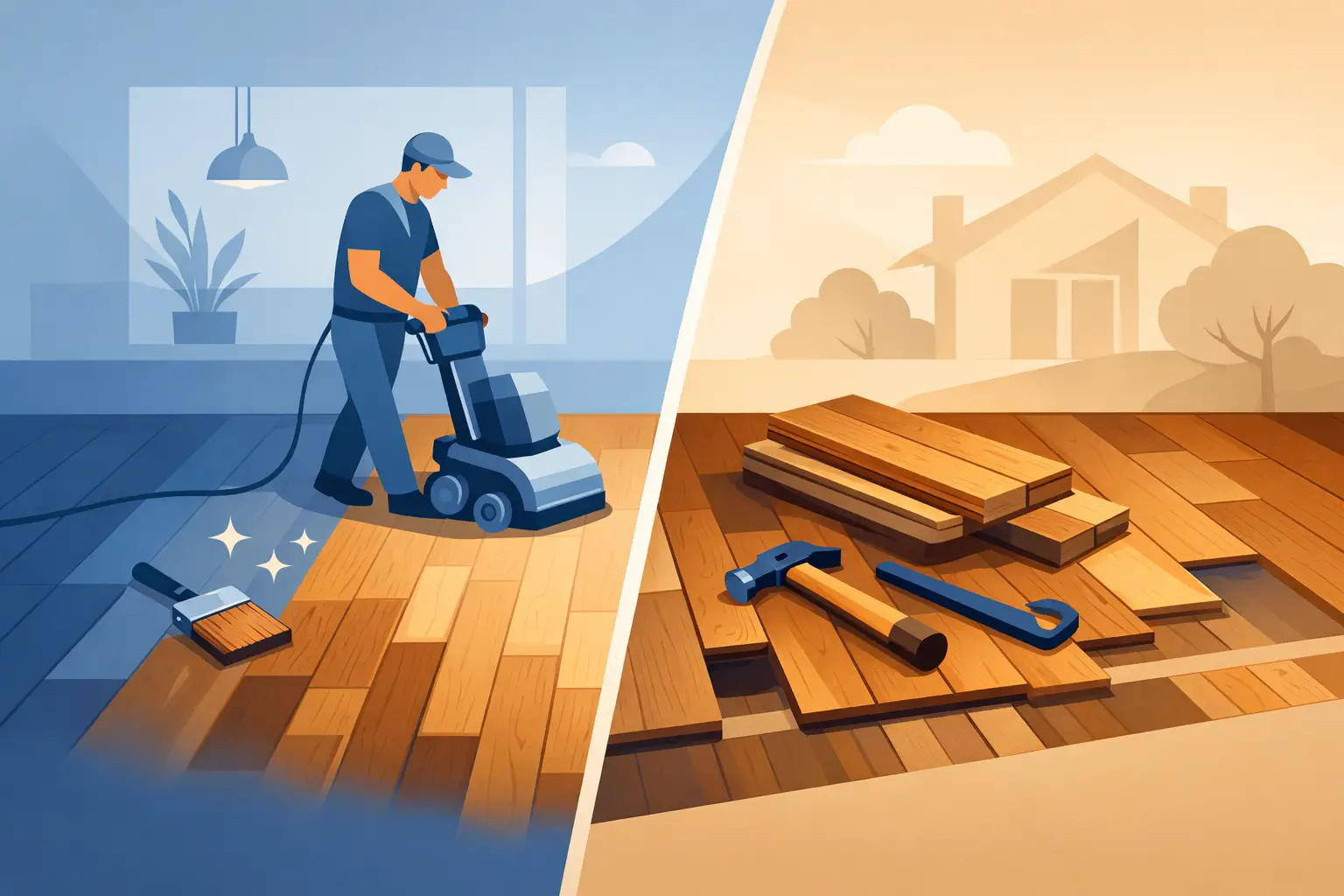
If your wood floors are scratched, faded, or showing wear in high-traffic areas, the question usually comes down to hardwood refinishing vs replacement. That decision affects your budget, project timeline, and the long-term value of your space. In many Phoenix-area homes and commercial properties, the right answer depends less on looks alone and more on the floor’s condition, the type of wood you have, and how much change you want.
Some floors only need their surface renewed. Others have deeper damage, outdated materials, or structural problems that make replacement the smarter investment. The goal is not to choose the cheaper option by default. It is to choose the option that gives you the best result for how you use the space.
Hardwood refinishing vs replacement: what changes with each option?
Refinishing keeps your existing hardwood floor in place. The top surface is sanded down, minor imperfections are addressed, and a new stain and finish are applied. This works best when the wood itself is still solid and the main issues are cosmetic wear, light surface damage, or an outdated finish.
Replacement means removing the current flooring and installing new material. That may involve replacing damaged hardwood with new hardwood, or using the opportunity to switch to a different wood species, plank width, color tone, or even a different flooring category based on your budget and lifestyle goals.
At a glance, refinishing is usually less expensive and less disruptive than a full replacement. Replacement, however, gives you more flexibility and may solve deeper problems that refinishing cannot fix.
When refinishing is the better choice
Refinishing is often the best route when the floor has good bones. If the planks are structurally sound, still securely attached, and thick enough to be sanded, refinishing can dramatically improve the appearance without the cost of tearing everything out.
This option makes sense for hardwood with surface scratches, dullness, minor staining, light pet wear, and general aging. It is also a strong choice when homeowners like the layout and character of their existing floor but want it to look cleaner, brighter, or more current.
In older homes, refinishing can preserve original wood that would be expensive or difficult to match today. For some property owners, that is a major advantage. Original hardwood often adds warmth and authenticity that new materials try to imitate but do not fully duplicate.
Refinishing can also be the practical choice if you are preparing a home for sale or upgrading a rental property and want a noticeable improvement without a complete floor replacement budget.
Signs your floor may be a good candidate for refinishing
If the damage is mostly on the surface, refinishing should be part of the conversation. Common examples include worn finish in traffic lanes, shallow scratches, slight color inconsistency from sun exposure, and older stain colors that no longer fit the room.
Solid hardwood can usually be refinished multiple times over its lifespan, depending on plank thickness and previous sanding history. Engineered wood is more limited. Some engineered hardwood products can be refinished once or twice, while others have wear layers too thin for sanding. That detail matters, and it should be confirmed before any recommendation is made.
When replacement is the smarter investment
Replacement becomes the better option when the floor has problems below the finish line. Deep gouges, severe water damage, soft spots, warping, buckling, missing boards, and major movement often point to issues refinishing will not solve.
If the existing floor has already been refinished several times, there may not be enough material left to sand safely again. In that case, trying to force another refinishing job can create more problems instead of extending the floor’s life.
Replacement is also worth considering if your goals go beyond restoring the current look. If you want wider planks, a different species, a more modern visual, better moisture resistance, or a product better suited to pets, kids, or commercial traffic, replacing the floor may give you more value than refinishing something that still does not meet your needs.
For some Phoenix and East Valley properties, replacement is driven by practical conditions. Sun exposure, previous moisture events, slab-related concerns, or mismatched repairs from earlier renovations can make it difficult to achieve a uniform result with refinishing alone.
Situations where replacement often makes more sense
A patchwork floor with boards from different eras, visible height changes between rooms, or widespread damage usually benefits more from starting fresh. The same is true when the homeowner wants to change the floor plan flow by running the same material through multiple spaces.
Commercial buyers and rental property owners may also lean toward replacement if speed, durability, and predictability matter more than preserving the existing floor. In some cases, installing a new product with lower maintenance demands can be the better long-term operating decision.
Cost: upfront savings versus long-term value
For most projects, refinishing costs less upfront than replacement. You are keeping the existing material, which eliminates much of the demolition and product expense. That can make refinishing attractive when the floor is still in decent shape and the main goal is appearance improvement.
Replacement costs more because it includes tear-out, disposal, new materials, and installation. If subfloor repairs are needed, that can increase the investment further.
Still, lower upfront cost does not always mean better value. If you refinish a floor with hidden damage or one that no longer suits the space, you may end up replacing it sooner than expected. On the other hand, if your hardwood is structurally sound and has years of life left, refinishing can deliver excellent value.
The right comparison is not just price today. It is how long the result will last, how well it fits the property, and whether it solves the actual problem.
Timeline and disruption
Refinishing usually involves less demolition, but it can still disrupt daily life. Sanding, staining, drying, and curing all take time, and rooms may need to stay off-limits during the process. Odor and dust control also matter, especially in occupied homes.
Replacement can be more labor-intensive at the front end, but depending on the material selected, the installation process may be more predictable. For some property owners, especially those coordinating a larger remodel, replacement is easier to schedule alongside other improvements.
If the property is occupied, the best choice may come down to how much downtime you can tolerate. A business owner may prioritize the fastest path back to service. A homeowner may prioritize preserving existing hardwood if temporary inconvenience is manageable.
Style goals matter more than many people expect
A lot of hardwood decisions start with damage but end with design. If you love the current plank size and just want to freshen the color, refinishing can do exactly that. If you have narrow orange-toned boards and want a wider, more contemporary look, refinishing may improve the floor without really changing how the room feels.
That is where replacement often pulls ahead. It gives you full control over the visual direction of the space. You can choose a different species, finish level, board width, and construction type based on traffic levels, maintenance expectations, and design goals.
This is especially relevant in whole-home updates, office remodels, and investment properties where consistent flooring from room to room can improve the final result.
Hardwood refinishing vs replacement in Arizona homes
Arizona conditions add a few practical considerations. Dry air, strong sunlight, and temperature swings can all affect wood flooring over time. Fading, finish wear, gaps, and movement may be manageable through refinishing if the floor remains stable overall. But prolonged exposure or earlier installation problems can sometimes leave boards too compromised to salvage.
This is why an in-person evaluation matters. Two floors may look similar from across the room but need completely different recommendations once moisture history, plank thickness, and subfloor condition are checked.
A local flooring expert can also help determine whether restoring the existing hardwood is the best path or whether a newer wood product, or another premium flooring option, would perform better for the space.
How to make the right call for your property
Start with the condition of the floor, not just its appearance. If the wood is solid and the damage is mostly cosmetic, refinishing is often the efficient and cost-effective choice. If the floor has structural damage, limited remaining wear layer, major layout inconsistencies, or no longer fits the way you use the space, replacement is usually the better investment.
It also helps to think beyond the immediate project. Are you trying to preserve character, modernize the home, improve durability, reduce future maintenance, or prepare a property for resale or lease? Each goal can point to a different answer.
For homeowners and commercial buyers in Phoenix and the East Valley, the best results usually come from looking at the floor in person and weighing cost, lifestyle, and long-term performance together. Premium Carpet Tile Stone and Wood, LLC helps customers sort through those decisions with straightforward guidance, quality product options, and professional installation support.
A worn wood floor does not always need to be torn out, and it does not always deserve another refinishing either. The best choice is the one that gives you a floor you can trust, enjoy, and live with comfortably for years to come.


Leave A Comment