
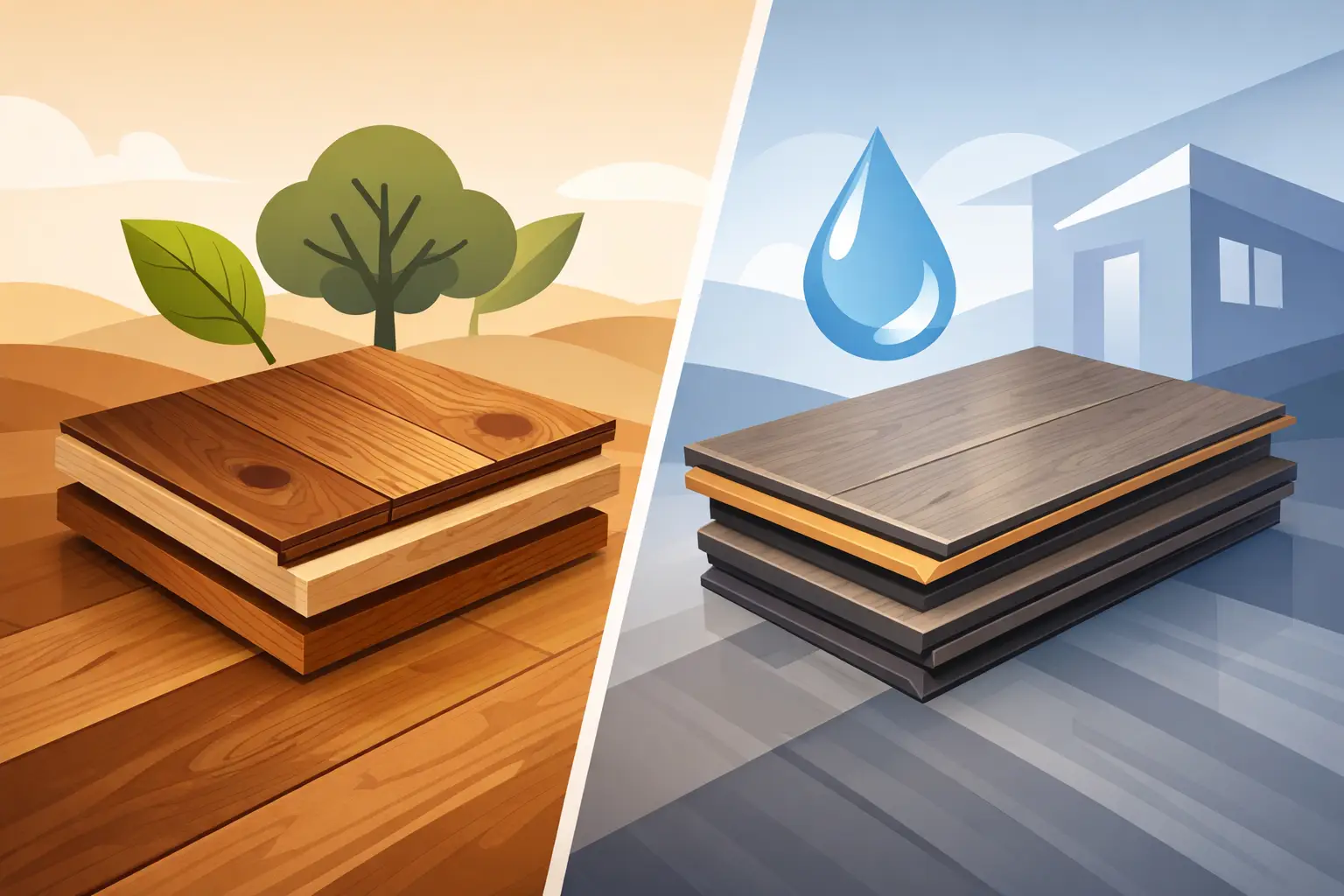
You can like the look of wood and still be torn between two very different floors. That is exactly why engineered hardwood vs vinyl plank is such a common comparison for homeowners, landlords, and commercial buyers in Phoenix and the East Valley. Both can work well. The better choice comes down to how you use the space, how much wear the floor will take, and how long you plan to keep it.
If you are trying to choose once and choose well, it helps to look past the showroom sample. A floor has to live with pets, kids, moving furniture, air conditioning cycles, tracked-in dust, and the occasional spill. In Arizona, it also has to hold up in a dry climate where material behavior matters.
Engineered hardwood vs vinyl plank: the main difference
Engineered hardwood is real wood. It has a hardwood veneer on top with a layered core underneath, which gives it more dimensional stability than solid hardwood. You get authentic grain, natural variation, and the feel of actual wood underfoot.
Vinyl plank is a manufactured flooring product designed to mimic wood visuals. Luxury vinyl plank, or LVP, typically has a printed image layer, a wear layer, and a rigid or flexible core. It is built for durability, easier maintenance, and stronger water resistance than wood-based products.
That difference in composition affects nearly everything else – price, resale appeal, comfort, moisture performance, and repair options.
Appearance and overall feel
When clients want a true wood floor, engineered hardwood usually wins this part of the conversation. Real wood has depth, texture, and natural character that vinyl can imitate but not fully duplicate. Light reflects differently on wood, and the variation from plank to plank tends to feel richer and more convincing.
That said, vinyl plank has improved quite a bit. Better lines now offer realistic embossing, wider planks, and cleaner edge details. For many homes and commercial spaces, especially if the goal is a practical wood-look floor at a better price point, vinyl plank delivers a strong visual result.
Underfoot, the experience is different. Engineered hardwood generally feels firmer and more like a traditional premium floor. Vinyl can feel slightly softer and sometimes quieter, especially with an attached pad. Some people prefer that. Others notice it feels more synthetic. This is one of those areas where seeing and walking on full samples makes a real difference.
Water resistance and Arizona lifestyle concerns
If the room has regular exposure to moisture, vinyl plank usually has the advantage. Kitchens, laundry rooms, bathrooms, break rooms, and some rental properties are common examples. Many vinyl products are water resistant, and some are fully waterproof depending on the construction.
Engineered hardwood handles moisture better than solid wood, but it is still a wood product. Spills should be cleaned up quickly, and standing water can still cause damage. That does not make engineered hardwood a poor choice. It just means room selection matters.
For Phoenix-area homes, the issue is not only water. Dry indoor air and temperature swings can affect flooring, especially if the product is installed without proper acclimation or over an uneven subfloor. A quality installation matters just as much as the material itself. That is one reason buyers often benefit from working with a local flooring team that understands how products perform in Arizona conditions.
Durability in busy households and commercial settings
Durability depends on what kind of wear you expect. Vinyl plank is often the easier answer for active households with pets, young children, or frequent traffic from outdoors. Its wear layer is designed to resist scratches, scuffs, and everyday abuse better than many wood finishes.
Engineered hardwood can absolutely last, but it tends to show wear differently. Small dents, scratches, and finish wear are part of the life of a real wood floor. Some owners appreciate that character. Others want a floor that looks consistent with less upkeep. In retail spaces, offices, and rentals, vinyl plank is often chosen because it is easier to maintain appearance over time.
If your priority is long-term beauty in a primary living area or bedroom, engineered hardwood can be a strong investment. If your priority is resilience in a high-traffic or higher-risk space, vinyl plank often makes more sense.
Cost now versus value over time
For many buyers, the real question is not which floor is better. It is which floor is better for the budget.
Vinyl plank usually comes in lower on upfront material and installation cost, though that depends on product quality and prep work. There is a wide range in LVP pricing, and premium lines can narrow the gap. Still, vinyl is often the more budget-friendly choice for larger projects, rental turnovers, or commercial spaces where square footage adds up fast.
Engineered hardwood generally costs more because it is a real wood product. That higher price can be worthwhile for buyers who want a more upscale look, stronger buyer appeal, or a floor that aligns with the rest of the home’s finishes. In the right property, that visual upgrade matters.
Value is also about expected lifespan and owner goals. If you are updating a forever home, your priorities may be different from someone remodeling a rental or preparing a property for resale. A good recommendation should account for both the room and the reason behind the project.
Maintenance and day-to-day care
Vinyl plank is easier to maintain for most people. Regular sweeping or vacuuming and occasional damp mopping are usually enough. It does not need refinishing, and it is more forgiving of everyday messes.
Engineered hardwood needs more care. Dirt and grit can wear the finish over time, and excess moisture should be avoided. You also need cleaning products that are appropriate for wood floors. Depending on the thickness of the top veneer and the product itself, some engineered hardwood floors can be lightly refinished, while others cannot.
That repair question matters. If a plank gets damaged, vinyl plank may be simpler to replace in some installations. Engineered hardwood may offer better restoration potential in certain cases, but it is not automatic. Product construction and installation method both affect the answer.
Engineered hardwood vs vinyl plank for different rooms
The room often makes the decision easier.
In living rooms, dining rooms, and primary bedrooms, engineered hardwood is often chosen for its warmth and premium appearance. These are the spaces where people want the floor to elevate the whole home.
In kitchens, bathrooms, laundry areas, and entryways, vinyl plank is often the safer option because of moisture and heavier daily wear. For rental homes and investment properties, vinyl plank is also popular because it balances style, durability, and cost control.
In commercial environments, the choice depends on the use case. A boutique office or high-end reception area may benefit from engineered hardwood if the setting calls for a more refined finish. A busy office, tenant space, or retail environment may be better served by commercial-grade vinyl plank that can handle traffic with less maintenance.
Installation matters more than many buyers realize
A good product can still underperform if the installation is rushed or the subfloor is not properly prepared. This is true with both materials.
Engineered hardwood may be glued down, stapled, or floated depending on the product and the site conditions. Vinyl plank may also be glued or floated. In both cases, flatness, moisture testing, transitions, and expansion details affect how the floor performs after installation.
This is where honest guidance matters. The best flooring decision is rarely based on one feature alone. It is based on the full picture – budget, room use, style goals, subfloor condition, and how much maintenance you want to take on. At Premium Carpet Tile Stone and Wood, LLC, that is the kind of conversation buyers often need before they commit to a material.
Which one should you choose?
Choose engineered hardwood if you want the authenticity of real wood, you are prioritizing appearance in lower-moisture spaces, and you are comfortable with a little more upkeep. It is a strong fit for buyers who want a classic, higher-end floor and plan to enjoy that upgrade for years.
Choose vinyl plank if durability, water resistance, easier maintenance, and value are at the top of your list. It is often the smarter option for active households, investment properties, and commercial spaces where the floor needs to work hard every day.
The right answer is not always the more expensive product or the one with the longest feature list. It is the one that fits your space honestly. If you are comparing samples and still not sure, bring the decision back to the room, the traffic, and the level of performance you expect. That is usually where the right floor becomes clear.




Leave A Comment