
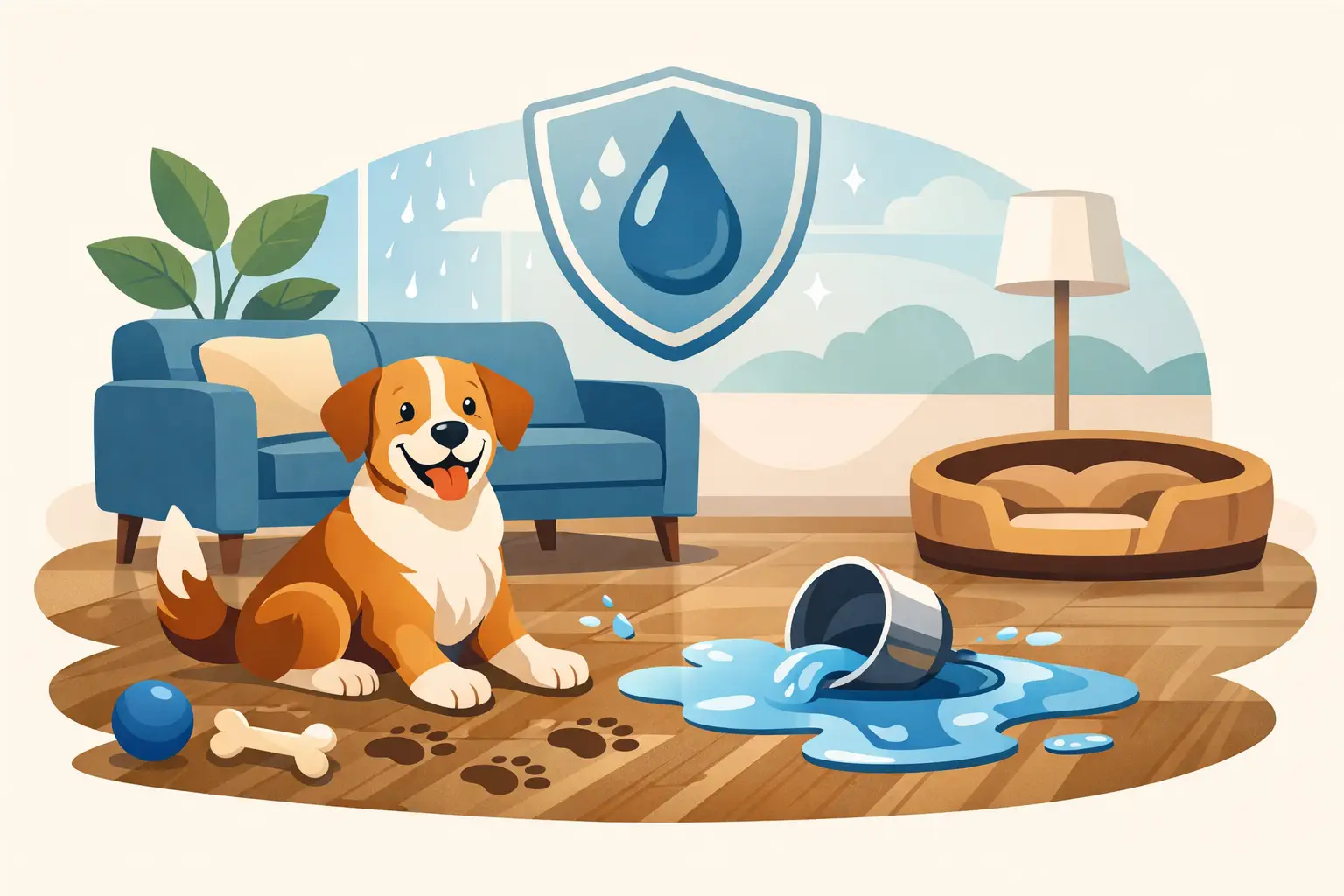
A wet paw print trail across the kitchen usually tells you two things right away – your dog is happy, and your floor is about to be tested. If you are shopping for waterproof flooring for dogs, the right choice is not just about spill protection. It also needs to handle scratches, dirt, accidents, nail traffic, and everyday cleanup without turning your home into a maintenance project.
For many homeowners in Phoenix and the East Valley, that means looking past appearance alone and focusing on how a floor performs under real living conditions. A beautiful floor that shows every scratch or absorbs every accident can become frustrating fast. The goal is to choose a surface that looks good, holds up well, and fits the way your household actually functions.
What matters most in waterproof flooring for dogs
Waterproof performance is the starting point, but it is not the whole story. Dog-friendly flooring also needs a wear layer or surface strength that resists scratches, a texture that gives pets reasonable traction, and a finish that is easy to clean after muddy paws or food spills.
Comfort matters too. Some hard surfaces are highly durable but can feel slick or unforgiving, especially for older dogs. If you have a large breed, a senior pet, or a dog with joint issues, the floor should support easier movement through the home. In many cases, the best option is a balance of moisture protection, durability, and underfoot comfort rather than the single hardest material available.
Another factor people often overlook is noise. Dogs running across certain floors can create more sound than expected, especially in open floor plans. If your home has a lot of echo or you have multiple pets, that can affect which product feels right day to day.
Luxury vinyl plank is often the strongest overall fit
For many households, luxury vinyl plank stands out as the best all-around waterproof flooring for dogs. It is designed to resist moisture, it is easier on joints than tile, and many products have textured surfaces that offer better grip than smoother materials.
It also works well for busy homes because it combines practical durability with design flexibility. You can get wood-look visuals, varied plank sizes, and colors that help conceal dust and pet hair better than very dark or very glossy floors. For homeowners who want the look of hardwood without the same level of moisture sensitivity, this is often the most realistic solution.
That said, not every vinyl product performs the same way. Thickness, core construction, and wear layer all matter. A thinner, lower-grade product may be waterproof on paper but still show more wear over time. If dogs are active, heavier, or constantly in and out of the yard, a better-quality plank is usually worth it.
Waterproof vinyl tile can make sense in some spaces
Waterproof vinyl tile is another strong option, especially in utility-heavy spaces like bathrooms, laundry rooms, mudrooms, and some commercial or rental applications. It offers many of the same benefits as vinyl plank, including moisture resistance and easier cleaning.
The difference often comes down to style and layout. If you prefer a stone-look floor or want a more traditional tile appearance without the hardness and cold feel of ceramic or porcelain, vinyl tile can be a smart compromise. It can also be a good fit when you want the performance advantages of vinyl but need a visual that better matches a specific design plan.
Tile is highly durable, but it has trade-offs
Porcelain and ceramic tile are excellent when moisture resistance is the top priority. They do not swell from accidents, they clean up well, and they hold up to heavy use. In Arizona homes, tile is already a common choice because it performs well in heat and is easy to maintain.
For dog owners, the trade-off is comfort and traction. Tile is harder underfoot than vinyl, and some polished finishes can be slippery for pets. Grout lines can also require more maintenance than people expect, especially near exterior doors or feeding areas. If you are considering tile, surface texture matters. A matte or lightly textured finish tends to be more dog-friendly than a slick polished one.
Tile can be a strong choice for certain rooms or for households that prioritize maximum water resistance and long-term durability. It is just not automatically the best answer for every pet owner, especially if comfort is a high priority.
Is laminate a good choice for dog owners?
This depends on the product. Standard laminate has improved over the years, and some newer options offer water-resistant or even waterproof features. But when customers ask for flooring that will consistently hold up to dogs, laminate still requires more caution than quality vinyl or tile.
The concern is not just the surface. It is what happens if moisture reaches the seams or the core. In a home with frequent spills, water bowl splashes, or occasional accidents, that risk matters. Some premium waterproof laminate products perform well, but the product details need to be reviewed carefully. It is not a category where all options should be treated the same.
Why real hardwood is usually not the first recommendation
Hardwood is a beautiful floor, but it is rarely the most practical answer for homes with dogs if waterproof performance is a top requirement. It can scratch, it can stain, and standing moisture can cause real damage over time.
That does not mean hardwood is impossible in a dog-friendly home. Some homeowners are willing to accept wear as part of the floor’s character, especially with harder species and lower-gloss finishes. But if your main concern is protection from accidents, wet paws, and easier maintenance, there are better-fitting options.
The features that make a floor more dog-friendly
When comparing products, it helps to look beyond the category name. The details of the specific floor often matter more than the display sample alone.
A stronger wear layer is important in vinyl products because it helps defend against nail scratches and everyday traffic. Surface texture can improve traction and also help disguise minor dust and pet hair. Color and pattern matter more than most buyers expect. Medium tones and natural variation usually hide pet mess better than very dark floors, very light solids, or high-gloss finishes.
Installation also plays a major role. Even the best product can disappoint if subfloor prep is poor or transitions are handled incorrectly. A floor that shifts, gaps, or flexes can wear faster and become harder to maintain. That is one reason many buyers prefer working with an installation-focused flooring company rather than trying to piece together product and labor separately.
Room-by-room decisions often work best
Not every part of the home needs the exact same solution. If your dog spends most of the day in the family room, kitchen, and back entry, those areas may need the highest-performing waterproof floor. Bedrooms or low-traffic rooms may give you more flexibility.
For rental properties, resale-minded upgrades, and commercial settings, durability and cleanup usually lead the conversation. For owner-occupied homes, comfort, appearance, and noise reduction may carry more weight. It depends on the property, the pet, and how the space is used every day.
This is where local guidance helps. A product that looks ideal online may not be the best fit for a Phoenix household dealing with dust, pool traffic, patio access, and active pets coming in from the yard. Seeing samples in person and comparing construction details can save costly second guesses.
Common mistakes to avoid when choosing waterproof flooring for dogs
One of the biggest mistakes is choosing based on the word waterproof alone. That label does not automatically mean scratch-proof, slip-resistant, or comfortable for pets. A second mistake is focusing only on price per square foot without considering wear layer, installation quality, and long-term maintenance.
Another common issue is selecting a floor that is too slick. This tends to show up after installation, when homeowners notice their dog hesitating on corners or struggling on smooth surfaces. The floor may be durable, but it still may not be the right fit for the household.
It is also easy to underestimate transitions between rooms. If one area gets a highly water-resistant floor and the next area does not, moisture and wear patterns can still create problems. Looking at the full layout usually leads to a better result than choosing room by room without a bigger plan.
How to make the best choice for your home
The best waterproof flooring for dogs is usually the one that fits your daily routine, your pet’s activity level, and your expectations for maintenance. For many homes, premium luxury vinyl plank hits the sweet spot because it offers waterproof performance, better comfort than tile, and strong visual options. Tile remains a solid contender where maximum moisture resistance matters most. Other products can work too, but only when the specific construction and use case line up.
At Premium Carpet Tile Stone and Wood, LLC, these are the kinds of decisions we help customers sort through every day. The right floor should not just look good in a sample. It should make life easier after the install, when the dog comes in from the yard, the water bowl tips over, and your home still needs to look great without constant worry.
If you are comparing options, start with how your home really functions. The best floor is the one that keeps up with it.



Leave A Comment