
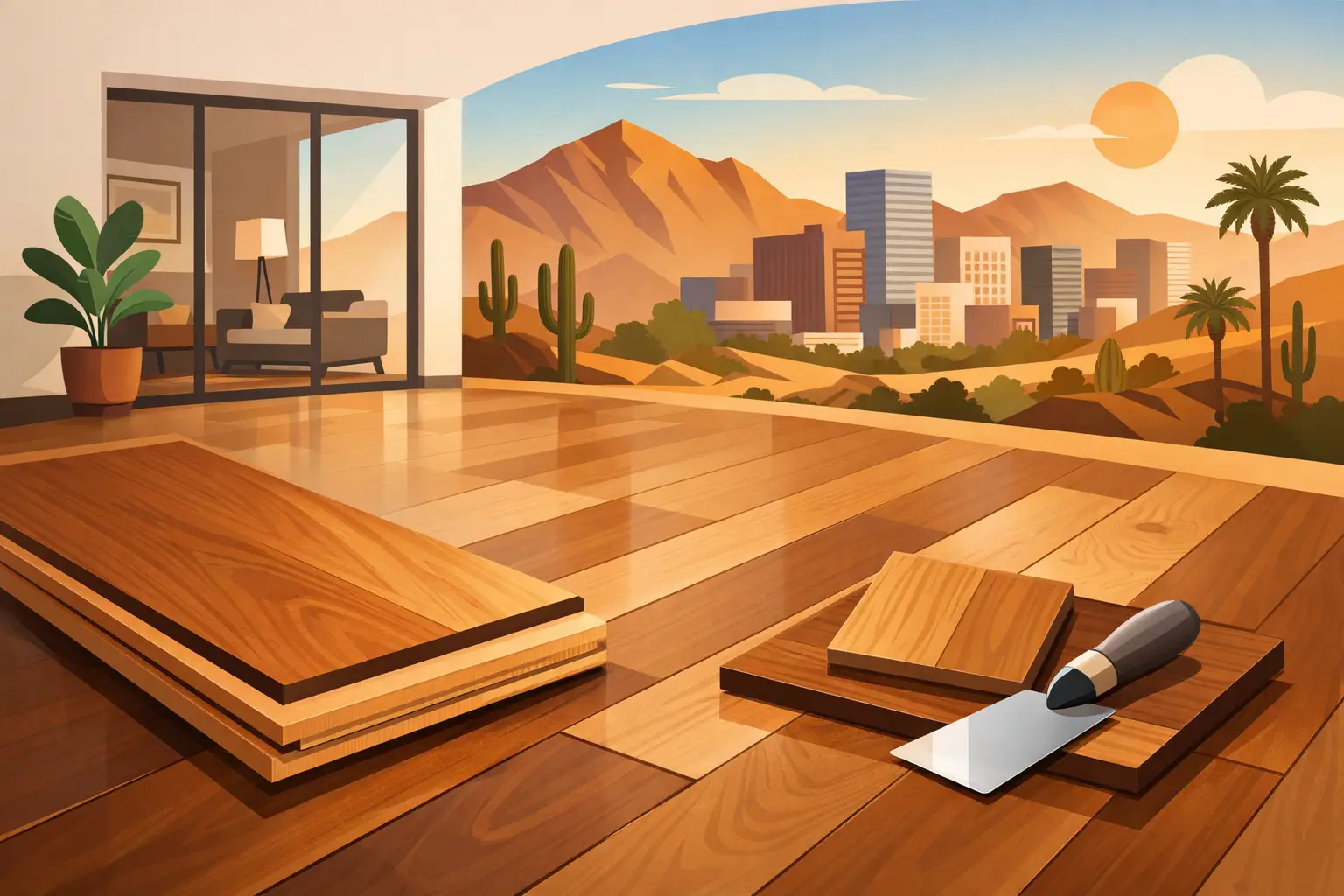
A floor can look beautiful in a showroom and still be the wrong choice for a busy household, a rental property, or a sun-filled Phoenix room. This engineered wood flooring review looks past the samples to explain how this material performs in real homes, what affects its value, and where a different flooring option may make more sense.
Engineered wood gives buyers the character of genuine hardwood with construction designed for greater dimensional stability. It is a strong option for many Arizona remodels, but the product details, installation conditions, and expectations around water all matter.
What Engineered Wood Flooring Actually Is
Engineered wood flooring has a top layer of real hardwood, called a veneer or wear layer, bonded to a layered wood core. The face can be oak, hickory, maple, walnut, or another hardwood species. Because the surface is real wood, it has authentic grain variation, texture, and the warmth that many homeowners want but cannot get from a printed wood-look floor.
The layered core is the key difference between engineered and solid hardwood. Solid hardwood is one piece of wood from top to bottom. Engineered planks use multiple layers arranged in alternating directions, which helps reduce expansion and contraction as temperature and humidity change.
That added stability can make engineered wood a practical choice over concrete slabs, which are common throughout Phoenix and the East Valley. It can also work well in open-concept homes where customers want continuous wood flooring through living areas, hallways, and bedrooms.
Engineered Wood Flooring Review: The Benefits
The best engineered wood floors offer a convincing combination of appearance, stability, and flexibility. They are not a substitute for every flooring type, but they solve several common concerns for homeowners and property owners.
First, the visual result is real hardwood. Each plank has natural variation rather than a repeating print pattern. Wider planks, wire-brushed finishes, matte surfaces, and longer board lengths can give a room a refined, established look without the movement concerns that sometimes come with traditional solid wood.
Second, engineered wood is generally more compatible with slab foundations and below-grade spaces than solid hardwood. Proper preparation is still required, especially moisture testing and the right underlayment or adhesive. But the construction gives installers more options for floating, glue-down, or nail-down applications depending on the product and subfloor.
Third, it may offer better long-term value than a floor that only imitates wood. A quality engineered floor can be refinished when its wear layer is thick enough. That is a meaningful advantage for buyers who plan to stay in their homes and want the option to refresh the floor years from now.
Finally, engineered hardwood works across a range of design styles. A light white oak can complement a clean, contemporary Scottsdale interior. A richer hickory or walnut tone can bring warmth to a traditional home, office, or upscale rental. The right finish lets the floor feel intentional rather than trendy.
The Trade-Offs Buyers Should Know
Engineered wood is more stable than solid hardwood, but it is not waterproof. This is the point many flooring reviews miss. A quality finish will protect against everyday drips and quick cleanup, yet standing water, plumbing leaks, wet mopping, or repeated pet accidents can damage the wood surface and core.
For bathrooms, laundry rooms, and other areas with regular moisture exposure, luxury vinyl plank or tile may be the better fit. In kitchens, engineered wood can work well for careful households, but it requires prompt cleanup and a realistic understanding that wood can show wear over time.
Scratch resistance also depends on the species and finish. Oak is popular because it balances durability and appearance. Hickory is harder and can be a good choice for active homes. Still, no real wood floor is scratch-proof. Dog nails, dragged furniture, grit near exterior doors, and high heels can leave marks. Many homeowners appreciate the natural patina that develops, while others prefer the more uniform wear resistance of luxury vinyl.
Price is another consideration. Entry-level engineered products may have a thin veneer, a less durable core, or limited refinishing potential. Premium options often cost more because they use thicker hardwood faces, stronger multi-ply construction, longer planks, and better finish systems. Comparing only the price per square foot can hide important quality differences.
What Determines Quality and Long-Term Performance
When evaluating samples, start with the wear layer. A thicker wear layer generally provides more durability and may allow refinishing in the future. A thin veneer can still be appropriate for a lower-traffic room or budget-focused project, but it should not be presented as the same product as a thicker, premium-grade plank.
Core construction matters as much as the surface. Multi-ply plywood cores are widely respected for stability, while other core types can perform well when made by a reputable manufacturer and installed correctly. The plank’s locking system, edge treatment, backing, and factory finish also affect how it handles daily use.
Finish should match the household. Matte and low-sheen finishes often hide minor scratches and dust better than high-gloss floors. Wire-brushed and hand-scraped textures can make small signs of use less noticeable. Smooth finishes have a clean, polished look but may show wear more readily in busy spaces.
Plank width affects appearance and installation planning. Wide planks can make large rooms feel open and elegant, but they place greater demands on subfloor flatness and moisture control. Narrower boards can be a smart choice in smaller rooms or homes where a more classic hardwood look is preferred.
Installation Matters More Than Most People Expect
A good engineered floor begins below the plank. Concrete moisture testing, slab condition, floor flatness, transitions, baseboards, and door clearances should all be evaluated before materials are ordered. Skipping this step can lead to hollow spots, gaps, movement, or adhesive problems that are not caused by the flooring itself.
In Phoenix, dry air and strong air conditioning can affect indoor conditions. Flooring should be stored, acclimated, and installed according to the manufacturer’s instructions. The home should also be operating under normal living conditions before and during installation whenever possible.
Glue-down installation is common over concrete and can create a solid, quiet feel underfoot. Floating floors may be faster to install and suitable for certain products, though they can sound different when walked on and require careful expansion space around the perimeter. Nail-down installation is typically used over appropriate wood subfloors.
Professional installation is especially valuable with engineered hardwood because the material is only as good as the preparation beneath it. A free in-home estimate helps identify whether the selected product, installation method, and room conditions are working together before the project begins.
Is It Better Than Solid Hardwood or Luxury Vinyl?
It depends on the room and the priority. Solid hardwood offers the deepest refinishing potential and a traditional all-wood construction. It can be an excellent choice over suitable wood subfloors, but it is usually less forgiving of changing conditions and less practical over many concrete slabs.
Luxury vinyl plank is often the easier choice for water-prone spaces, active pets, and low-maintenance rental properties. It can provide excellent durability at a range of price points, but it does not have a real hardwood surface. Buyers who value natural grain, depth, and a floor that can age gracefully often prefer engineered wood.
Engineered wood sits between those two choices. It provides genuine wood beauty with more installation flexibility than solid hardwood, while requiring more care than vinyl. For living rooms, bedrooms, dining rooms, home offices, and many kitchens, that balance can be exactly right.
Choosing the Right Floor for Your Project
Start with the way the space is used, not the color of the sample. Consider whether there are pets, children, direct access to a pool area, frequent entertaining, or commercial-level foot traffic. Then consider the subfloor, exposure to sunlight, budget, and how long you expect to keep the property.
For a primary residence, a thicker wear layer and durable finish may justify the investment. For a rental or light commercial space, a product with dependable performance and a practical replacement cost may be more appropriate. Samples should be viewed in the actual room, where natural light and existing finishes can change how the color reads.
At Premium Carpet Tile Stone and Wood, LLC, buyers can compare engineered wood options with guidance based on their room conditions, budget, and installation needs. The goal is not simply to sell a wood look. It is to help you select a floor that will continue to feel like the right decision after the furniture is back in place.
A well-chosen engineered wood floor brings real warmth to a space without asking you to ignore practical concerns. Take time to compare construction, finish, and installation requirements, then choose the option that fits the way your property is actually lived in.



Leave A Comment