
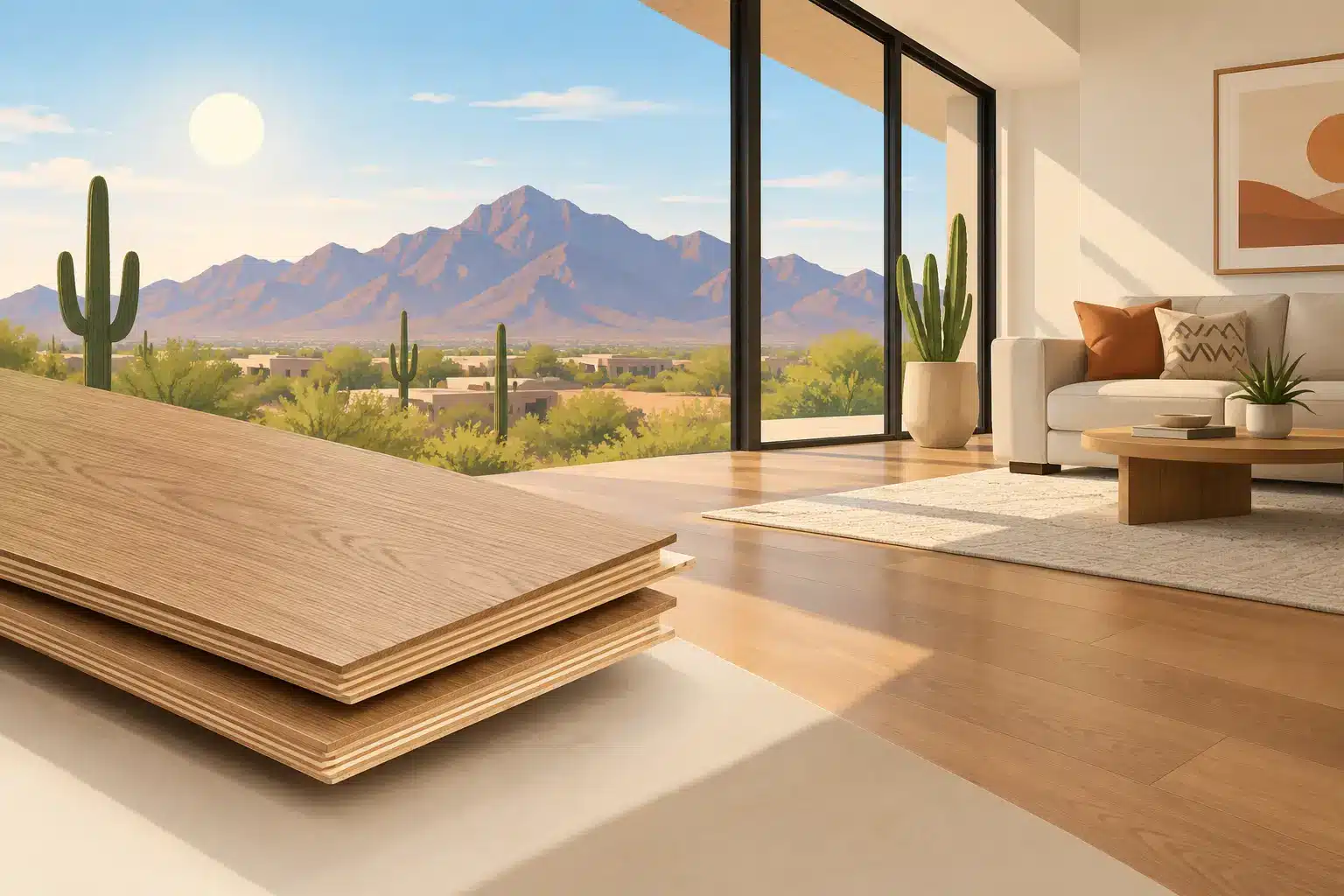
A beautiful wood floor has to do more than look right under showroom lighting. In Arizona, engineered wood performance depends on how the product is built, the condition of the home, and the quality of the installation. The right engineered hardwood can bring genuine wood character to a living room, bedroom, office, or retail space while offering greater dimensional stability than many solid hardwood options. The wrong product, or the wrong installation method, can create avoidable concerns long before the floor should be due for replacement.
For homeowners and property owners in Phoenix and the East Valley, the most useful question is not simply, “Is engineered wood good?” It is, “Which engineered wood is built for this project, and what will it take to keep it looking its best?”
What Engineered Wood Performance Really Means
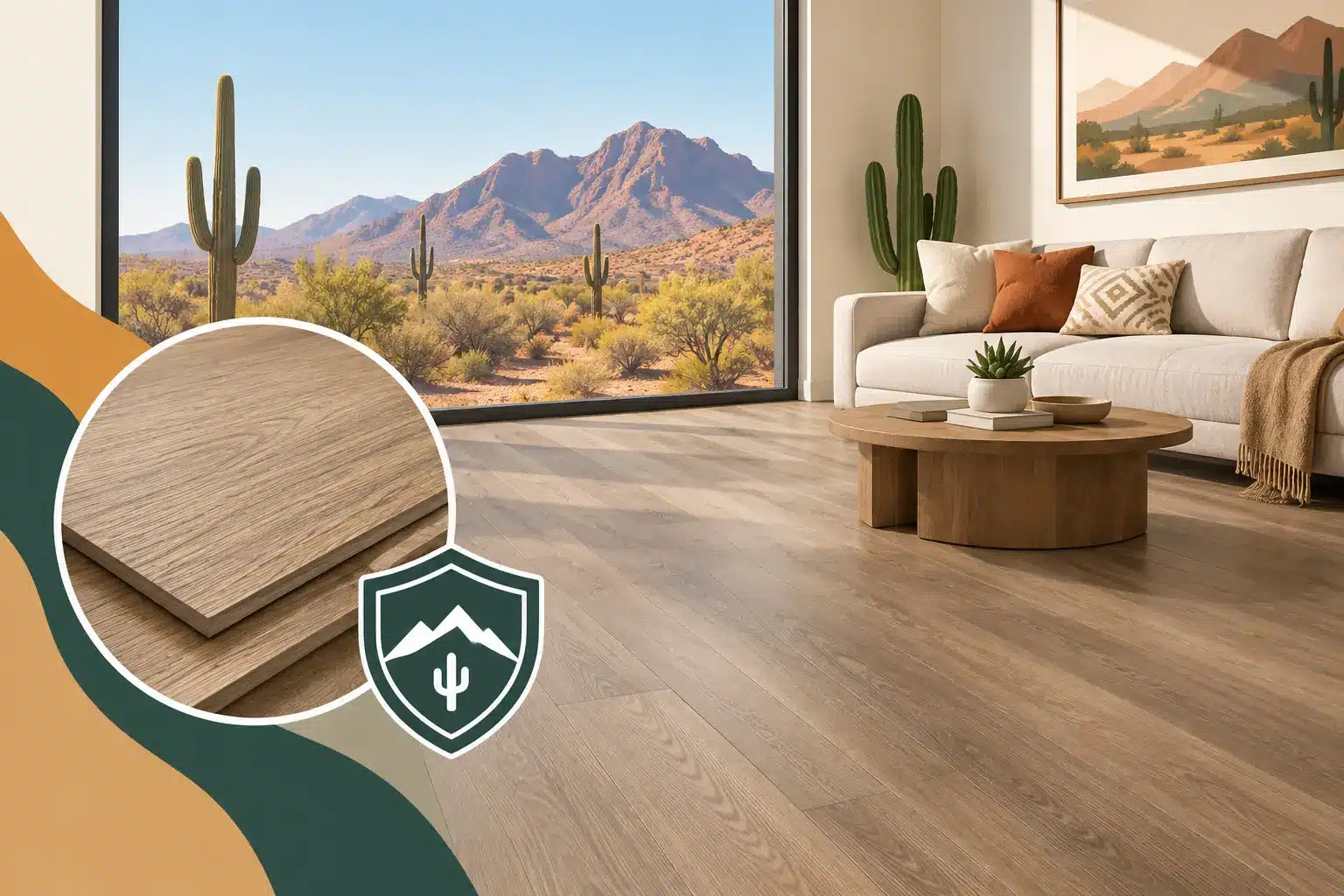
Engineered wood flooring has a real hardwood wear layer, often called a veneer, over a layered core. That construction distinguishes it from luxury vinyl plank and laminate, which may replicate the look of wood but do not have a true wood surface.
The cross-layered core helps engineered hardwood resist expansion and contraction better than a typical solid wood plank. That can make it an excellent choice for homes with slab foundations, rooms below grade, and projects where a lower-profile installation is helpful. However, more stable does not mean unaffected by its environment. Wood remains a natural material, and moisture, heat, direct sunlight, and indoor humidity still matter.
Performance includes more than whether a plank stays flat. It also includes resistance to everyday wear, the way the finish holds up to traffic, how easily the floor can be repaired or refinished, its sound underfoot, and how well it fits the subfloor and installation conditions. Two floors can carry the same species name and look similar in a sample, yet perform very differently over time.
The Construction Details That Matter Most
When comparing engineered hardwood, start below the surface. A lower price can be appropriate for a low-traffic room or a short-term update, but construction quality should match the demands of the space.
Veneer thickness affects the floor’s service life
The hardwood veneer is the visible layer that gives the floor its grain, color variation, and natural character. Thicker wear layers generally provide more material for future screening, refinishing, or repair, depending on the product and its manufacturer guidelines. A thinner veneer may be a sensible value choice for a guest room or rental refresh, but it has less margin for deep scratches or future refinishing.
Do not assume every engineered wood floor can be refinished multiple times. Some can be refinished once or more, while others are intended primarily to be maintained rather than sanded. The finish type, veneer thickness, plank condition, and installer assessment all affect that decision.
Core quality supports stability
Better engineered wood products use carefully constructed plywood or high-density core layers designed to hold the board in shape. This is especially important across wide planks, where natural movement can be more noticeable. A well-made core also helps the floor accept the recommended installation method, whether that is glue-down, nail-down, floating, or a combination of methods.
Core construction is not a detail to overlook when shopping by color alone. It influences how the product handles seasonal conditions, how solid it feels underfoot, and how reliably it performs over a properly prepared subfloor.
Finish and species determine everyday durability
The finish protects the wood from routine use, but no finish makes wood completely scratch-proof. A hard species and a quality finish can better handle active households, pets, and normal foot traffic. Matte and low-sheen finishes are often practical because they tend to make minor dust, scuffs, and small scratches less obvious than a high-gloss surface.
Texture matters, too. Wire-brushed, hand-scraped, and naturally varied planks can be forgiving in busy homes because their visual character helps disguise minor wear. Smooth, uniform floors create a clean and refined appearance, but they may show dents or surface marks more readily.
How Phoenix Conditions Affect Engineered Wood Flooring
Phoenix-area homes face a different set of flooring conditions than homes in humid climates. Outdoor heat is extreme for much of the year, but indoor air conditioning can lower humidity significantly. The goal is not to treat engineered wood as fragile. The goal is to select a suitable product and maintain reasonable indoor conditions.
Direct sun is a major consideration. Large windows, sliding doors, and bright rooms can gradually change the color of natural wood, particularly on lighter or more reactive species. Window coverings, UV-filtering treatments, and occasional rug rotation can help reduce uneven fading. Rugs should be breathable and should not trap moisture against the floor.
Water is another common concern. Engineered hardwood is more dimensionally stable than solid wood, but it is not waterproof. A spilled drink that is wiped up promptly is usually manageable. A leaking refrigerator line, overflowing sink, wet mop, or long-term moisture from a slab is a different situation. Kitchens can work well with engineered wood when owners are prepared for routine care, but bathrooms and other consistently wet areas usually call for a more water-resistant flooring choice.
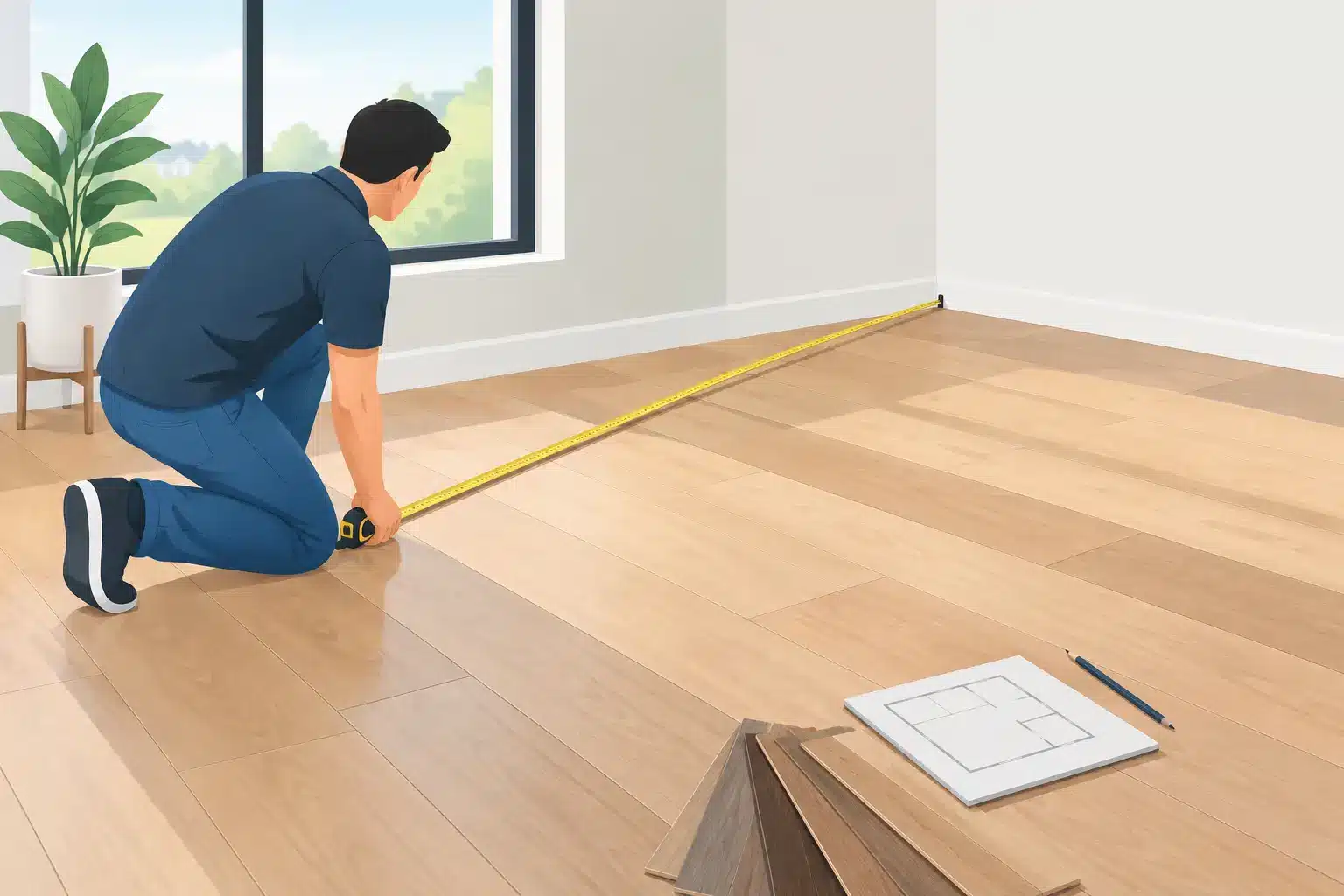
Before installation, the subfloor must be tested and prepared according to the product requirements. Concrete slabs need moisture evaluation, and wood subfloors need to be clean, dry, level, and structurally sound. Skipping this work can lead to adhesive issues, gaps, movement, or visible irregularities. The floor may be premium, but it cannot overcome a subfloor problem on its own.
Installation Has a Direct Effect on Performance
Engineered wood flooring is not a one-method product. The correct installation depends on the construction of the flooring, the subfloor, the room, and manufacturer instructions.
Glue-down installation is common over concrete and can create a firm, stable feel underfoot. It requires careful slab preparation and the correct adhesive system. Nail-down or staple-down installation is often used over suitable wood subfloors. Floating installation can be efficient for specific approved products, but it may feel different underfoot and requires attention to expansion space, transitions, and a properly rated underlayment.
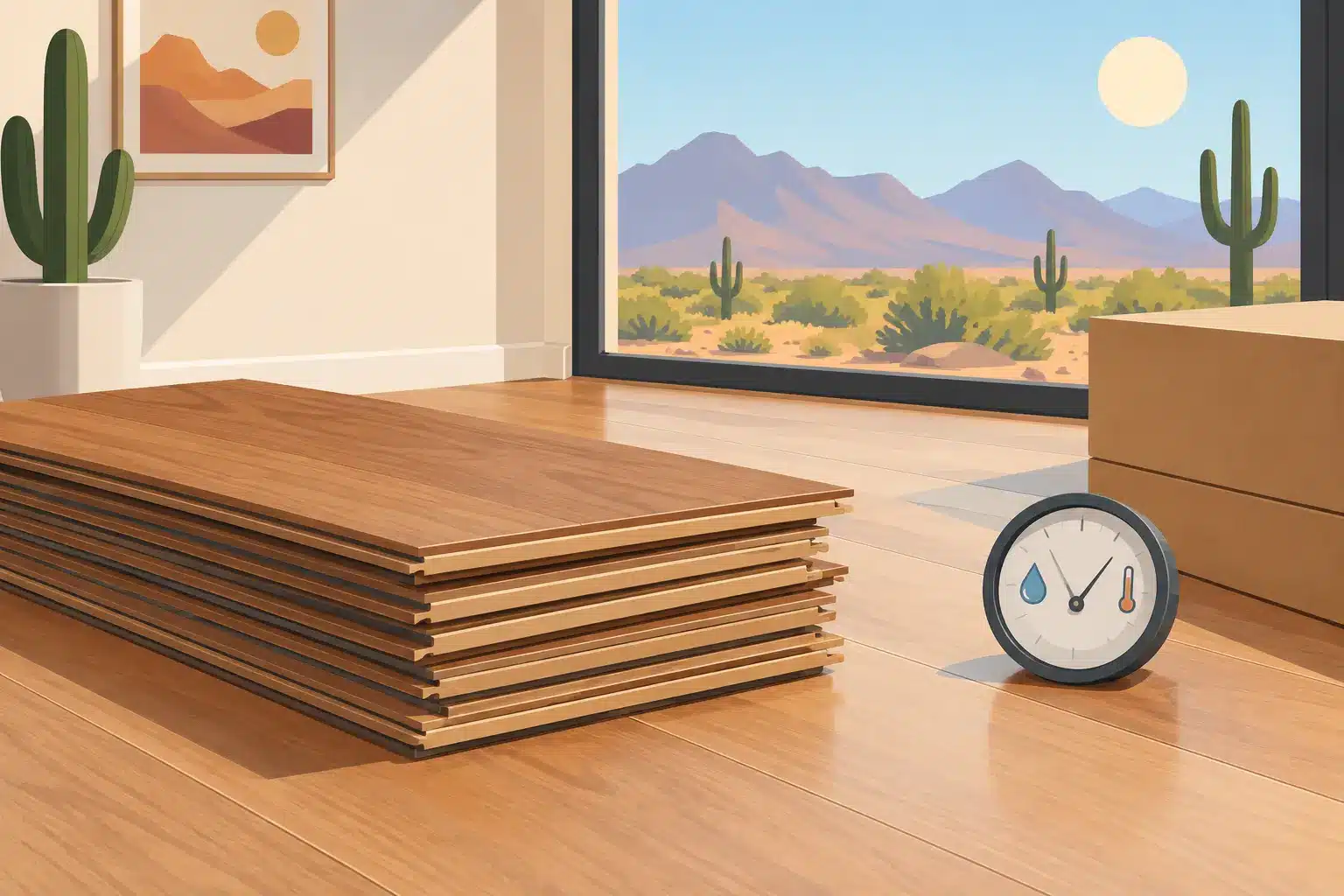
Acclimation is equally important. Flooring should be delivered, stored, and conditioned according to the manufacturer’s instructions before installation. In a climate with dramatic outdoor temperatures, controlled indoor conditions during this process are essential. Installation should not begin simply because boxes have arrived at the job site.
Professional installation also improves the appearance of the finished project. Board layout, plank selection, color blending, transitions, stair details, and expansion allowances all affect the result. This is where experienced guidance can prevent a floor from looking pieced together or performing poorly at room edges and doorways.
Matching the Floor to How You Live
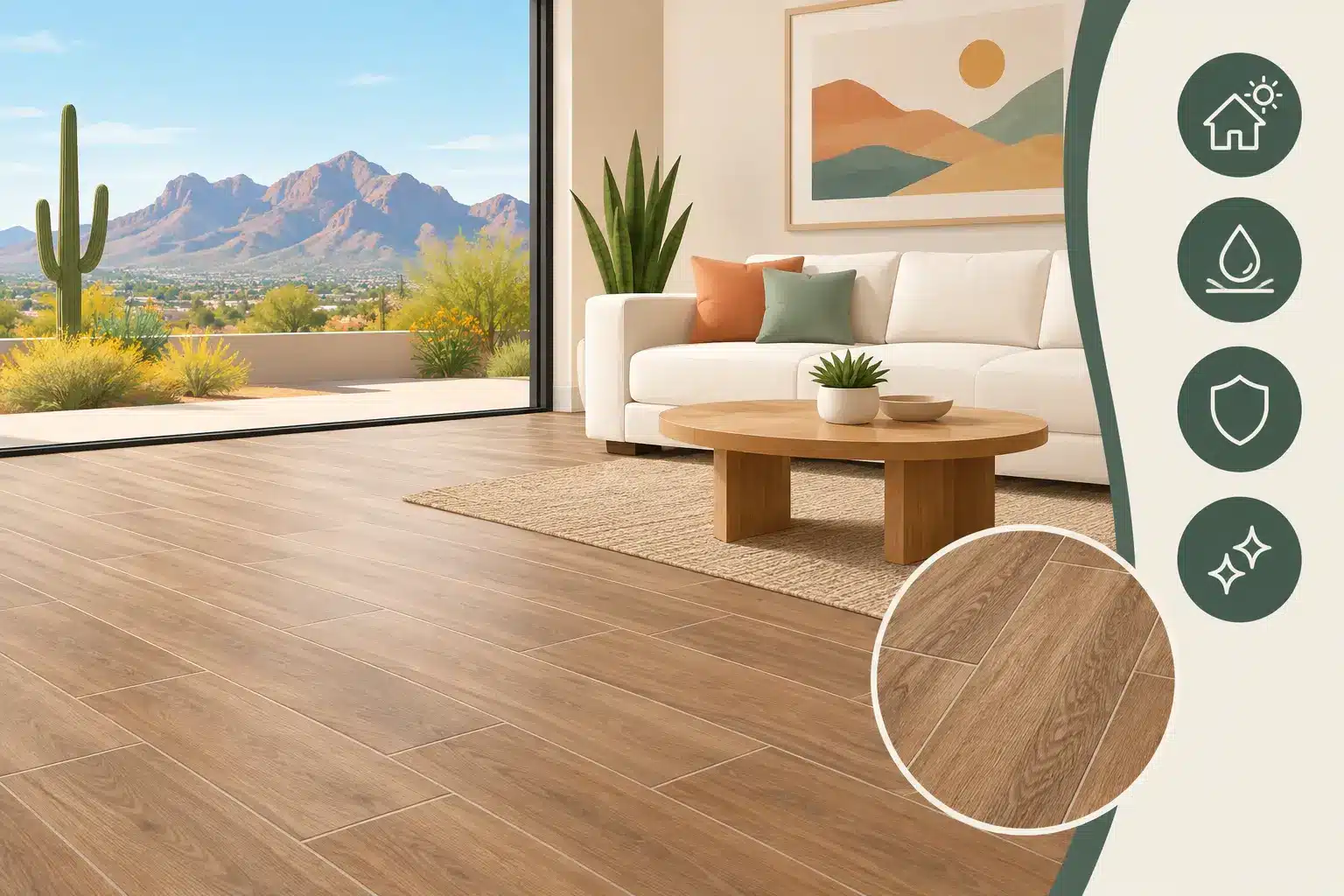
Engineered wood is often a strong choice for living areas, bedrooms, dining rooms, offices, and commercial spaces where warmth and natural material matter. It can also be a good option for open-concept homes, provided the selected product is approved for the installation conditions.
For a household with large dogs, young children, or frequent entertaining, choose a practical finish and expect normal signs of use. Wood develops character over time. If the goal is a floor that handles standing water, heavy rolling traffic, and very low maintenance with minimal visible change, luxury vinyl plank or tile may be a better fit in certain rooms.
Commercial buyers should also consider traffic patterns. A private office may benefit from engineered wood’s upscale appearance, while a busy entry, restaurant service area, or space exposed to frequent spills may need a more resilient surface. Flooring decisions work best when the material is matched to the actual use of the space, not just the desired look.
Care That Protects Engineered Wood Performance
Daily care is straightforward. Use a dry microfiber mop or vacuum designed for hard surfaces to remove grit, since abrasive dirt is one of the main causes of finish wear. Place quality mats at exterior doors, use felt pads beneath furniture, and lift rather than drag heavy items.
Clean spills promptly with a soft cloth. For regular cleaning, use only a wood-floor cleaner approved for the flooring and follow the product directions. Avoid steam mops, soaking the floor with water, oil soaps, waxes, and harsh cleaners. These products can leave residue, affect the finish, or introduce moisture where it does not belong.
If a plank is damaged, repair options depend on the construction and installation method. Some individual boards can be replaced, while surface scratches may be addressed with manufacturer-approved touch-up materials. A flooring professional can help determine whether a repair, replacement, recoating, or refinishing approach makes sense.
At Premium Carpet Tile Stone and Wood, LLC, a free in-home estimate gives buyers the opportunity to discuss subfloor conditions, sunlight, household traffic, design goals, and budget before choosing a floor. The best engineered wood floor is not necessarily the most expensive sample in the showroom. It is the one built, installed, and maintained for the way your space is actually used.


Leave A Comment