
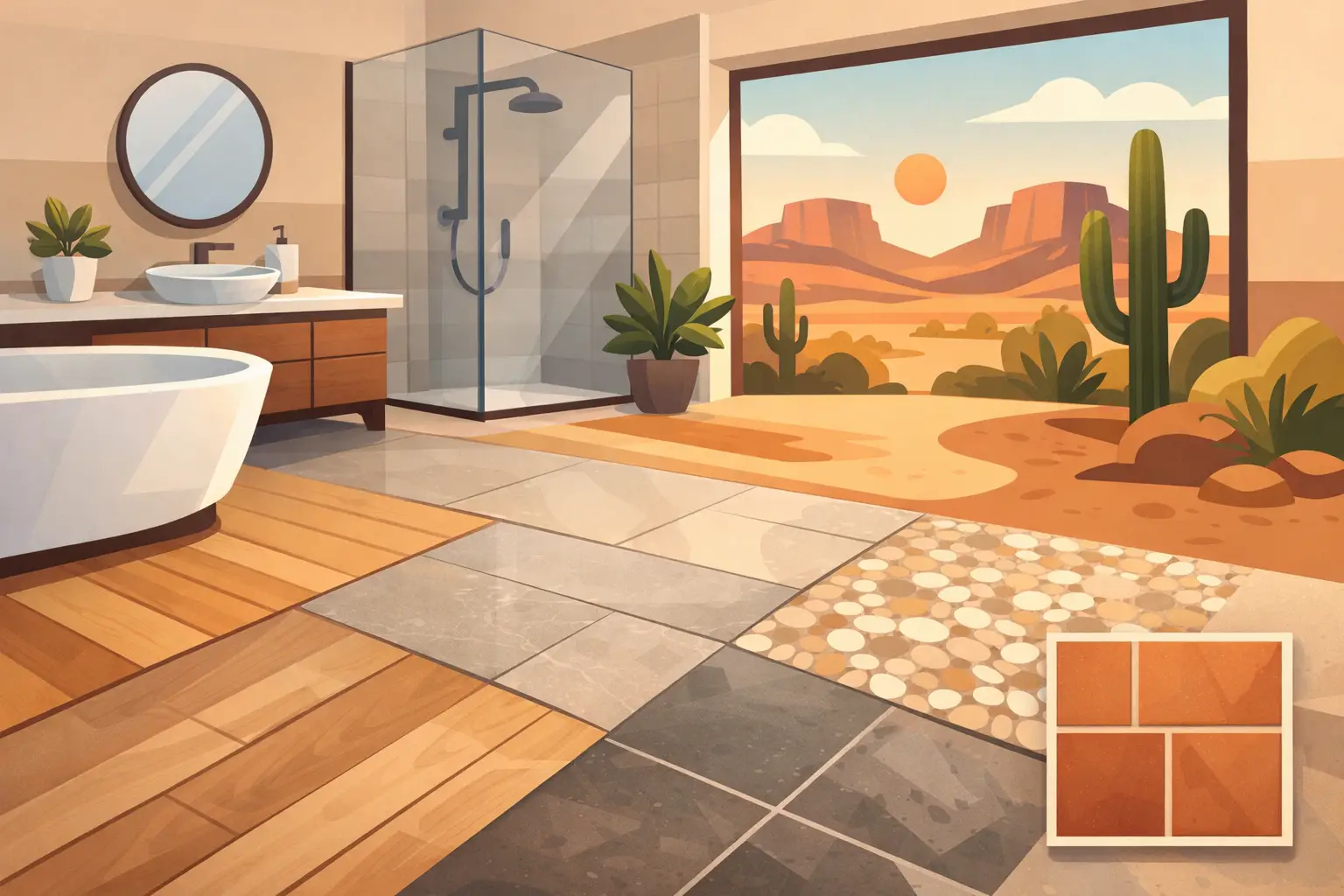
A bathroom floor has to handle more than the occasional splash. It deals with wet feet, shower steam, bath mats that trap moisture, cleaning products, and daily traffic in a small, highly visible space. The best bathroom flooring materials balance water resistance, comfort, maintenance, style, and budget – not just the look of a sample under showroom lighting.
For homeowners and property owners in Phoenix and the East Valley, the right choice also depends on the bathroom itself. A busy family hall bath needs a different floor than a powder room, a rental property, or a primary bath renovation built around natural stone. Here is how the leading options compare in real-world use.
What Bathroom Flooring Needs to Do
A bathroom floor should resist moisture from above and below. Surface water is the obvious concern, but humidity and small leaks around toilets, tubs, and vanities can create problems over time. Materials with many seams, absorbent surfaces, or moisture-sensitive cores need extra attention during installation.
Slip resistance matters, too. A glossy floor can look beautiful, but it may be less forgiving when wet. Tile texture, grout joint size, finish, and bath mat placement all affect traction. For households with young children, older adults, or anyone with mobility concerns, this should be part of the material decision from the start.
Finally, consider repair and replacement. A floor that looks affordable on day one may become costly if a plumbing issue requires removing a large area. Professional installation, proper underlayment, waterproofing where needed, and careful transitions help protect the investment regardless of the material selected.
Best Bathroom Flooring Materials Compared
Porcelain Tile: Best Overall for Most Bathrooms
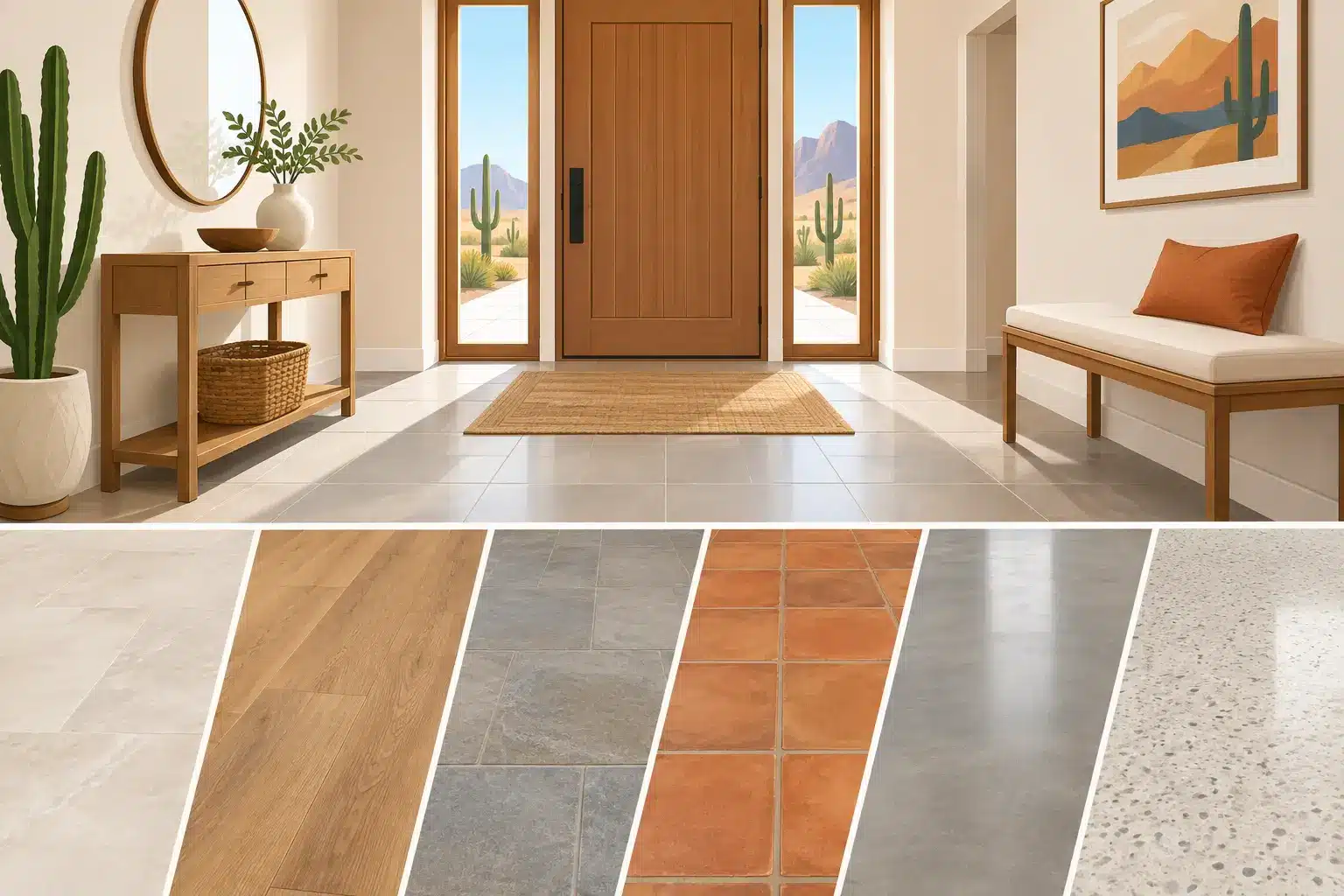
Porcelain tile is often the strongest all-around choice for bathrooms. It is dense, highly water-resistant, durable, and available in an enormous range of colors, sizes, patterns, and textures. Homeowners can get the look of marble, concrete, wood, terrazzo, or handmade tile while choosing a product that is practical for everyday use.
Porcelain is especially well suited to full bathrooms, shower-adjacent areas, and high-traffic homes. Large-format tile can create a clean, modern appearance with fewer grout lines, while smaller mosaic tile provides more grout joints and can improve traction in wet areas. Matte or textured porcelain is usually a smarter choice than a highly polished finish for bathroom floors.
The trade-off is comfort and installation complexity. Tile feels hard and can feel cool underfoot, although Arizona homeowners often find that welcome for much of the year. Radiant heating can add comfort in a primary bath, and a quality bath mat helps in any bathroom. Tile installation requires a properly prepared subfloor, so this is not an area where shortcuts pay off.
Luxury Vinyl Plank and Tile: Best for Value and Comfort
Luxury vinyl plank, often called LVP, and luxury vinyl tile, or LVT, offer a warmer and softer feel than tile. They are popular for bathroom updates because they provide realistic wood and stone visuals at a competitive price point. Quality vinyl flooring is easy to clean and generally performs well with normal bathroom moisture.
Waterproof vinyl products are a good option for bathrooms, but the word “waterproof” needs context. The wear surface and core may resist water, yet moisture can still reach the subfloor through edges, perimeter gaps, damaged seams, or an unaddressed plumbing leak. Proper installation remains essential.
LVP works well for powder rooms, guest bathrooms, rental properties, and remodels where homeowners want one continuous floor across bedrooms and bathrooms. LVT is particularly useful when you want a tile-inspired pattern without tile’s hard surface. Choose a product with a durable wear layer and a finish that is not overly slick.
Ceramic Tile: Best for Style on a Controlled Budget
Ceramic tile is a reliable bathroom flooring option with a wide range of design choices. It is generally less dense than porcelain, but it still performs well on bathroom floors when the correct product is chosen and installed properly. It can be an excellent value for homeowners who want a custom tile appearance without moving into premium porcelain or natural stone pricing.
Ceramic is best used in standard residential bathrooms with a sound, level subfloor. Look for floor-rated tile rather than wall tile, and ask about the finish and expected traction. Small-format ceramic tile can add character in a vintage-inspired bath, while larger tiles can make a compact room feel more open.
The main consideration is durability. Porcelain is typically the better choice for heavy traffic or areas that see more frequent moisture exposure. Still, ceramic remains a practical, attractive option for many bathroom renovations.
Natural Stone: Best for a High-End, One-of-a-Kind Look
Natural stone delivers depth and variation that manufactured materials cannot fully duplicate. Marble, travertine, limestone, slate, and granite can turn a primary bathroom or powder room into a distinctive design feature. Each piece has its own color movement and character, making the finished floor feel truly custom.
Stone also requires a realistic maintenance plan. Most natural stone should be sealed, and some varieties are more vulnerable to etching, staining, or surface wear than porcelain. Polished marble, for example, can be beautiful but may show water spots and can become slippery. Honed finishes and textured stone are often better choices for bathroom floors.
Arizona homeowners should also consider the look they want to maintain long term. Travertine’s natural pits and variation are part of its appeal, but it is not the right fit for someone seeking a perfectly uniform, low-maintenance surface. With expert selection, sealing, and installation, stone can be an excellent premium material.
Sheet Vinyl: Best for Basic Baths and Rental Properties
Sheet vinyl remains a sensible choice when budget, water resistance, and simple maintenance are the top priorities. Because it can be installed with very few seams, it offers strong protection against everyday surface moisture. Modern sheet vinyl has improved in appearance, with designs that imitate tile, stone, and wood more convincingly than older products.
It is a practical fit for secondary bathrooms, utility-adjacent spaces, and rental property updates. It is not usually the first choice for a high-end custom renovation, but it can deliver dependable performance at a lower installed cost. The subfloor must be smooth because imperfections can telegraph through the material.
Engineered Wood: Usually Better Outside the Bathroom
Engineered hardwood is more stable than solid hardwood, but it is still wood-based flooring. That means it can be affected by standing water, repeated moisture, and leaks. It may work in a carefully managed powder room, but it is generally not the best choice for a full bathroom with a shower or tub.
If you want the warmth of wood in a bathroom, wood-look porcelain tile or luxury vinyl is usually the more practical route. Both can create the visual continuity of hardwood without asking a moisture-sensitive material to do a job it was not designed to handle.
How to Choose the Right Bathroom Floor
Start with the room’s daily use. A primary bathroom used by two adults may support a premium stone or large-format porcelain design. A busy kids’ bathroom needs traction, easy cleanup, and a surface that can take dropped bottles and constant splashes. In a rental property, durability, replacement availability, and budget may carry more weight than a custom finish.
Next, look beyond the floor sample. Ask how the material performs when wet, how it is cleaned, whether it needs sealing, and what happens if water sits on it. Consider grout color and grout maintenance with tile. Light grout can look fresh but may require more cleaning, while a mid-tone grout often hides everyday use more effectively.
Installation should be part of the decision, not an afterthought. Tile and stone need a stable substrate and appropriate preparation to avoid cracking. Vinyl needs a smooth, clean surface and carefully finished edges. A professional installer can identify subfloor issues, moisture concerns, and layout details before they become expensive surprises.
A Practical Recommendation for Phoenix Homes
For most full bathrooms, porcelain tile is the best long-term balance of water resistance, durability, and design flexibility. For homeowners who prefer a softer surface or need to manage project costs, quality LVP or LVT is an excellent alternative. Natural stone is worth considering when the goal is a distinctive, higher-end primary bath and the homeowner is comfortable with ongoing care.
Premium Carpet Tile Stone and Wood can help narrow the options with samples, product guidance, and a free in-home estimate. Seeing materials in your own lighting and alongside your vanity, paint, and shower finishes often makes the right choice much clearer.
The best bathroom floor is the one that fits how the room is actually used, not simply the one that photographs best. Choose a material you will be comfortable cleaning, living with, and trusting when real life brings wet towels, rushed mornings, and the occasional plumbing surprise.


Leave A Comment