
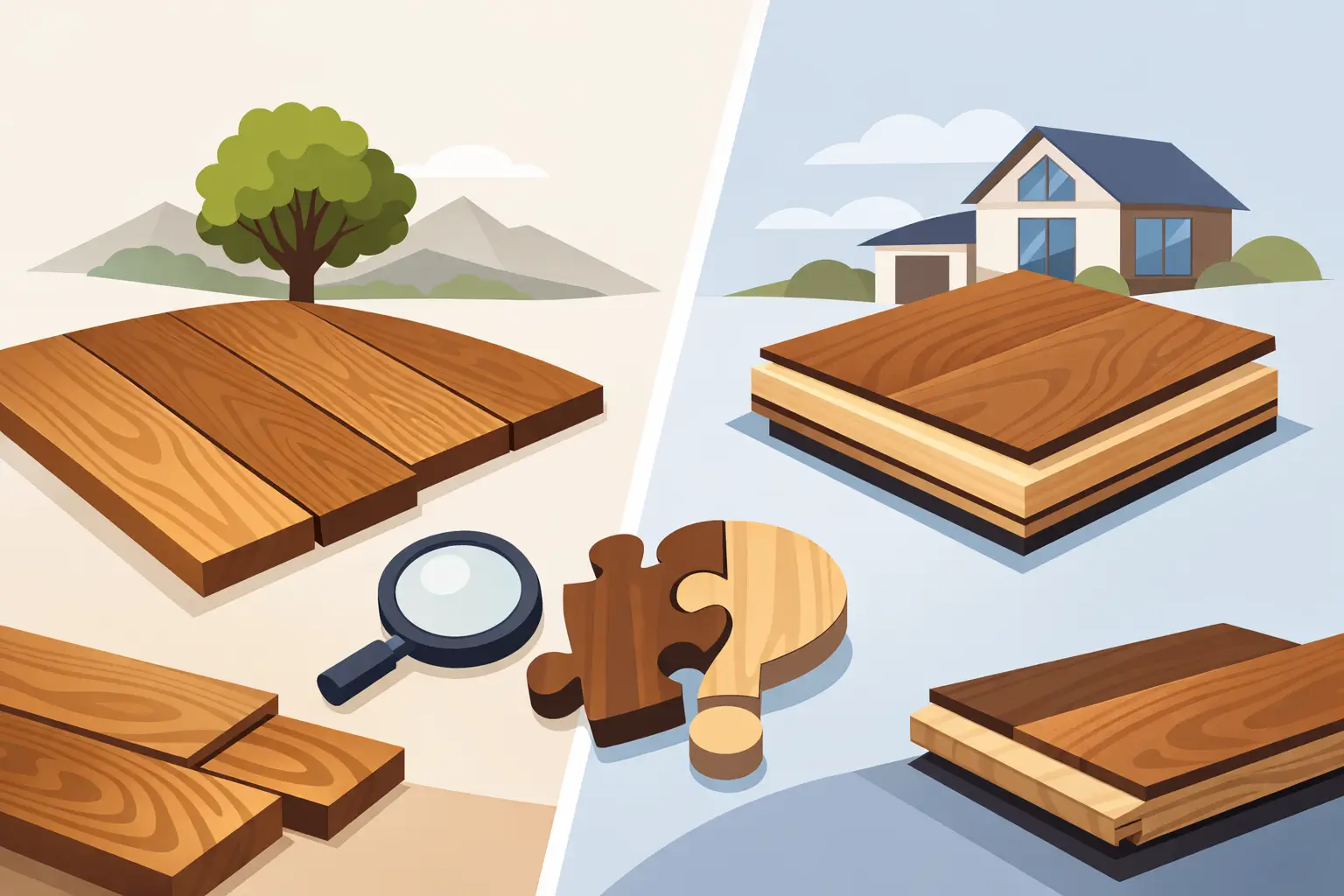
A beautiful wood floor can make a Phoenix home feel warmer, more finished, and more valuable. But hardwood versus engineered wood is not simply a choice between a traditional floor and a newer alternative. The right answer depends on where the floor will be installed, how your household uses the space, the condition of the subfloor, and how much future flexibility you want.
Both options can deliver genuine wood beauty. Both are available in a wide range of species, plank widths, colors, and finishes. The difference is in their construction, which affects how each floor handles Arizona’s dry climate, temperature changes, installation conditions, and long-term maintenance.
Hardwood Versus Engineered Wood: The Core Difference
Solid hardwood is made from one piece of wood, typically 3/4 inch thick. Each plank is milled from a single species, such as oak, maple, hickory, or walnut. Because the wood runs through the full thickness of the plank, a solid hardwood floor can usually be sanded and refinished several times over its service life.
Engineered wood has a top layer of real hardwood, called a veneer or wear layer, bonded to several layers of plywood or other stable wood material beneath it. It is still a real wood floor, not a printed wood-look product. The face of the board is genuine oak, hickory, maple, or another selected species. Its layered construction is designed to reduce the natural expansion and contraction that occurs in wood.
That structure gives engineered wood a practical advantage in locations where moisture, slab conditions, or temperature variation may be a concern. Solid hardwood remains a strong choice when installed in the right environment and when its ability to be refinished over decades is a priority.
How Phoenix Conditions Affect Wood Flooring
Phoenix homeowners understandably think about heat first. While indoor flooring is protected by air conditioning, desert conditions still make humidity control and proper installation important. Wood responds to changes in moisture. It can expand when humidity rises and contract when the air becomes very dry.
Engineered wood is generally more dimensionally stable because its layers are arranged in alternating directions. That makes it well suited for many Arizona homes, particularly when flooring will be installed over a concrete slab. It can also be a smart choice for ground-level rooms, condos, and remodels where floor height needs to stay manageable.
Solid hardwood can perform beautifully in Phoenix, but it needs the right preparation. The subfloor must be dry, flat, and appropriate for the installation method. Wood should be acclimated according to manufacturer requirements, and the home should maintain reasonably consistent indoor conditions. A professional moisture evaluation helps prevent issues that are far more expensive to correct after installation.
Direct sunlight deserves attention as well. Arizona sun can fade or change the color of natural wood over time, especially near large windows and patio doors. Window coverings, UV-filtering glass, and rotating area rugs can help the floor age more evenly. This applies to both solid and engineered products because both have a real wood surface.
Installation Can Influence the Best Choice
The subfloor often narrows the decision quickly. Solid hardwood is most commonly nailed or stapled to a wood subfloor. This makes it an excellent fit for many second-story spaces and homes with suitable plywood subfloors.
Engineered wood offers more installation flexibility. Depending on the product, it may be glued down, nailed down, floated, or installed over an approved underlayment. Glue-down engineered wood is a common solution over properly prepared concrete slabs, which are found in many homes throughout Phoenix and the East Valley.
Installation is not a detail to leave until the end of the selection process. The flooring thickness, transitions to tile or carpet, cabinet clearances, and door heights can all affect the finished result. In a remodel, a thinner engineered plank may reduce the need to alter doors or adjust adjoining surfaces. In a new build or a larger renovation, solid hardwood may fit the construction plan without those limitations.
Refinishing, Repairs, and Expected Life
Solid hardwood has a clear long-term advantage when it comes to refinishing. A quality solid wood floor can often be sanded and refinished multiple times, allowing homeowners to remove surface wear, repair minor damage, or update the stain color years later. For buyers planning to stay in a home for decades, that can be a meaningful benefit.
Engineered wood can also be refinished, but the number of times depends on the thickness of its wear layer. Products with thicker hardwood wear layers may allow one or more professional refinishes. Thinner products may only tolerate light screening and recoating, or no sanding at all. This is why two engineered floors with similar appearances can have very different long-term value.
For either material, daily care matters more than many buyers expect. Use protective pads under furniture, clean spills promptly, and avoid wet mopping. Grit and sand act like sandpaper under shoes, so entry mats and regular sweeping are especially helpful in desert areas. A factory-finished floor with a durable protective coating can make routine maintenance easier for busy families, pet owners, and rental property owners.
Appearance Is Not a Tie-Breaker Anymore
Years ago, buyers often chose solid hardwood because it offered more authentic-looking planks. That is no longer the case. Quality engineered wood is available in wide planks, wire-brushed textures, matte finishes, natural knots, and contemporary colors that closely match the character buyers expect from premium wood flooring.
Solid hardwood still has a particular appeal for homeowners who want traditional craftsmanship, thick planks, and the knowledge that their floor can evolve through refinishing. Engineered wood appeals to buyers who want the same natural wood face with a broader range of installation options.
The best way to compare color and texture is with samples in the actual room. Lighting can change a floor dramatically. A warm oak may look golden in a bright south-facing living room and more neutral in a shaded bedroom. Viewing samples beside cabinets, countertops, paint colors, and existing tile prevents costly surprises.
Cost Is More Than the Price Per Square Foot
Engineered wood is often less expensive than solid hardwood, but pricing varies widely by species, plank width, wear layer thickness, finish quality, and manufacturer. A premium engineered floor can cost as much as, or more than, an entry-level solid hardwood floor.
The complete project cost matters most. Include subfloor preparation, moisture mitigation when needed, removal of existing flooring, trim work, transitions, delivery, and professional installation. A lower-priced product can lose its advantage if it requires extensive site preparation. On the other hand, an engineered option that installs efficiently over an approved slab may offer better total value for a specific home.
For commercial interiors, rental properties, and high-traffic households, the decision may lean toward the product that best balances appearance, maintenance needs, and replacement planning. A homeowner focused on long-term ownership may place more value on refinishing potential. Neither approach is automatically better.
Which Wood Floor Is Right for Your Project?
Solid hardwood is often the stronger choice for rooms over a wood subfloor, homeowners who value multiple future refinishes, and projects where classic construction is part of the goal. It is an investment in a floor that can be renewed rather than replaced.
Engineered wood is often the practical choice for concrete slabs, first-floor installations, remodels with height restrictions, and buyers who want real wood with added dimensional stability. It can provide the look of hardwood in spaces where solid wood may require more complicated preparation or may not be recommended.
Before making a final selection, ask about the product’s wear layer, warranty, approved installation methods, moisture requirements, and maintenance instructions. Those details are more useful than relying on a label alone. At Premium Carpet Tile Stone and Wood, a free in-home estimate can help identify subfloor conditions and compare flooring options based on your room, budget, and installation needs.
The best wood floor is the one that looks right in your space and is built for the way that space is actually used. Start with the conditions underfoot, then choose the wood product that gives you confidence long after installation day.




Leave A Comment