
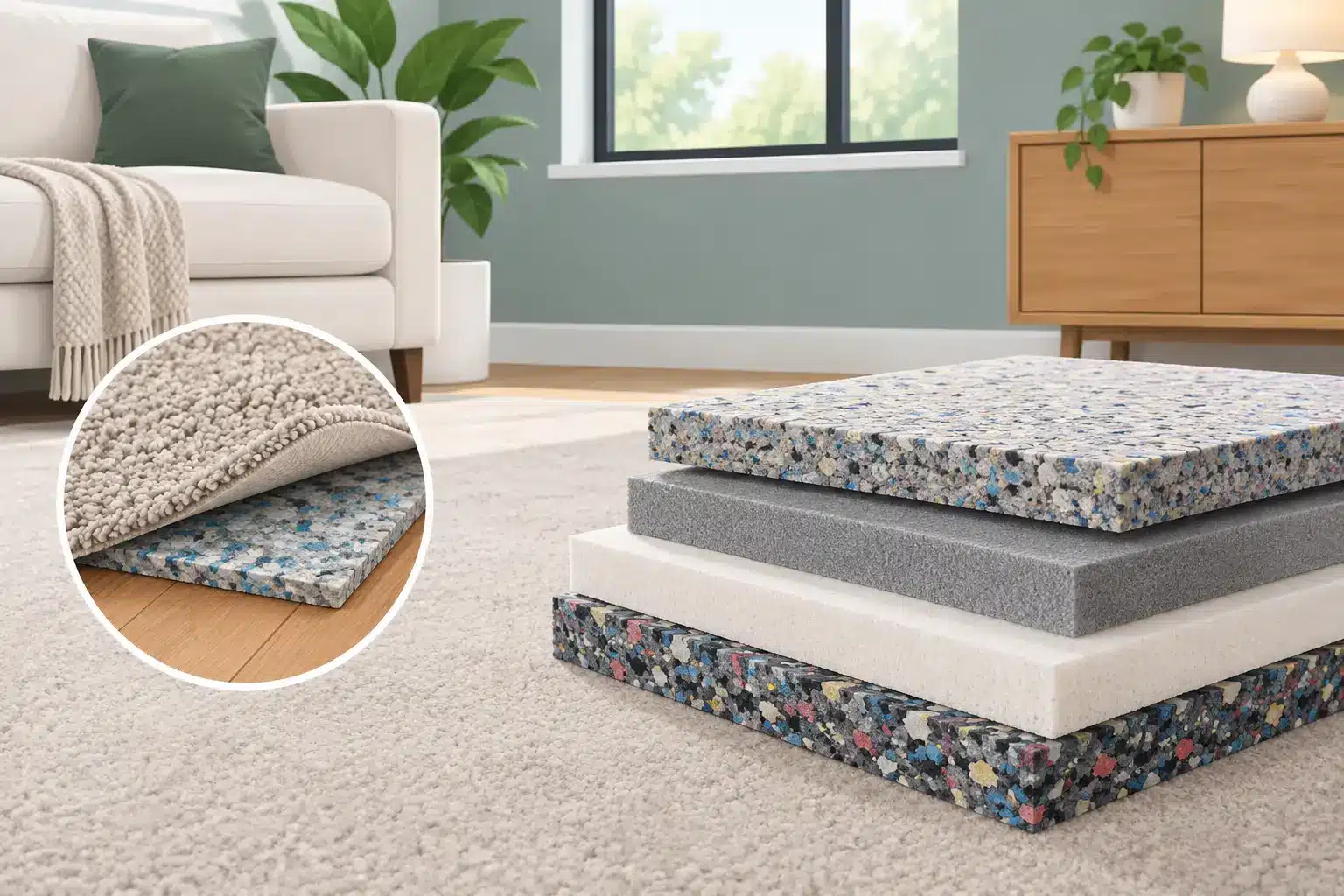
A carpet sample can feel soft and luxurious in a showroom, then feel completely different after installation if the padding underneath is not right. Knowing how to choose carpet padding helps protect your carpet investment, improve comfort underfoot, and prevent premature wear in the areas your family uses most.
Carpet padding is not a one-size-fits-all purchase. The best choice depends on the carpet style, the room’s traffic level, your subfloor, and whether moisture, pets, or heavy furniture are part of the equation. A quality pad should support the carpet without making it feel unstable or too soft.
Why Carpet Padding Matters
Padding, also called carpet cushion, sits between the carpet and the subfloor. It absorbs impact from foot traffic, helps carpet fibers recover after being compressed, and adds insulation and sound control. Just as importantly, the right cushion helps the carpet perform the way its manufacturer intended.
A lower-cost pad may reduce the upfront price of a flooring project, but it can shorten the life of an otherwise high-quality carpet. If a pad compresses too easily, the carpet backing can flex excessively and fibers may show traffic patterns sooner. On the other hand, padding that is too thick or too soft can make carpet feel loose and may create problems with seams, stairs, and door clearances.
For homeowners and property managers, the goal is not simply to buy the thickest pad available. It is to select the correct level of support for the carpet and the room.
How to Choose Carpet Padding by Density and Thickness
Density and thickness are the two specifications most shoppers hear first, but they mean different things.
Density is usually measured in pounds per cubic foot. A higher number generally means a firmer, more supportive pad. For many residential carpet installations, an 8-pound rebond pad is a dependable starting point. It offers good support for bedrooms, living rooms, and hallways without making the carpet feel overly firm.
For high-traffic spaces, rentals, stairs, or homes with active children and pets, a denser 8- to 10-pound pad is often worth considering. The extra support can help the carpet retain its appearance longer. In light-use guest rooms, a 6-pound pad may be appropriate if the carpet and manufacturer requirements allow it, though it is not always the best value for a long-term installation.
Thickness is measured in inches. Most residential carpet padding falls between 3/8 inch and 1/2 inch thick. A 7/16-inch pad is a common choice because it provides noticeable comfort while maintaining proper support. Thick padding is not automatically better. Many Berber, loop, low-profile, and patterned carpets require thinner, firmer padding to prevent stretching, wrinkling, or damage to the carpet backing.
Always start with the carpet manufacturer’s padding guidelines. Warranty requirements may specify the maximum thickness and minimum density allowed. Choosing a pad outside those guidelines can affect warranty coverage, even if the carpet looks good on day one.
A Simple Rule for Most Homes
If you are installing a typical textured or plush residential carpet, a 7/16-inch, 8-pound rebond pad is often a strong all-around option. It balances comfort, durability, and value for many Phoenix-area homes.
That recommendation changes when the carpet has a low profile, a loop construction, a heavy pattern, or a specific warranty requirement. In those situations, the carpet style should guide the pad selection.
Choose the Right Padding Material
Several carpet padding materials are available, and each has a practical purpose.
Rebond padding is the most common residential option. It is made from recycled foam pieces bonded together, often visible as multicolored material. Quality rebond padding is durable, widely available, and offers excellent value for most rooms.
Prime foam is a solid foam cushion. It can feel comfortable, but lower-density versions may compress more quickly than a quality rebond pad. It is often used for budget-conscious projects, but the specifications matter more than the material name alone.
Rubber padding, including waffle rubber and flat rubber, is dense and resilient. It can be an excellent choice for certain high-end carpets or commercial applications, although it typically costs more. Flat rubber is especially firm and durable, making it suitable where strong support is required.
Fiber padding is made from natural or synthetic fibers and is usually quite firm. It may be recommended for specific carpet types, particularly woven carpets, but it does not provide the plush feel many homeowners expect from soft residential carpet.
The right material depends on the room and carpet. An experienced flooring professional can show you the difference in person because density and feel are easier to judge when you can handle the materials side by side.
Match Padding to the Room, Not Just the Carpet
One pad may work throughout an entire home, but there are times when different rooms deserve different choices. Bedrooms generally have lighter traffic and may prioritize comfort. Hallways, family rooms, and stairs need greater resilience because they receive more repeated foot traffic.
Stairs deserve special attention. Padding that is too thick can make the carpet harder to secure cleanly around each step. A thinner, denser cushion is usually the better choice because it supports the carpet while helping the installation stay tight and tailored.
For home offices, consider the chair you use. A rolling office chair can compress carpet and padding over time. A denser pad, paired with a suitable chair mat when needed, can help limit wear in the work area.
In rental properties, commercial spaces, and busy households, durability usually matters more than a soft, sink-in feel. Spending a little more on a firmer pad can reduce the chance of early replacement, especially in hallways, living areas, and bedrooms used every day.
Consider Moisture Protection Carefully
Moisture-barrier padding has a film layer designed to help prevent spills from soaking into the cushion and reaching the subfloor. It can be useful in homes with young children, pets, or frequent entertaining. It may also offer peace of mind over certain wood subfloors.
However, moisture-barrier padding is not a solution for ongoing moisture problems. If a concrete slab has moisture concerns, the slab should be tested and addressed before carpet installation. This is especially relevant in Arizona homes built on slab foundations. A spill barrier can help with accidents from above, but it cannot stop moisture migrating upward from below.
Barrier pads also need to be installed correctly. If liquids reach carpet seams or edges, they can still find a path beneath the carpet. Proper installation and prompt cleanup remain part of protecting the floor.
Do Not Overlook Carpet Type and Warranty Requirements
Every carpet construction responds differently to cushioning. Plush and textured carpets often feel excellent over a medium-density rebond pad. Loop and Berber styles typically need firmer, thinner support. Heavy patterned carpets may also require a specific cushion to preserve their appearance and backing.
Before selecting a pad, confirm four details: the carpet’s recommended density, its maximum padding thickness, whether a moisture barrier is approved, and whether the manufacturer has special requirements for stairs or commercial use. These details are easy to miss when focusing on carpet color and texture, but they affect long-term performance.
Carpet tile is a separate category. Many carpet tile products are designed for direct glue-down installation or include an attached backing, so traditional carpet padding may not be used at all. Commercial flooring should be selected according to the product system and the demands of the space.
Make the Decision With the Whole Installation in Mind
Padding is only one part of a successful carpet project. Subfloor condition, furniture placement, transitions to tile or luxury vinyl, door clearance, and installation method all influence the final result. A free in-home estimate can identify those details before materials are ordered.
When comparing quotes, ask what type of padding is included rather than assuming all cushions are equal. Request the thickness, density, material, and whether it meets the carpet warranty requirements. This creates a clearer comparison between estimates and helps avoid a lower quote that uses a weaker pad.
At Premium Carpet Tile Stone and Wood, LLC, the goal is to help customers select carpet and cushion combinations that fit their room, budget, and expected use. Seeing carpet samples and pad options together makes the decision more straightforward, especially when you are choosing for a full home, rental property, or commercial project.
A good carpet pad should disappear into the background after installation. You should simply notice that the carpet feels comfortable, stays supported, and continues to look good where life happens most.



Leave A Comment