
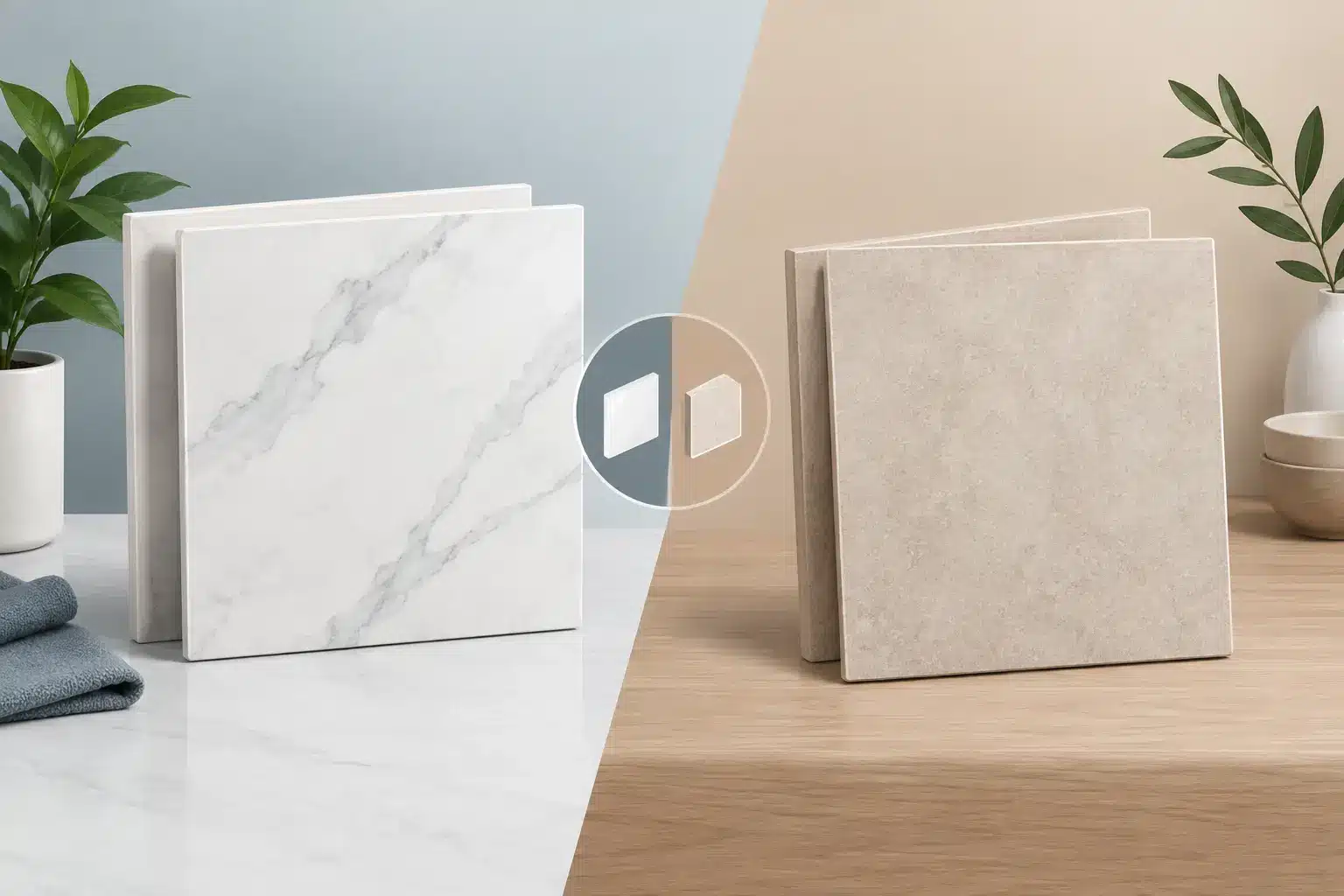
A tile sample can look nearly identical on a showroom wall, yet perform very differently once it is installed in a busy kitchen, shower, rental property, or commercial entry. When comparing porcelain versus ceramic tile, the best choice comes down to more than color and price. Water exposure, foot traffic, installation location, and the condition of the subfloor all matter.
For Phoenix-area homeowners and property owners, tile is often a practical long-term flooring choice. It stands up well to heat, dust, pets, and daily use. The key is selecting a tile rated for the way the space will actually be used, then having it installed correctly.
Porcelain Versus Ceramic Tile: The Core Difference
Both porcelain and ceramic tile are made from natural clay and fired in a kiln. Porcelain is a type of ceramic tile, but it is made with finer clay, pressed more densely, and fired at higher temperatures. That manufacturing process creates a harder, less porous material.
Porcelain tile must meet a very low water-absorption standard, generally 0.5% or less. Ceramic tile usually absorbs more water, though the exact rate varies by product. In practical terms, porcelain is often the stronger choice for wet areas, heavy traffic, and exterior applications that are specifically approved for outdoor use.
Ceramic tile remains an excellent flooring and wall-tile option for many projects. It is not an inferior material. It simply has a different set of strengths, including a wider range of affordable decorative choices and easier cutting during installation.
Where Porcelain Tile Makes Sense
Porcelain is commonly chosen when durability and moisture resistance are the priority. It performs well in entryways, kitchens, bathrooms, laundry rooms, and commercial spaces where people are constantly coming and going. It is also a strong option for households with large dogs, active children, or frequent entertaining.
Because porcelain is dense, many products can be made to closely resemble hardwood, natural stone, concrete, or fabric. Wood-look porcelain is especially popular for homeowners who want the appearance of wood in bathrooms, kitchens, or open-concept living areas without worrying about water damage.
For patios, pool-adjacent spaces, and other outdoor projects, porcelain can be a good choice, but the product must be rated for exterior installation. A beautiful indoor porcelain tile is not automatically suitable for Arizona heat, direct sun, or wet walking surfaces. The finish and slip-resistance rating matter just as much as the material itself.
The trade-off is installation. Porcelain is harder and denser, so it requires proper tools, blades, setting materials, and installer experience. Its weight may also affect labor and preparation needs, particularly with large-format tile.
Where Ceramic Tile Is the Better Value
Ceramic tile is a practical choice for bathroom walls, kitchen backsplashes, fireplace surrounds, and lower-traffic residential floors. It offers a broad selection of colors, shapes, glazes, and patterns, making it a favorite for design-focused projects.
A ceramic backsplash can deliver a custom look without using a premium porcelain product where that level of density is unnecessary. Decorative ceramic wall tile is often easier to cut and shape around outlets, niches, fixtures, and corners, which can be helpful for detailed installations.
Ceramic floor tile can also work well in guest bathrooms, bedrooms, dining areas, and lighter-use living spaces when the selected product is rated for floor use. The important point is to avoid choosing based on appearance alone. Wall tile should never be substituted for floor tile just because the color or pattern matches the room.
Ceramic may cost less than porcelain at the material level, but the total project cost depends on the tile size, layout, demolition, surface preparation, trim pieces, grout, and installation conditions. A less expensive tile can still become a significant project if the existing floor needs extensive leveling or repair.
Durability, Water Resistance, and Everyday Wear
For a busy primary residence or commercial property, porcelain usually provides more margin for error. Its dense body makes it more resistant to moisture and everyday wear, and through-body porcelain can make chips less noticeable because the color may continue below the surface.
That does not mean porcelain is impossible to chip or crack. Like any tile, it can be damaged if something heavy falls on it or if the subfloor flexes beneath the installation. Tile is a hard surface, not a flexible one. Proper preparation is what helps it last.
Ceramic is durable enough for many indoor applications, but glazed ceramic may show a contrasting body color if a significant chip occurs. For a low-traffic wall or backsplash, that is rarely a concern. For a busy mudroom or retail floor, porcelain is often the more dependable investment.
Grout also deserves attention. Grout color, joint width, and stain resistance can change the look and maintenance needs of either material. A quality grout and proper sealing, when recommended for the product, help keep the installation looking cleaner over time.
Comparing Cost Without Missing the Bigger Picture
Porcelain tile often costs more than ceramic tile because of its manufacturing process and performance characteristics. Large-format porcelain, rectified edges, stone-look finishes, and specialty textures can increase the price further. However, paying more for porcelain can be worthwhile in areas where moisture, traffic, and long-term wear would be hard on a less dense tile.
Ceramic frequently gives buyers more design flexibility at a lower price point. For an accent wall, shower wall, backsplash, or powder room, it can be the smart place to save without compromising the finished look.
The best value is not always the lowest price per square foot. Consider how long you plan to keep the property, how the room is used, and whether replacing a failed floor later would cost more than choosing the right material now. For rental homes and commercial interiors, selecting a durable tile that is easy to maintain can also reduce future turnover and repair expenses.
Details That Matter More Than the Tile Category
Porcelain versus ceramic tile is an important comparison, but several product details can be equally important. Before making a final selection, review these factors with your flooring professional:
- Floor or wall rating: Tile designed only for walls is not made to carry foot traffic.
- Slip resistance: Wet bathrooms, pool areas, and commercial entries need a finish appropriate for walking safety.
- Tile size and layout: Large tiles create a clean, modern look but demand a flatter surface and careful installation.
- Finish and maintenance: High-gloss tile can show water spots and dust more readily than matte or textured finishes.
- Installation conditions: Cracks, uneven slabs, moisture concerns, and movement joints need to be addressed before tile goes down.
In Arizona, slab condition is particularly worth evaluating. Small cracks do not always prevent tile installation, but they should be assessed so the proper preparation or crack-isolation method can be considered. Skipping this step can lead to cracked grout or tile later, regardless of whether the tile is porcelain or ceramic.
Choosing Tile for Each Room
For a main-floor kitchen, entry, laundry room, or high-use bathroom, porcelain is often the safest recommendation. It provides excellent moisture resistance and holds up well to daily traffic. A matte or lightly textured finish can be especially practical where floors may get wet.
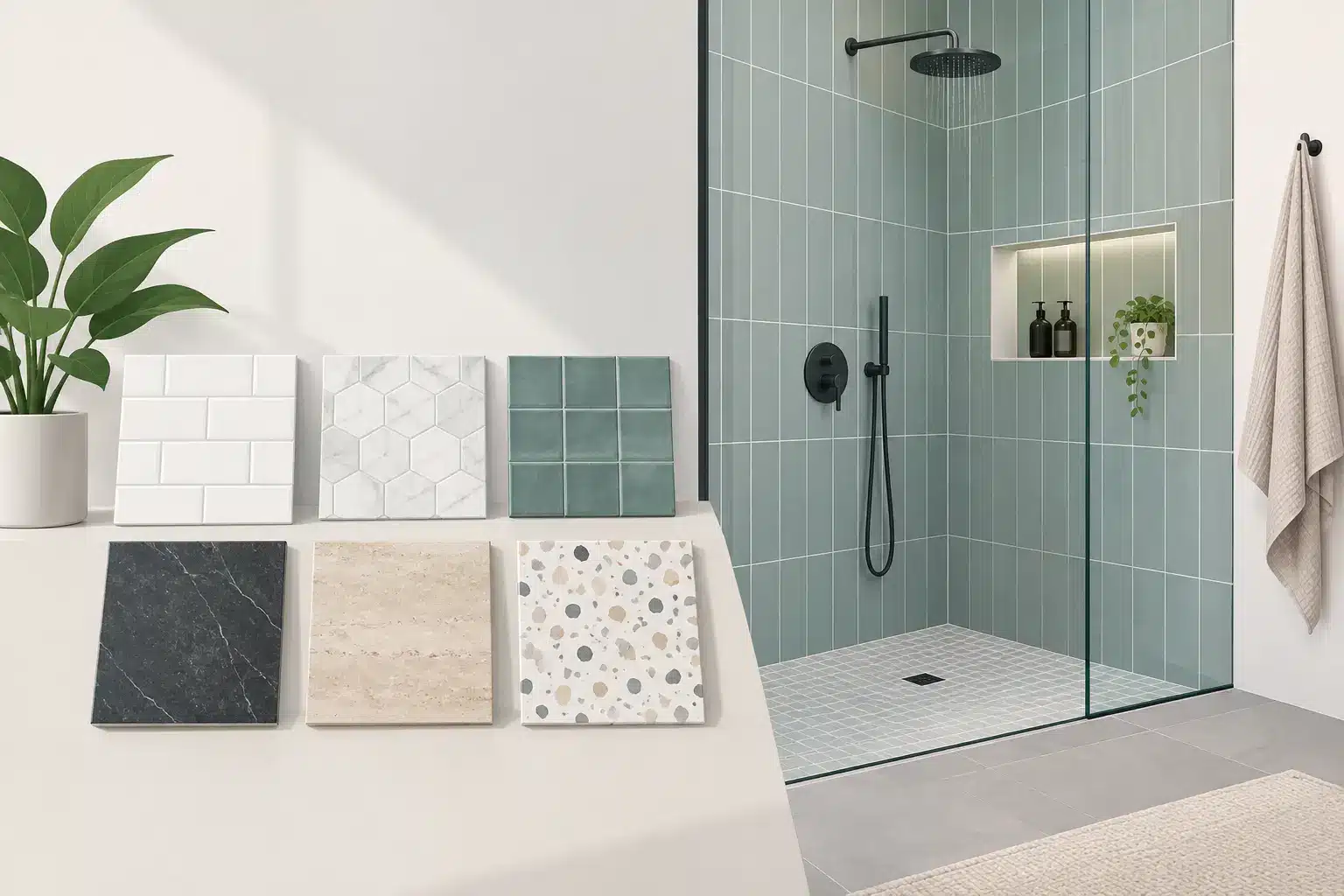
For shower walls, bathroom walls, backsplashes, and decorative features, ceramic can deliver outstanding color and style at an attractive price. Porcelain is still suitable in these spaces, especially for a matching floor-and-wall design, but it may not be necessary for every application.
Commercial buyers should consider the level of traffic, cleaning routine, entry moisture, and expected life of the space. A porcelain tile rated for commercial use can be a strong fit for offices, retail spaces, lobbies, and common areas. Product selection should be based on the specific environment rather than a one-size-fits-all recommendation.
At Premium Carpet Tile Stone and Wood, LLC, customers can compare samples, discuss their project goals, and receive practical guidance based on the room, budget, and installation requirements. A free in-home estimate is also a useful way to evaluate the existing surface before committing to a material.
The right tile should make daily life easier, not create another maintenance concern. Bring the room measurements, a few photos, and an honest description of how the space is used, and the porcelain or ceramic decision becomes much clearer.



Leave A Comment