
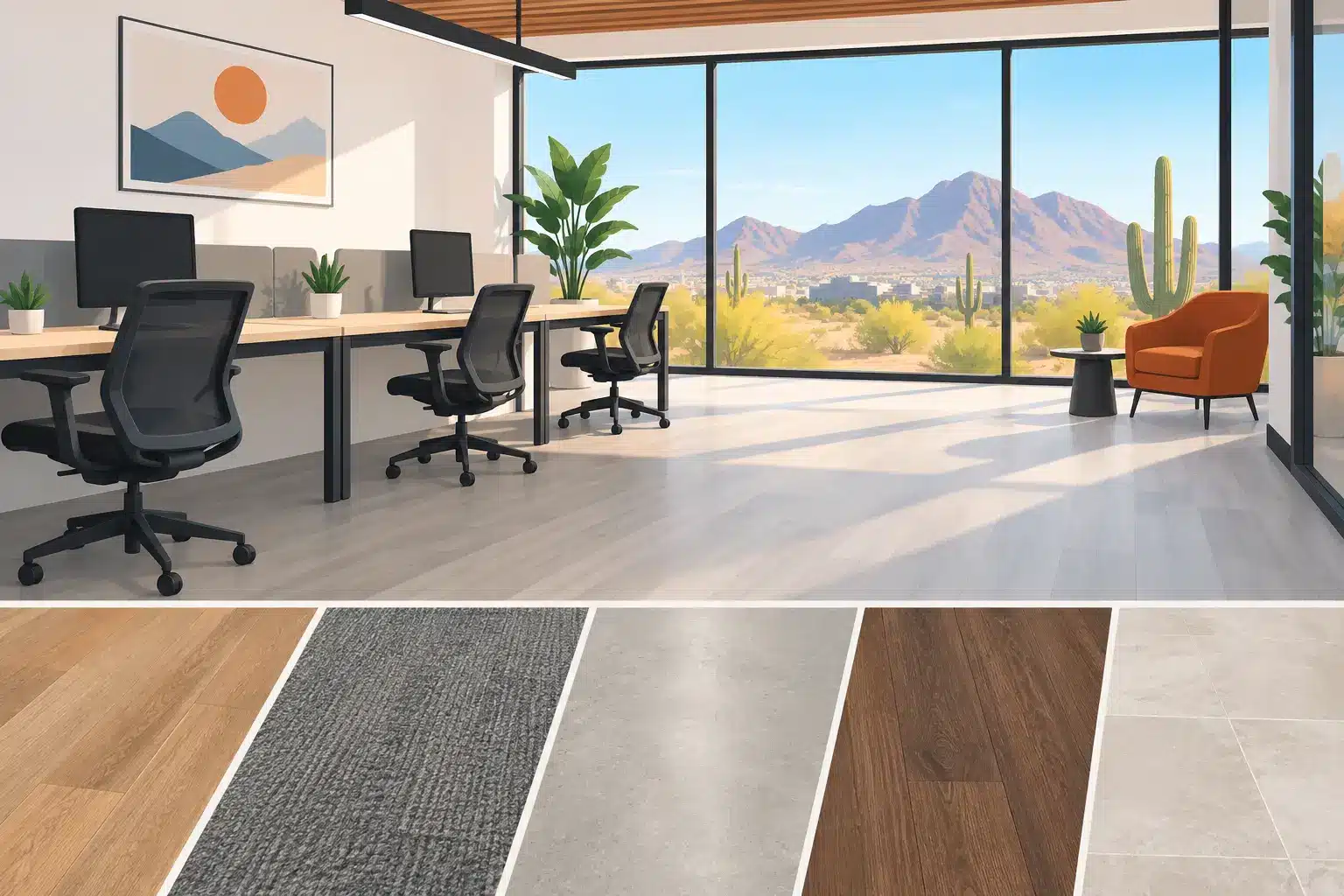
A busy office floor has a harder job than most people realize. It needs to handle rolling chairs, foot traffic, spills, meetings, daily cleaning, and a look that still reflects the business well. The best office flooring materials balance durability, maintenance, acoustics, comfort, and budget – but the right choice depends on how each part of your workplace is used.
For offices in Phoenix and the East Valley, climate also matters. Dry conditions, tracked-in dust, intense sunlight near windows, and frequent movement between indoor and outdoor areas can all affect long-term performance. A flooring decision should account for the whole space, not just how a sample looks under showroom lighting.
Start With How the Office Actually Works
Before choosing a material, separate the office into zones. Reception areas and hallways receive concentrated foot traffic. Private offices may need a quieter, warmer feel. Break rooms and copy areas need better moisture and stain resistance. Conference rooms often benefit from materials that soften sound and make long meetings more comfortable.
Also consider what is underneath the flooring. Many commercial spaces have concrete slabs, which can feel hard and may require preparation before installation. If the office is a leased space, the length of the lease, landlord requirements, and the need to replace flooring later can influence the best investment.
The lowest upfront price is not always the best value. A floor that needs frequent replacement, shows every stain, or causes disruptive installation downtime can cost more over time than a better-suited material installed correctly from the beginning.
Best Office Flooring Materials by Performance
Carpet Tile for Comfort, Quiet, and Easy Repairs
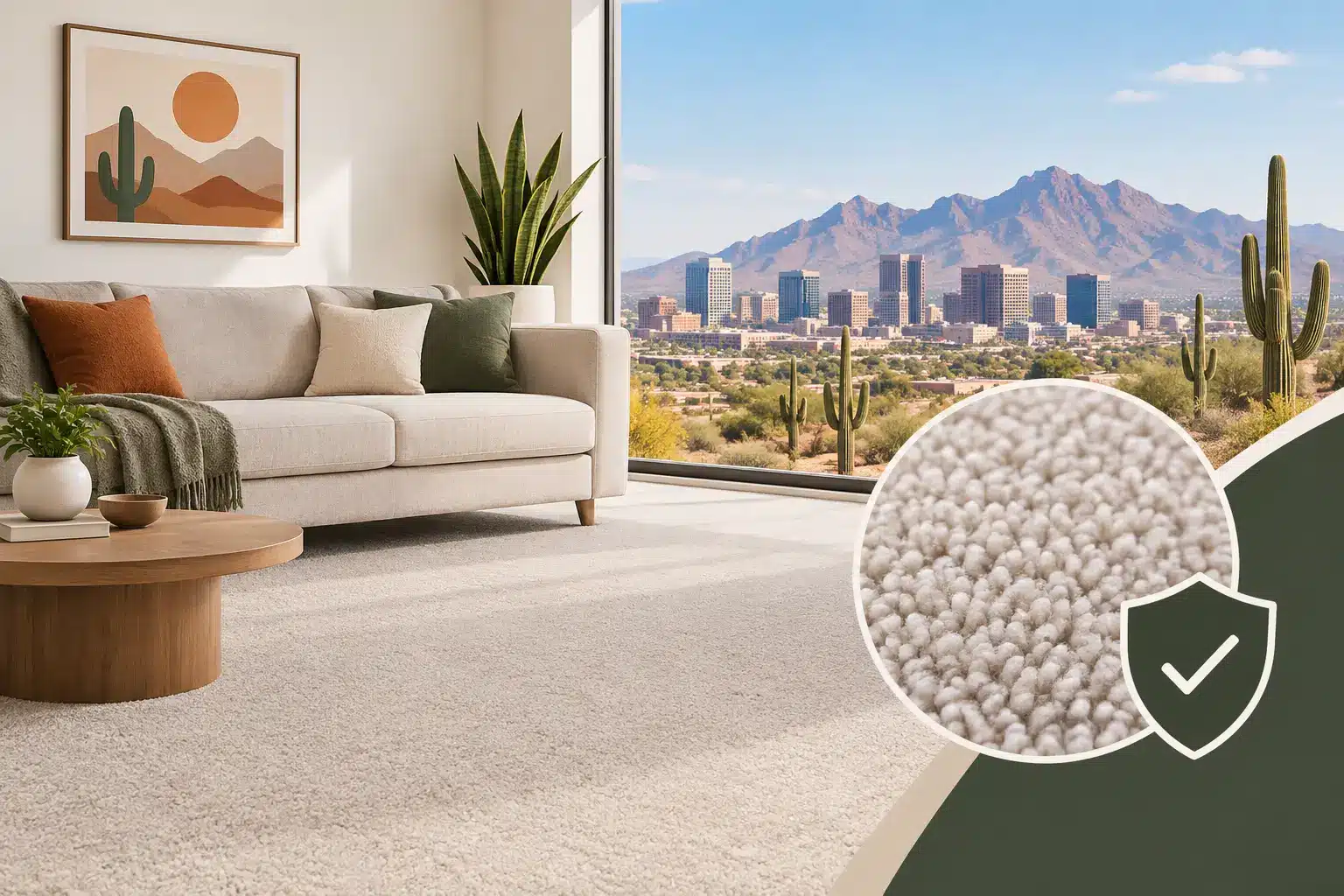
Carpet tile remains one of the strongest choices for traditional offices, call centers, conference rooms, and professional service spaces. It helps absorb sound from conversations, footsteps, and rolling chairs, creating a quieter environment for employees and visitors. It also adds warmth to offices that might otherwise feel cold or echo-heavy.
Its practical advantage is replacement. If a tile is damaged by a spill, stain, or heavy wear, an installer can replace the affected section instead of removing an entire room of broadloom carpet. This makes carpet tile especially useful in high-traffic corridors, workstations, and areas where food or drinks are common.
Not all carpet tile performs the same way. Commercial-grade options with strong backing, stain resistance, and low-pile construction generally hold up better under office chairs and frequent cleaning. Patterned styles can also hide routine traffic better than solid, light-colored carpet.
Carpet tile does require vacuuming and periodic professional cleaning. It may not be the first choice for an entry exposed to rain or mud, but in most Arizona offices, it provides an excellent mix of comfort, sound control, and long-term serviceability.
Luxury Vinyl Plank and Vinyl Tile for Versatility
Luxury vinyl plank, often called LVP, and luxury vinyl tile, or LVT, are popular commercial options because they combine a polished appearance with dependable day-to-day performance. Available in wood, stone, and contemporary tile visuals, these materials can create a high-end look without the maintenance demands of natural hardwood or stone.
Vinyl flooring is a smart fit for reception areas, executive offices, hallways, break rooms, retail-adjacent offices, and medical or service businesses. It is generally water-resistant, easy to clean, and comfortable enough for people who spend much of the day standing or walking. Compared with hard tile, it also has more give underfoot.
The trade-off is that LVP and LVT can show damage from dragging heavy furniture or equipment if the product is not commercial-rated. Chair mats, protective pads, and proper furniture moving practices help preserve the surface. In rooms with large windows, select a quality product and discuss sunlight exposure, since intense Arizona sun can affect some finishes over time.
For many businesses, commercial luxury vinyl is one of the best office flooring materials because it works across several areas of the building and keeps routine care simple.
Porcelain or Ceramic Tile for High-Moisture Areas
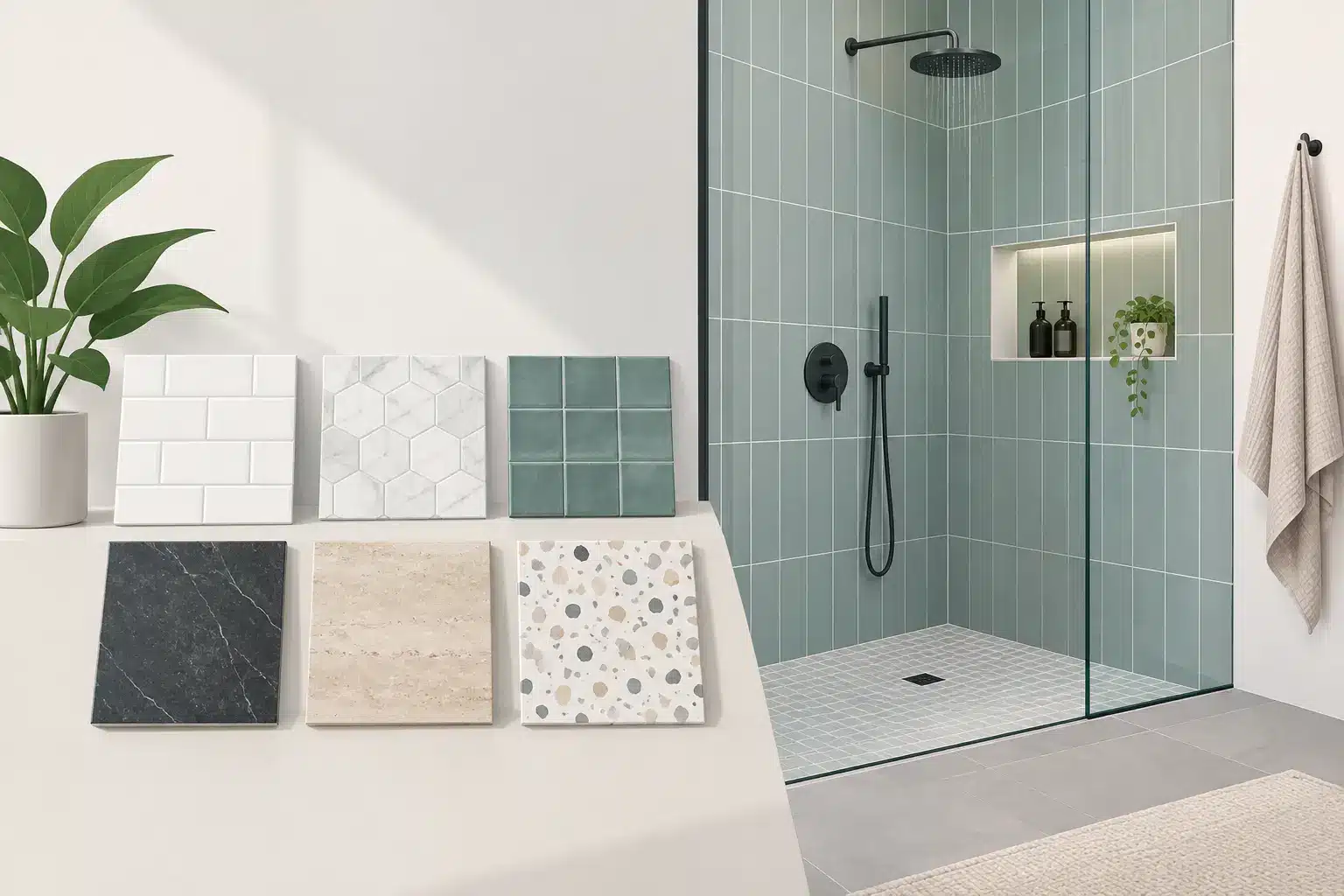
Tile is exceptionally durable and well suited to offices where moisture resistance and easy cleanup are priorities. It is a natural choice for restrooms, break rooms, building entries, kitchens, and businesses with frequent public traffic. Quality porcelain tile can handle heavy use while offering a wide range of colors, sizes, and finishes.
In Phoenix, tile also makes sense for offices that want a clean, cool feel. It resists spills and does not absorb odors like softer flooring materials. With the right grout and a professional installation, it can provide decades of service.
The downside is hardness. Tile can amplify sound, feel unforgiving underfoot, and make long periods of standing less comfortable. A glossy finish may also become slippery when wet. For office settings, a textured or matte finish is often a more practical choice, especially near entrances or beverage stations.
Tile is frequently most effective when paired with carpet tile or LVP in work areas. That combination gives each part of the office the performance it needs without forcing one material to do everything.
Polished Concrete for a Modern, Low-Maintenance Look
Polished concrete is worth considering when an office already has a sound concrete slab and wants an industrial, contemporary appearance. It is durable, easy to sweep and mop, and can work well in creative studios, showrooms, warehouses with office space, and modern retail environments.
It can also be a practical option for large open areas because it avoids the cost of installing a separate finish material. Decorative stains, dyes, and coatings can give concrete a more finished appearance while supporting the company’s visual identity.
However, concrete is hard and reflective. It can increase noise and fatigue in work areas, particularly where employees stand for long periods. Area rugs, acoustic treatments, and designated carpeted meeting spaces can help address these concerns. Concrete also needs proper preparation and finishing to avoid dusting, cracks, or an uneven result.
Hardwood and Engineered Wood for Executive Spaces
Wood flooring creates a classic, established look that fits law offices, financial firms, boutique agencies, and client-facing professional spaces. Engineered hardwood is often more practical than solid hardwood in commercial interiors because it is more dimensionally stable and can be installed in a wider range of settings.
Wood is best reserved for lower-traffic areas such as executive offices, conference rooms, and private client spaces. It can be damaged by rolling chairs, moisture, and heavy traffic, so it is usually not the best fit for a busy lobby or break room without added protection.
If wood is part of the design plan, choose a durable finish, use chair mats where needed, and establish a simple cleaning routine. Wood flooring can make a strong first impression, but it should be selected for the right zone rather than used everywhere.
Factors That Affect Your Final Choice
Beyond appearance, consider maintenance expectations. A property manager may prefer LVT or tile because the cleaning process is straightforward. A business that values acoustic privacy may prioritize carpet tile in meeting rooms and workstations. A medical, salon, or food-service-adjacent office may need materials with stronger moisture and sanitation performance.
Installation timing matters as well. Some flooring systems can be installed with less disruption than others, while concrete preparation, demolition, or moisture mitigation can extend a project schedule. A site visit and accurate estimate can identify these issues before materials are ordered.
Color and pattern should support maintenance, not fight it. Very dark flooring can show dust, while very light solid colors may reveal scuffs and stains. Mid-tone colors, subtle patterns, and commercial finishes often deliver the most forgiving appearance in active offices.
Build a Flooring Plan That Fits the Space
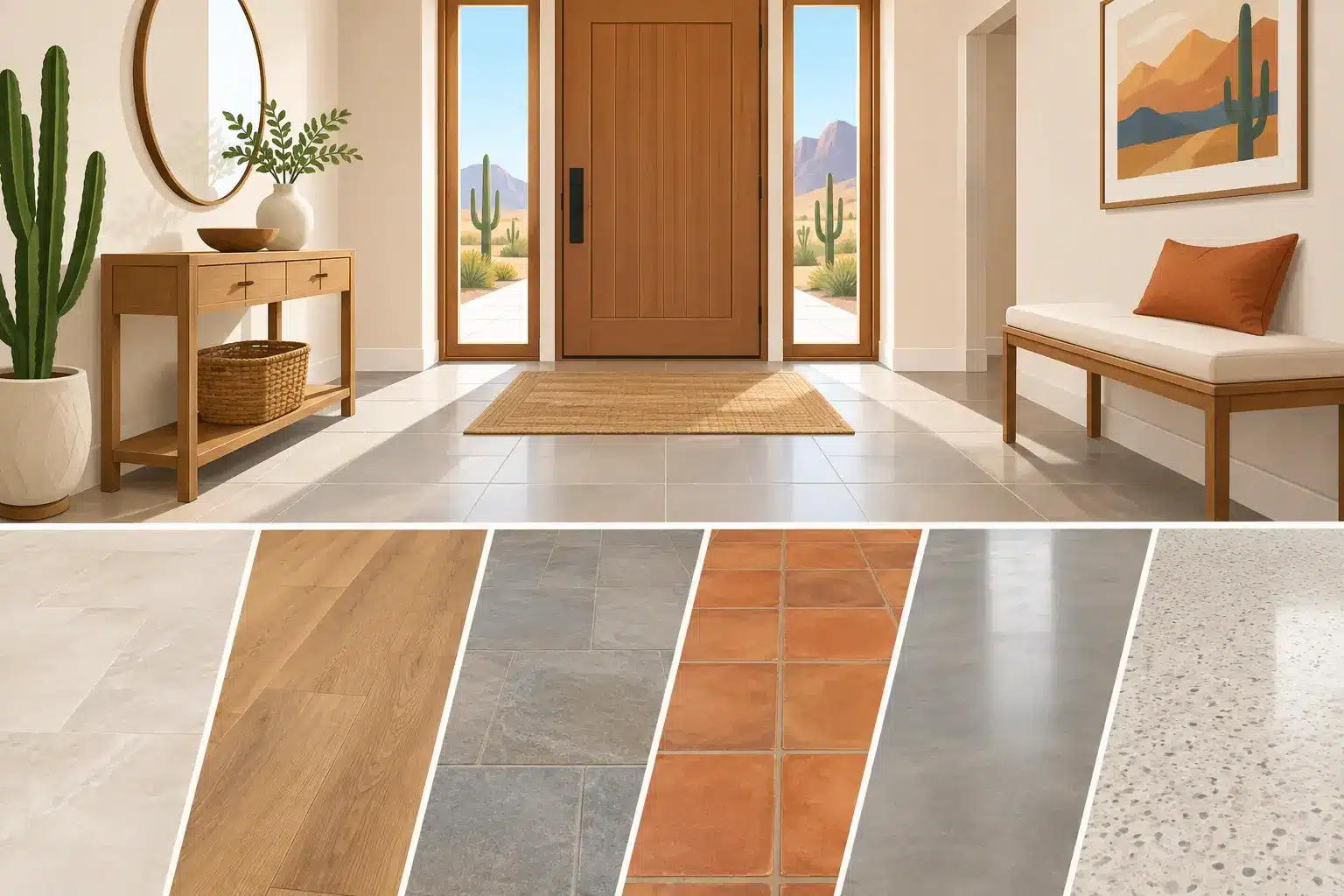
The most effective office designs often use more than one flooring type. For example, a reception area may use luxury vinyl for a polished, easy-care entrance, while carpet tile in work areas helps control sound. Tile can handle the break room and restroom, where moisture resistance is more important than softness underfoot.
Premium Carpet Tile Stone and Wood, LLC helps Phoenix-area business owners compare commercial flooring options based on traffic, budget, design goals, and installation needs. Seeing samples in person and discussing the conditions at the job site can prevent expensive surprises later.
A good office floor should make the workplace easier to run, not harder to maintain. Choose materials that fit the people, the work, and the daily demands of the space, then invest in professional preparation and installation to help that decision last.



Leave A Comment