
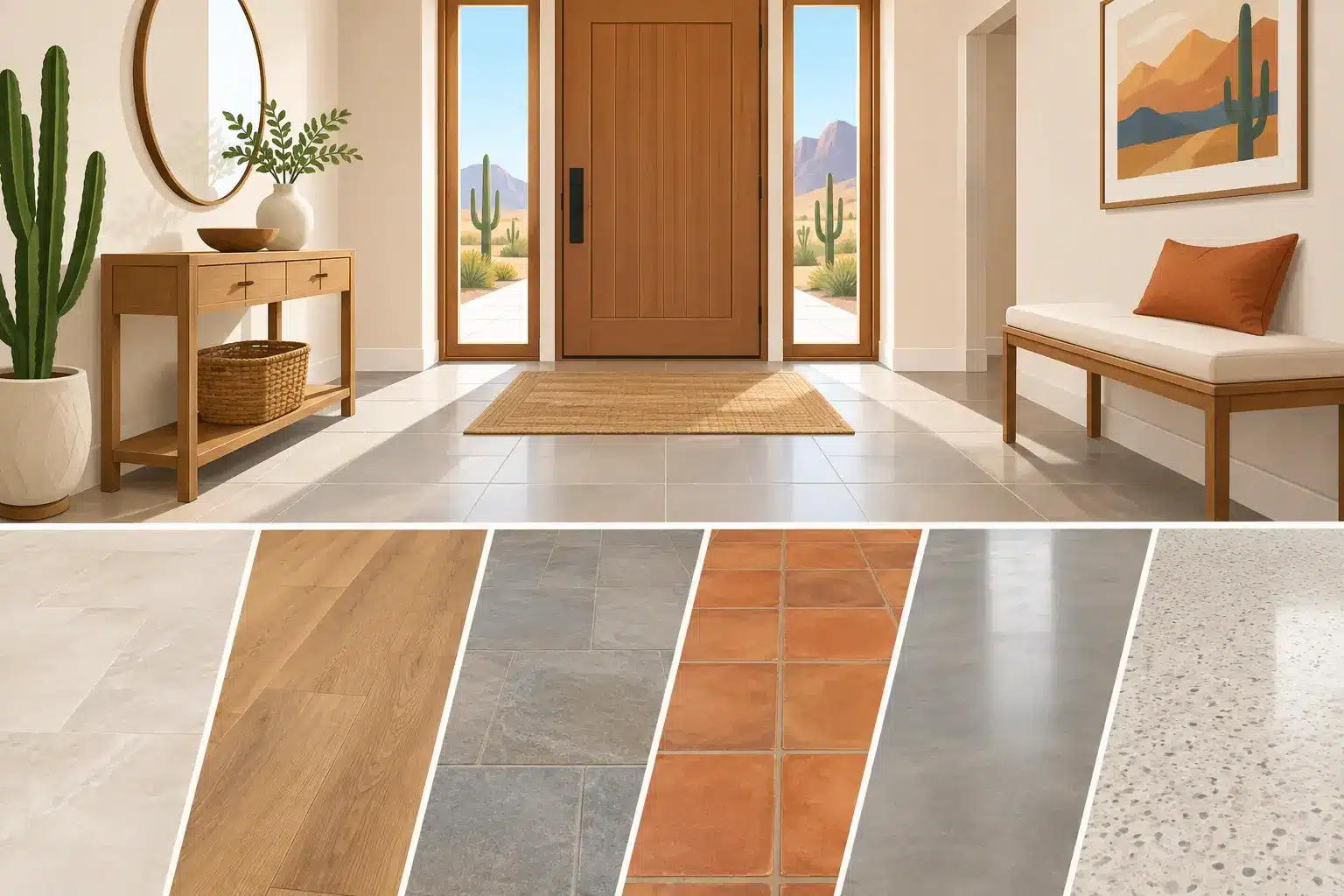
Your entryway is where Arizona dust, pool water, pet paws, work boots, and daily foot traffic first meet your floors. The best entryway flooring ideas balance that real-world wear with the look you want visitors to see when they walk in. For Phoenix and East Valley homes, material performance matters just as much as color or pattern.
A beautiful entry floor should be easy to clean, resistant to scratches and moisture, and durable enough for the busiest transition point in the house. The right choice depends on whether your entry opens directly outdoors, connects to a mudroom, receives strong sunlight, or needs to match existing flooring in nearby rooms.
Best Entryway Flooring Ideas for High-Traffic Homes
1. Porcelain tile for dependable everyday performance
Porcelain tile is one of the strongest choices for a front entry. It handles dirt, moisture, scratches, and frequent cleaning without demanding much maintenance. It also gives homeowners a wide range of looks, including stone, concrete, wood, and decorative patterns.
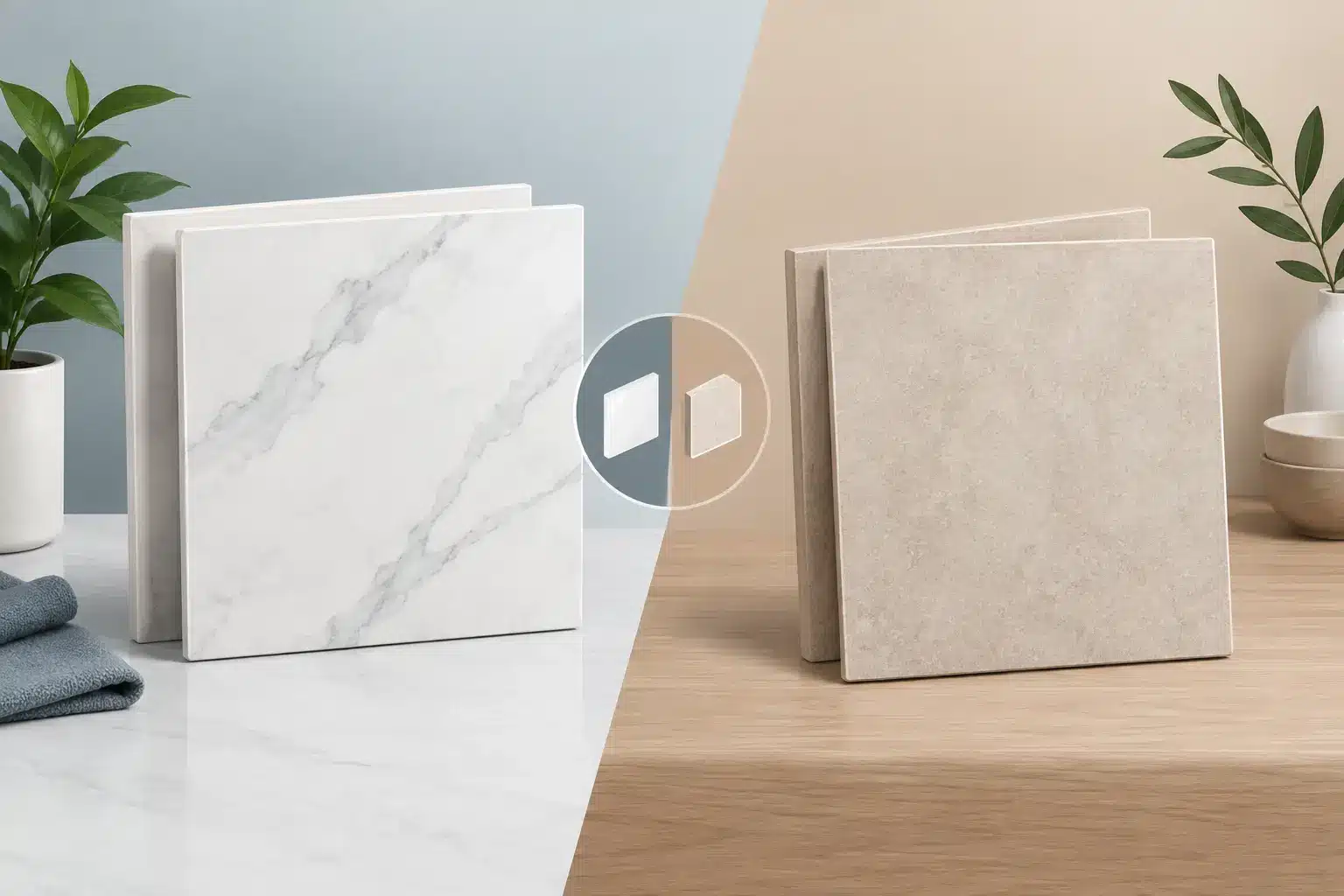
For an Arizona home, porcelain is especially practical because it stays cooler underfoot than many other materials. Choose a matte or textured finish rather than a highly polished surface if wet shoes, pool traffic, or pets are part of the picture. A light-to-medium grout color can also make routine dust less noticeable than bright white grout.
2. Natural stone for a custom, high-end entrance
Travertine, limestone, slate, and marble can make an entryway feel established and distinctive. Stone brings natural variation that manufactured materials cannot fully duplicate, and it can complement Southwest, Mediterranean, transitional, and luxury contemporary interiors.
The trade-off is maintenance. Natural stone generally needs proper sealing and may require more care than porcelain tile, particularly in a busy entry. Honed finishes are often a better fit than polished stone because they provide a softer look and can better disguise minor wear. Stone is a strong option when you want a premium first impression and are prepared to maintain it correctly.
3. Wood-look porcelain for warmth without the worry
Many homeowners want the welcoming appearance of hardwood near the front door but do not want to worry about tracked-in grit or water. Wood-look porcelain tile solves that problem. It offers the visual warmth of oak, walnut, or weathered wood while standing up to moisture and abrasion.
Long planks can make a narrow entry feel larger, especially when installed in the same direction as the adjoining hallway. Keep in mind that tile layouts require careful planning. A professional installer can help avoid awkwardly narrow cuts at walls and doorways, which makes a noticeable difference in the finished appearance.
4. Luxury vinyl plank for a softer step
Luxury vinyl plank, often called LVP, is a practical option for entryways that flow directly into an open living area. It is more comfortable and quieter underfoot than tile, and quality products provide strong scratch and water resistance. Many styles realistically resemble natural hardwood.
LVP works well for families who want one continuous floor from the entry through the main living spaces. Look for a durable wear layer and a product rated for the level of traffic your household sees. While luxury vinyl is water-resistant, it is still smart to use a quality mat at exterior doors and wipe up standing water promptly.
5. Luxury vinyl tile with a stone or concrete look
Luxury vinyl tile, or LVT, gives you another resilient option with the appearance of stone, cement, or ceramic tile. It is a useful choice for homeowners who prefer a modern large-format tile look but want a floor with more warmth and cushion.
This material can be especially effective in rental properties, condos, and busy households where easy replacement and straightforward maintenance matter. The best installation method depends on the subfloor and product type, so it is worth discussing glue-down versus floating options before making a final selection.
6. Large-format tile for a clean, contemporary entry
Large-format porcelain tiles create a streamlined look with fewer grout lines. That can make an entry feel more open and can reduce the amount of grout that needs routine cleaning. Neutral concrete looks, soft stone visuals, and warm sand tones are popular choices for contemporary Arizona homes.
Large tile does require a properly prepared, level surface. If the subfloor is uneven, tile edges can sit improperly or lead to lippage, where one edge is higher than the next. Installation expertise is not optional with this format. Proper preparation helps protect both the appearance and long-term performance of the floor.
7. Patterned tile for a memorable focal point
A patterned tile entry can bring personality to an otherwise neutral home. Geometric patterns, subtle encaustic-inspired designs, and classic black-and-white combinations work particularly well in smaller foyers, where the floor can serve as a defined design moment.
This idea works best when the pattern supports the rest of the home rather than competing with it. If surrounding rooms have busy finishes, choose a restrained pattern with two or three tones. If the rest of the home is simple, a bolder entry tile can add character without overwhelming the space.
8. A tile inset to define the front door zone
If you have hardwood, laminate, or luxury vinyl throughout the main level, consider a tile inset directly inside the exterior door. This creates a durable landing zone for shoes, bags, and wet umbrellas while allowing the rest of the floor plan to remain continuous.
An inset can be rectangular, angled, or shaped to follow the entry architecture. The key is making the transition intentional. A clean border, a complementary grout color, and an appropriate transition profile will make the design look finished rather than patched together.
9. Hardwood for classic character in lower-exposure entries
Hardwood remains a beautiful choice for formal entries with limited direct exposure to the outdoors. It adds warmth and can create a cohesive look when the same hardwood continues into dining rooms, offices, or living spaces.
However, hardwood is not the lowest-maintenance option for a heavily used exterior entry. Sand and grit can scratch the finish, and repeated moisture exposure can cause problems over time. Use a substantial indoor-outdoor mat, place a runner inside the door, and consider a tile landing area if your front door sees frequent traffic.
10. Commercial-grade vinyl for offices and rental properties
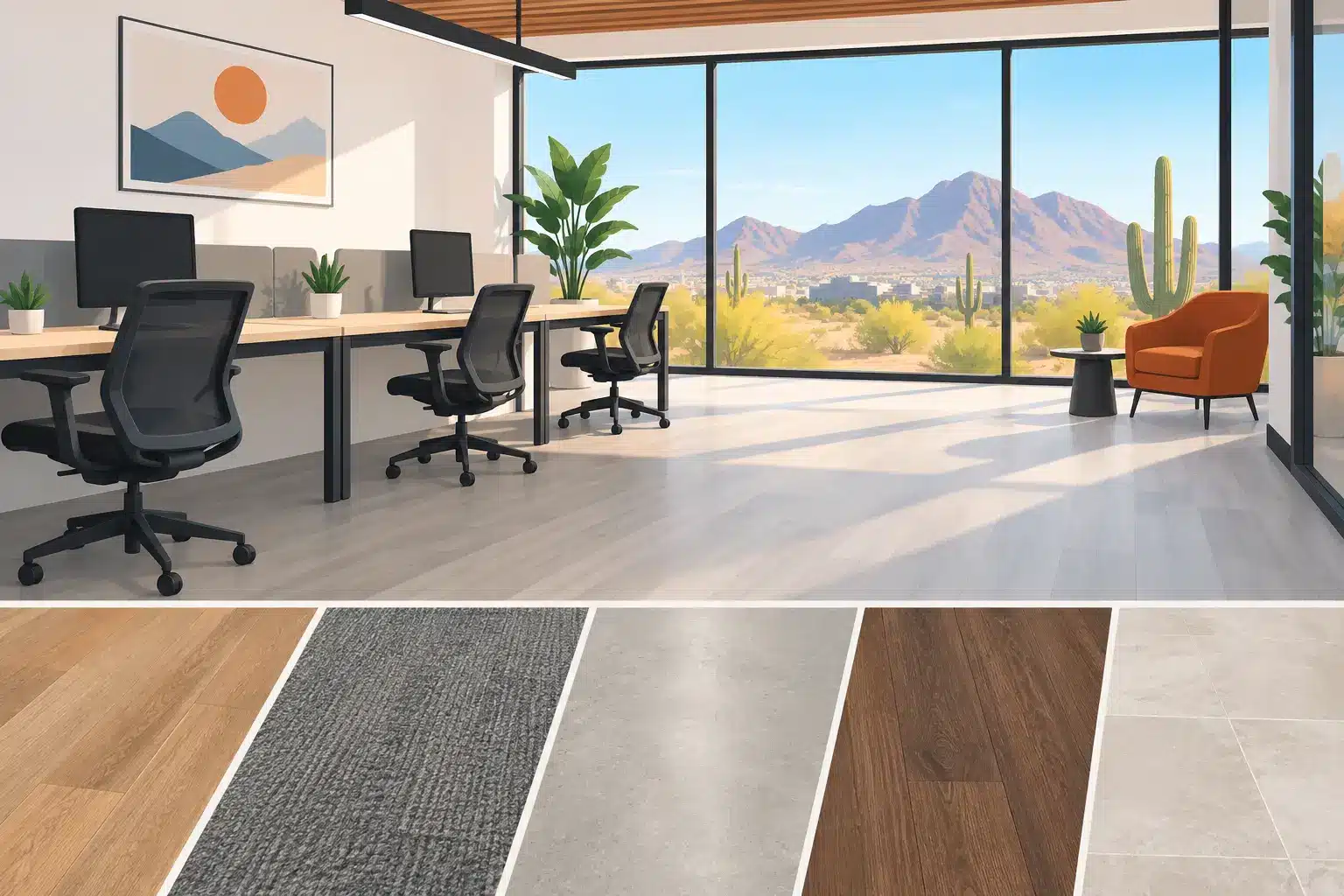
For commercial entries, rental units, and high-use spaces, commercial-grade vinyl flooring can offer a smart balance of cost, durability, and maintenance. Sheet vinyl and vinyl tile are available in a broad range of wood, stone, and abstract designs, making them useful for practical projects that still need a professional appearance.
This option is worth considering when cleaning speed, replaceability, and budget control are priorities. It may not carry the same premium feel as natural stone or porcelain, but the right product can perform very well in demanding settings.
11. Neutral mid-tone floors that hide Arizona dust
Color choice matters more than many buyers expect. Very dark floors can show pale dust, while very light floors may reveal dark grit, scuffs, and grout discoloration. Mid-tone beiges, greiges, soft browns, and mixed stone visuals are often the most forgiving choices for local conditions.
A floor with mild variation in its pattern can hide everyday debris better than a perfectly solid color. That does not replace regular cleaning, but it helps your entry look presentable between cleanings.
12. Textured finishes for safer footing
A slightly textured surface is a practical detail for any entry that gets wet. It provides better traction than glossy finishes, especially near a pool, in homes with children or older adults, or at commercial entrances. Textured porcelain, slate-look tile, and many luxury vinyl products offer good options without looking overly rough.
Ask to see full-size samples under your home’s lighting. A finish that looks subtle in a showroom may read differently in bright natural light, and a sample lets you compare color with your walls, door, cabinetry, and existing flooring.
How to Choose the Right Entryway Floor
Start with the traffic pattern. A rarely used formal front door has different needs than a main entrance used by a large family, pets, and guests every day. Next, consider what is immediately outside the door. Gravel landscaping, pool decking, dirt, or a covered porch will affect how much moisture and debris reaches the floor.
Then consider transitions. Your entry flooring should work visually and physically with adjacent rooms. Matching every floor exactly is not always necessary, but colors and undertones should coordinate. A warm oak LVP next to cool gray tile, for example, can look disconnected unless there is a deliberate design element that ties them together.
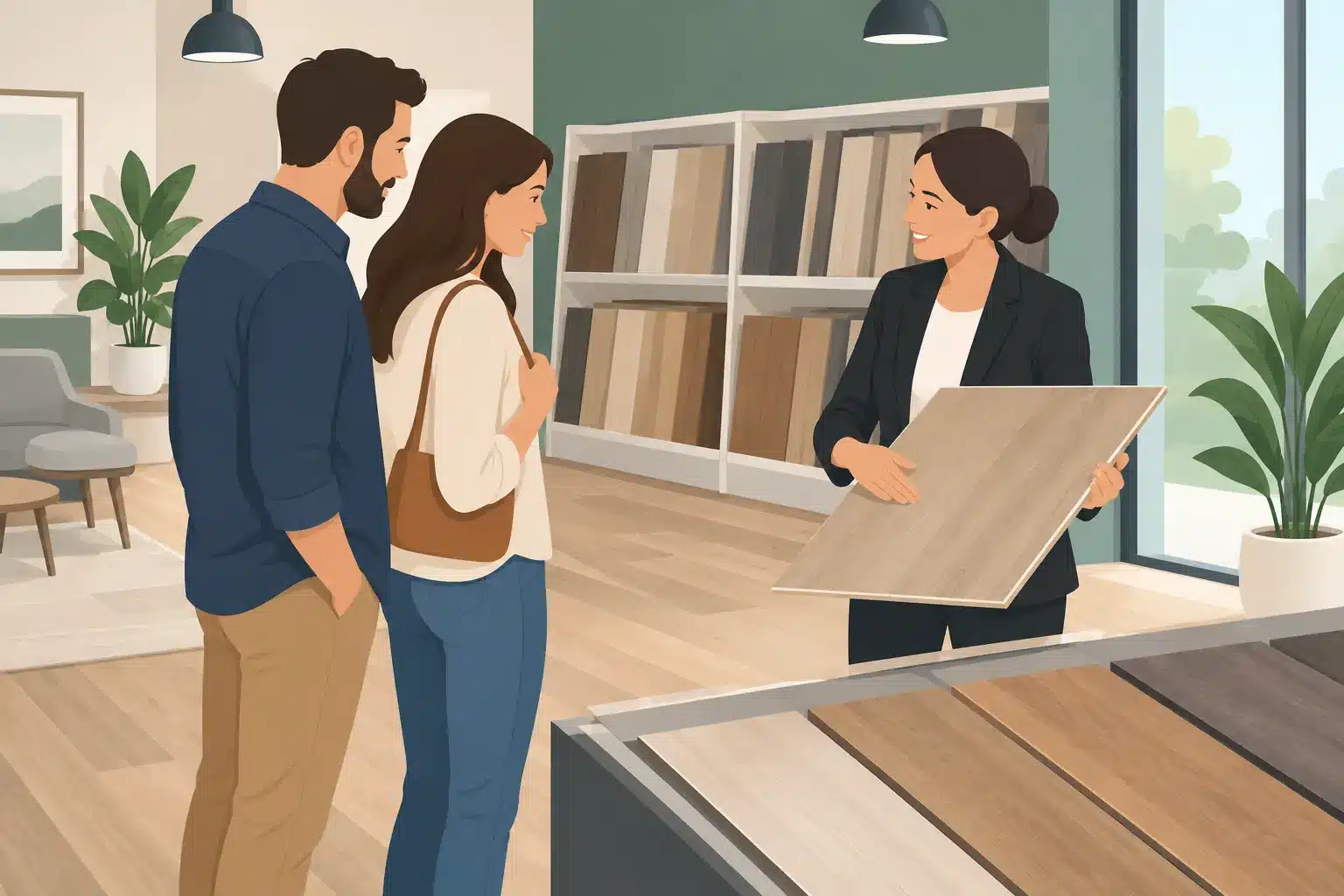
Finally, do not choose based on a small sample alone. Review larger samples, discuss subfloor conditions, and factor installation into the total project cost. At Premium Carpet Tile Stone and Wood, LLC, homeowners and property owners can compare materials with experienced local guidance and schedule a free in-home estimate before committing to a final selection.
The best entry floor is the one that fits how you actually live: durable enough for the daily mess, comfortable with your budget, and attractive enough to make coming home feel like an upgrade.


Leave A Comment