
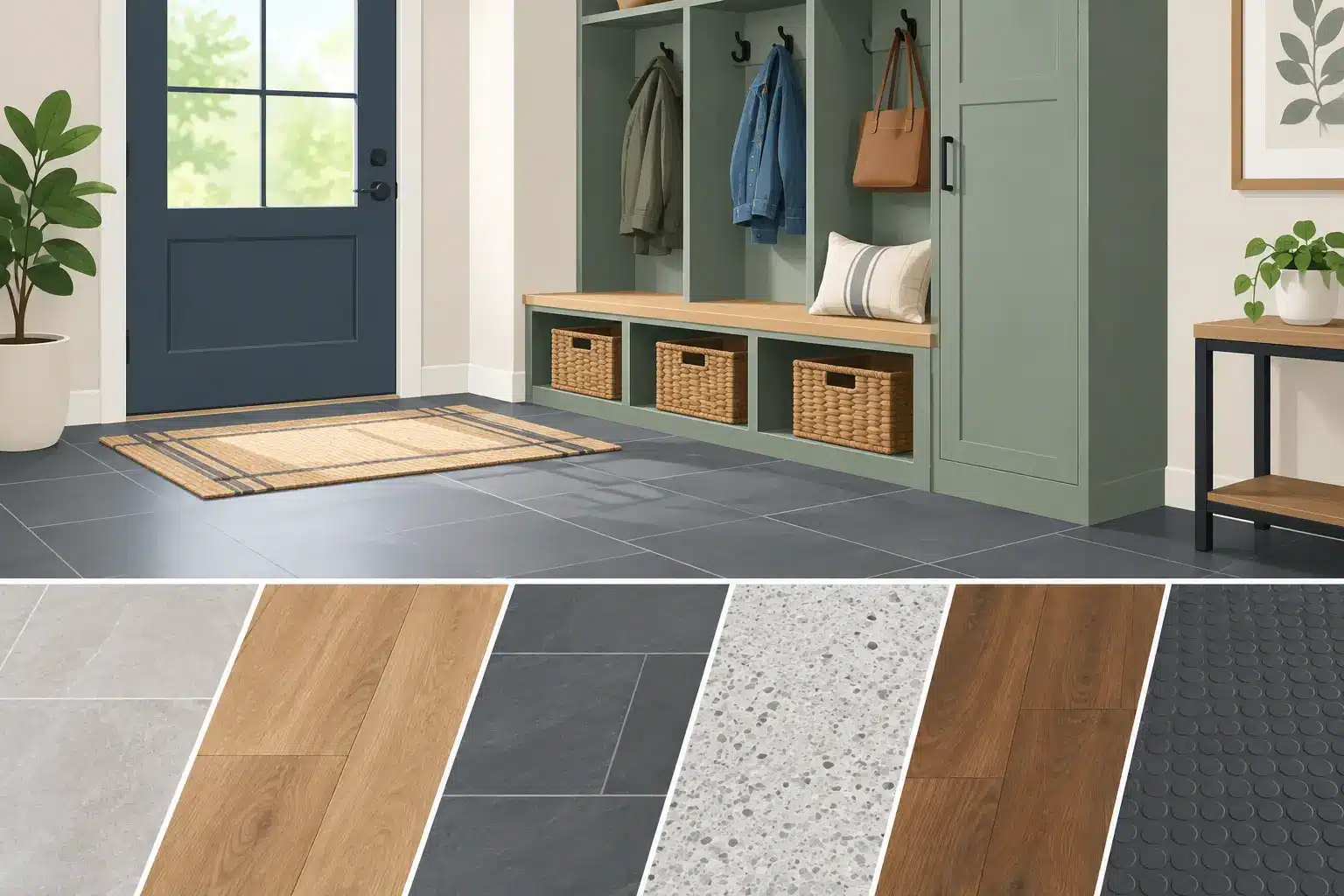
A mudroom floor earns its keep every day. It handles dusty shoes, pet paws, dripping umbrellas, sports gear, grocery runs, and the occasional pool towel. The best mudroom flooring options should make that traffic easier to manage, not give you another surface to worry about.
For Phoenix and East Valley homes, a mudroom may be less about snow boots and more about a hardworking entry, laundry room, garage transition, or family drop zone. Dry desert dust can be abrasive, monsoon rain can arrive quickly, and outdoor living often means more foot traffic moving between the yard and the house. The right material needs to be durable, simple to clean, and suited to the way your household actually uses the space.
What a Mudroom Floor Needs to Handle
Before choosing a color or pattern, consider the job the floor will perform. Mudrooms need resistance to moisture, scratches, dirt, and frequent cleaning. They should also provide secure footing when shoes or paws are wet.
Maintenance matters just as much as durability. A floor that looks great but shows every footprint can become frustrating in a high-traffic entry. For most households, the strongest choice is a material with a protective finish, low water absorption, and a visual texture or pattern that does not highlight every bit of dust.
Comfort and budget are part of the decision, too. Tile and stone can last for decades, while luxury vinyl may offer a warmer, more economical solution. The best answer depends on whether the mudroom is a small entryway, a large laundry area, or a direct connection to a garage or backyard.
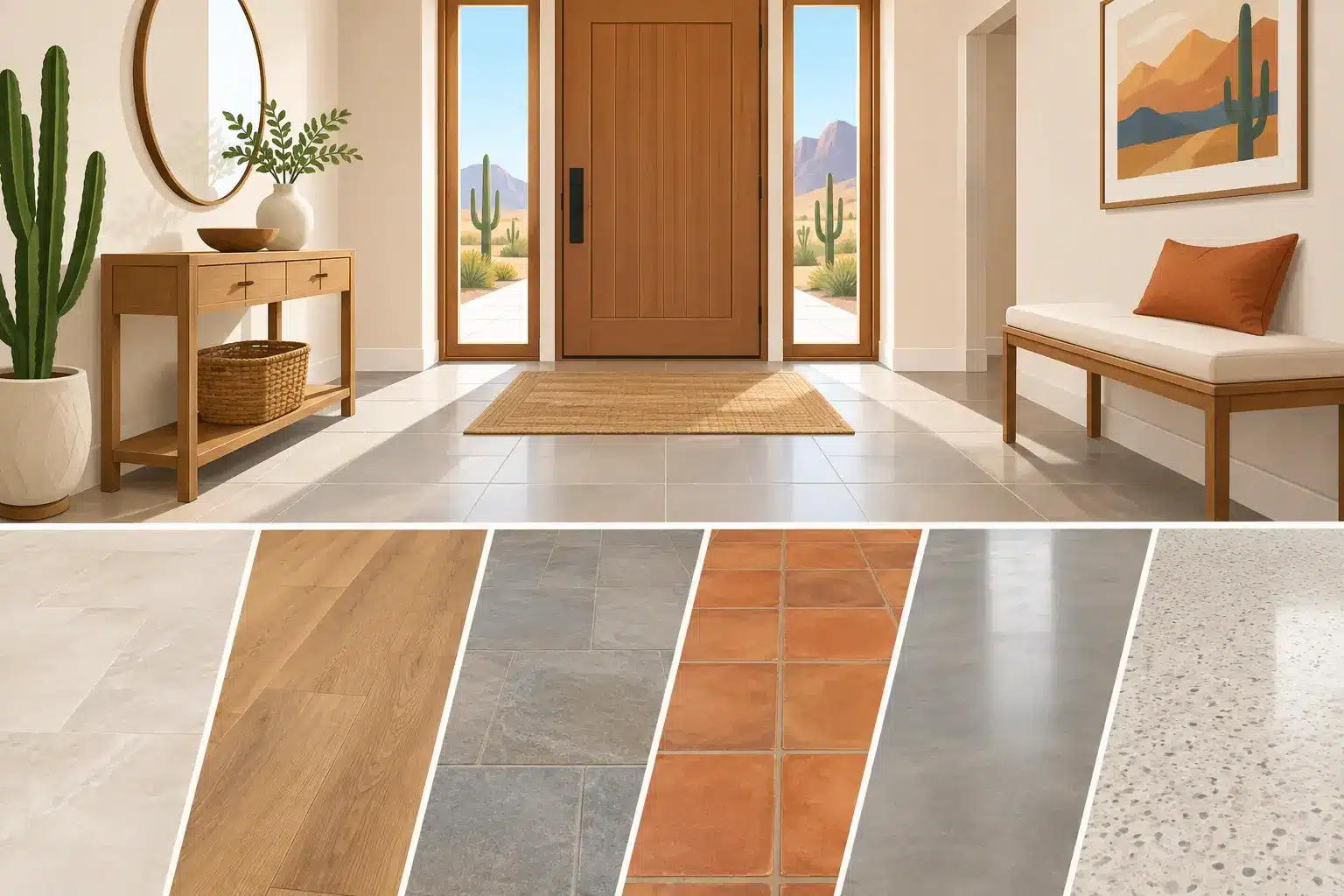
Best Mudroom Flooring Options Compared
Porcelain Tile: Best Overall for Lasting Performance
Porcelain tile is one of the most reliable choices for a mudroom. It is highly resistant to water, stains, scratches, and everyday wear. Unlike more porous materials, quality porcelain does not absorb much moisture, which makes it well suited for wet shoes, pet bowls, and frequent mopping.
It also offers exceptional design flexibility. Wood-look porcelain can bring warmth to an entry without the maintenance concerns of real hardwood. Stone-look, concrete-look, and patterned porcelain tiles can create a more tailored appearance while still standing up to busy family life.
For mudrooms, choose a matte or textured tile rather than a polished finish. Matte surfaces provide better traction and are more forgiving of dust and water spots. Grout selection matters as well. A mid-tone grout usually hides daily soil better than bright white, and professional installation helps ensure the floor is properly prepared and sealed where needed.
The trade-off is comfort. Tile feels harder and cooler underfoot than vinyl or wood, though an area rug or runner can soften the space. It can also involve a higher upfront installation cost, particularly if subfloor preparation is needed.
Luxury Vinyl Plank or Tile: Best for Comfort and Value
Luxury vinyl plank, often called LVP, and luxury vinyl tile are practical choices for homeowners who want water resistance, comfortable footing, and a broad range of styles. Quality vinyl products can replicate wood, stone, and tile looks while offering a softer, warmer surface underfoot.
This category works especially well in mudrooms connected to kitchens, hallways, or living areas where homeowners want the floor to continue from one room into the next. Many luxury vinyl products have wear layers designed to handle active households, pets, and regular cleaning.
Not all vinyl flooring performs the same way. Product thickness, wear-layer quality, installation method, and subfloor conditions affect the final result. A professionally selected and installed product will provide better stability and a more finished appearance than a bargain option chosen only by price.
Luxury vinyl is highly water resistant, but it is still wise to wipe up standing water promptly. If a mudroom has recurring water exposure from a leaking door, washing machine, or exterior drainage issue, address that source before installing any new floor.
Ceramic Tile: Best for Budget-Friendly Tile Style
Ceramic tile can be an excellent value when you want the benefits of tile without choosing porcelain. It resists spills, holds up well to normal foot traffic, and comes in a wide range of colors, sizes, and patterns.
For a smaller mudroom or laundry entry, ceramic tile can create a polished look at a manageable material cost. It is particularly appealing when the space does not receive the same level of heavy traffic as a main family entry or garage passage.
The key is selecting the right tile for the application. Some ceramic tiles are better suited to walls or light-duty areas, while others are rated for residential flooring. A flooring professional can help match the tile’s durability rating, finish, and size to your room and expected use.
Natural Stone: Best for a Distinctive, High-End Entry
Natural stone gives a mudroom character that manufactured materials cannot fully duplicate. Travertine, slate, limestone, and other stones have natural variation in color and texture, making each installation unique. For homeowners creating a premium entry or a home with a Southwest-inspired design, stone can be a strong visual choice.
Stone does require more attention than porcelain or luxury vinyl. Many types need periodic sealing to help resist stains and moisture, and some are more vulnerable to acidic cleaners or dropped objects. Honed or textured finishes are generally more appropriate for a mudroom than highly polished stone because they offer a more practical surface for daily use.
This is a material where expert guidance is valuable. The right stone depends on the room’s traffic, maintenance expectations, and whether the space opens directly to the outdoors. When selected and installed correctly, stone can provide long-term beauty and strong resale appeal.
Waterproof Laminate: Best for a Wood-Look on a Moderate Budget
Waterproof laminate has improved significantly and can be worth considering for a mudroom with controlled moisture exposure. It offers a realistic wood appearance, scratch resistance, and a firmer feel than luxury vinyl. For a home where the mudroom functions more as an organized entry than a wet utility room, it may fit the budget and design plan well.
Still, waterproof does not mean indestructible. Standing water can find its way into seams, edges, or gaps if it is left too long. This makes laminate a better match for a low-to-moderate moisture mudroom than a room that routinely sees wet towels, soaked shoes, or frequent spills.
Choose a product specifically rated for water resistance and follow installation requirements carefully. Expansion space, underlayment, and subfloor preparation all affect how well laminate performs over time.
Sealed Concrete: Best for Modern Utility Spaces
If a mudroom is built on a concrete slab, sealed or coated concrete may be a practical option. It can suit modern homes, garage-adjacent entries, workshops, and utility-focused spaces. Concrete is durable, easy to sweep, and can be stained, polished, or finished with a protective coating for a more intentional look.
Its limitations are similar to tile: it can feel hard and cool underfoot. Cracking is also possible as slabs move over time, although strategic joints and the right finish can make minor variation less noticeable. A quality sealer is essential to help protect against stains and make cleanup easier.
How to Choose the Right Mudroom Floor for Your Home
Start with the source of the mess. A front entry used by children and pets may benefit from porcelain tile or luxury vinyl with a textured, forgiving finish. A laundry room with occasional damp clothing may work well with either of those materials, while a garage entry that sees gravel, tools, and heavy traffic may call for tile or sealed concrete.
Then look at the surrounding rooms. If you want visual continuity with a kitchen or hallway, luxury vinyl can carry a coordinated wood-look surface through the home. If the mudroom is its own defined zone, tile or stone can create a durable transition that also adds design interest.
Color deserves practical consideration. Very dark floors can show light desert dust, while very light solid floors may show scuffs and tracked-in dirt. Mid-tone colors, natural variation, and subtle patterns are often the easiest choices for a Phoenix-area mudroom. Add a durable runner near the door and a low-profile mat outside to reduce grit before it reaches the flooring.
Get Professional Help Before You Commit
The material is only part of a successful mudroom floor. Moisture conditions, subfloor levelness, door clearances, transitions to adjoining rooms, and installation details all influence performance. A free in-home estimate can help identify those issues before materials are ordered.
Premium Carpet Tile Stone and Wood has served Phoenix and the East Valley for more than 30 years, helping homeowners compare flooring options based on real budgets, design goals, and daily use. Seeing samples in your home can make the difference between a floor that simply looks good and one that works well for years.
A mudroom should make arriving home easier. Choose a floor that can take the daily traffic, clean up without fuss, and still make the space feel like part of your home.



Leave A Comment