
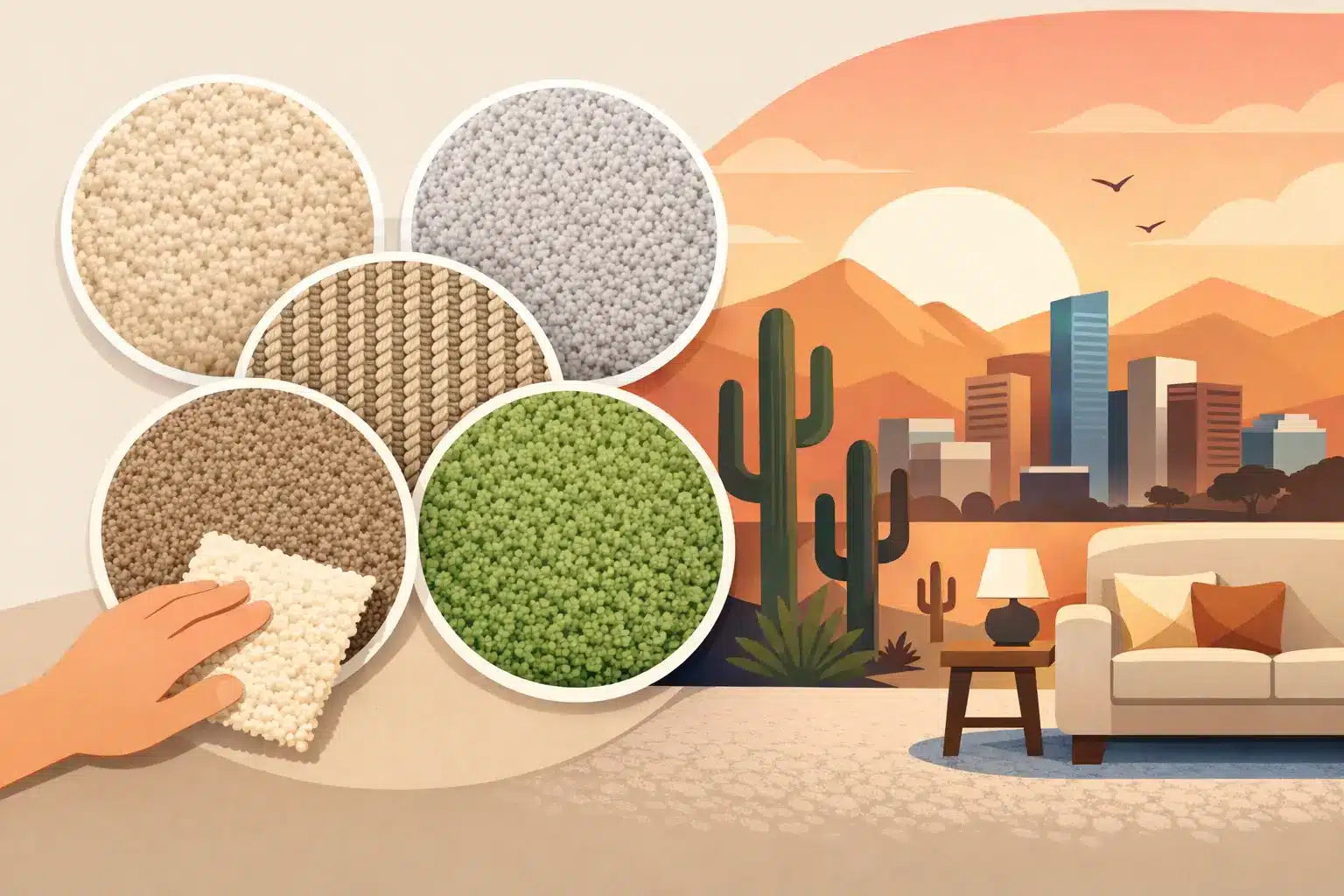
A carpet sample can look great under showroom lighting and still be the wrong choice for a busy family room, a rental property, or an office entrance. This carpet fiber types guide explains what each material does well, where it has limits, and how to choose a carpet that fits the way your Phoenix-area space is actually used.
Carpet fiber affects stain resistance, softness, appearance retention, price, and cleaning needs. It is one of the first decisions to make, but it is not the only one. Carpet density, pile style, cushion, color, and installation quality also influence how the finished floor performs over time.
Carpet Fiber Types Guide: Start With How You Use the Room
Before comparing samples, consider traffic, pets, children, sunlight, and the purpose of the room. A low-traffic bedroom can prioritize softness and value. A hallway, staircase, family room, or commercial office needs a fiber that can recover after repeated foot traffic.
For Arizona homes, it also helps to consider the dust and dry conditions that come with desert living. Regular vacuuming is essential for every carpet type. In rooms with strong direct sun, discuss color selection and window coverage as well. No fiber is completely immune to fading when exposed to intense sunlight for years.
A trusted flooring professional should also ask about the people using the space. A light-colored carpet in a formal living room has very different demands than a neutral carpet in a home with two dogs and teenagers.
Nylon: Best for Heavy Traffic and Long-Term Performance
Nylon remains one of the most dependable carpet fibers for active homes and commercial settings. Its biggest advantage is resilience. The fibers spring back well after furniture, foot traffic, and everyday use, helping the carpet maintain its texture and appearance.
Nylon is a strong choice for stairs, hallways, family rooms, offices, and rental properties where durability is a priority. Many nylon carpets receive stain and soil treatments, but buyers should understand that these treatments vary by product. A quality nylon carpet is often easier to maintain than a lower-grade alternative, especially when spills are addressed promptly.
The trade-off is cost. Nylon generally costs more than polyester or olefin, particularly in higher-quality styles with better density and warranties. For homeowners who expect to stay in the home for years, that added investment can make sense. For a high-traffic commercial space, it is frequently one of the most practical options.
Polyester: Soft Feel and Strong Stain Resistance
Polyester is popular because it feels soft underfoot and naturally resists many water-based stains. It is often available in a wide range of colors and can offer excellent value for bedrooms, low-to-moderate traffic living areas, and budget-conscious updates.
Many polyester carpets are made with recycled content, which appeals to buyers looking for a more environmentally conscious material option. It also holds color well, making it a good fit for homeowners who want rich tones or a softer, more luxurious look without moving into wool pricing.
Its limitation is resilience. Polyester may crush or mat sooner than nylon in heavily traveled areas, especially if the carpet has a lower density or taller pile. It can still be a smart purchase, but it is better suited to spaces where comfort and stain resistance matter more than maximum wear performance.
Triexta: A Practical Middle Ground for Families
Triexta is a newer synthetic fiber that combines softness, stain resistance, and better resilience than many traditional polyester options. It is commonly considered by families who want a comfortable carpet that can handle everyday spills, pets, and active household use.
Because triexta has inherent stain resistance, rather than relying only on a surface treatment, it can be a reassuring option for dining areas, bedrooms, playrooms, and family rooms. It also tends to feel noticeably soft, which makes it appealing in spaces where people sit or play on the floor.
Triexta is not automatically the right answer for every project. Product construction still matters. A dense, well-made polyester carpet can outperform a loosely constructed triexta carpet, and nylon may still be the better choice for very demanding commercial traffic. Compare the actual sample, face weight, density, pile height, and warranty instead of selecting by fiber name alone.
Olefin: Useful for Moisture and Commercial Applications
Olefin, also called polypropylene, is highly resistant to moisture and many stains. It is often used in looped Berber-style carpets, indoor-outdoor products, and certain commercial carpet applications. Its color is built into the fiber, which gives it strong resistance to fading and bleaching.
This fiber can be a good value in basements, covered outdoor spaces, low-traffic rooms, and select commercial settings. In Phoenix, it may also appeal to buyers who want a practical carpet for a patio enclosure or other area where moisture resistance is helpful.
However, olefin is less resilient than nylon. It can flatten under heavy traffic and may attract oily soil, which requires proper cleaning methods. It is generally not the best choice for a busy main hallway or a family room with constant activity unless the specific carpet construction is designed for that use.
Wool: Natural Comfort With Premium Care Requirements
Wool is a natural carpet fiber valued for its rich appearance, comfort, and ability to help regulate indoor humidity. It has a distinctive texture that works beautifully in custom homes, formal spaces, and projects where natural materials are a central design goal.
Quality wool carpeting can be exceptionally durable, but it requires attentive care. It is more susceptible to some stains than synthetic fibers, and professional cleaning methods matter. Wool also comes at a premium price, making it a better fit for buyers who value its natural character and are prepared for the maintenance involved.
For many Phoenix homeowners, wool works best in lower-traffic bedrooms, formal living rooms, and other spaces where its appearance can be appreciated without constant exposure to pets, spills, or muddy shoes.
Fiber Is Only Part of the Carpet Decision
Two carpets with the same fiber can perform very differently. A carpet’s density tells you how tightly packed its fibers are. Higher density generally supports better wear performance and a fuller feel. Twist level matters in textured and frieze styles because tightly twisted fibers can better hide footprints and vacuum marks.
Pile style also affects the look and maintenance. Cut pile carpet feels soft and works in many residential spaces. Loop carpet can provide a clean, tailored appearance and strong durability, but pet claws may snag some loop styles. Patterned carpet can help disguise traffic and add visual interest in offices, hallways, and larger rooms.
Do not overlook carpet cushion. The right pad supports the carpet, improves comfort, and can help extend its service life. A cushion that is too soft or too thick for the selected carpet may create problems, so the pad should be chosen to match the manufacturer’s requirements and the room’s use.
Choosing the Right Fiber for Your Project
For a busy household with children or pets, nylon or triexta often provides the best balance of performance and maintenance. For a guest room or value-focused bedroom update, polyester can provide softness and strong stain resistance at a more accessible price. For commercial spaces, rental turnovers, and high-traffic areas, nylon deserves close consideration because it holds up well over time.
The best choice depends on more than a square-foot price. A less expensive carpet that wears out early can cost more in the long run than a better-performing option installed once. On the other hand, there is no reason to pay for commercial-grade durability in a lightly used bedroom if a comfortable, well-made polyester fits the project better.
Bring room measurements, photos, and a clear picture of how the space is used when you shop. Seeing larger samples next to cabinetry, paint, and furniture can prevent costly color surprises. At Premium Carpet Tile Stone and Wood, LLC, homeowners and commercial buyers can compare options with experienced guidance, wholesale pricing, and professional installation support.
The right carpet should make daily life easier, not create another surface to worry about. Choose a fiber that matches the traffic in the room, invest in quality construction where it counts, and let the final decision be guided by how you want the space to perform for years ahead.



Leave A Comment