
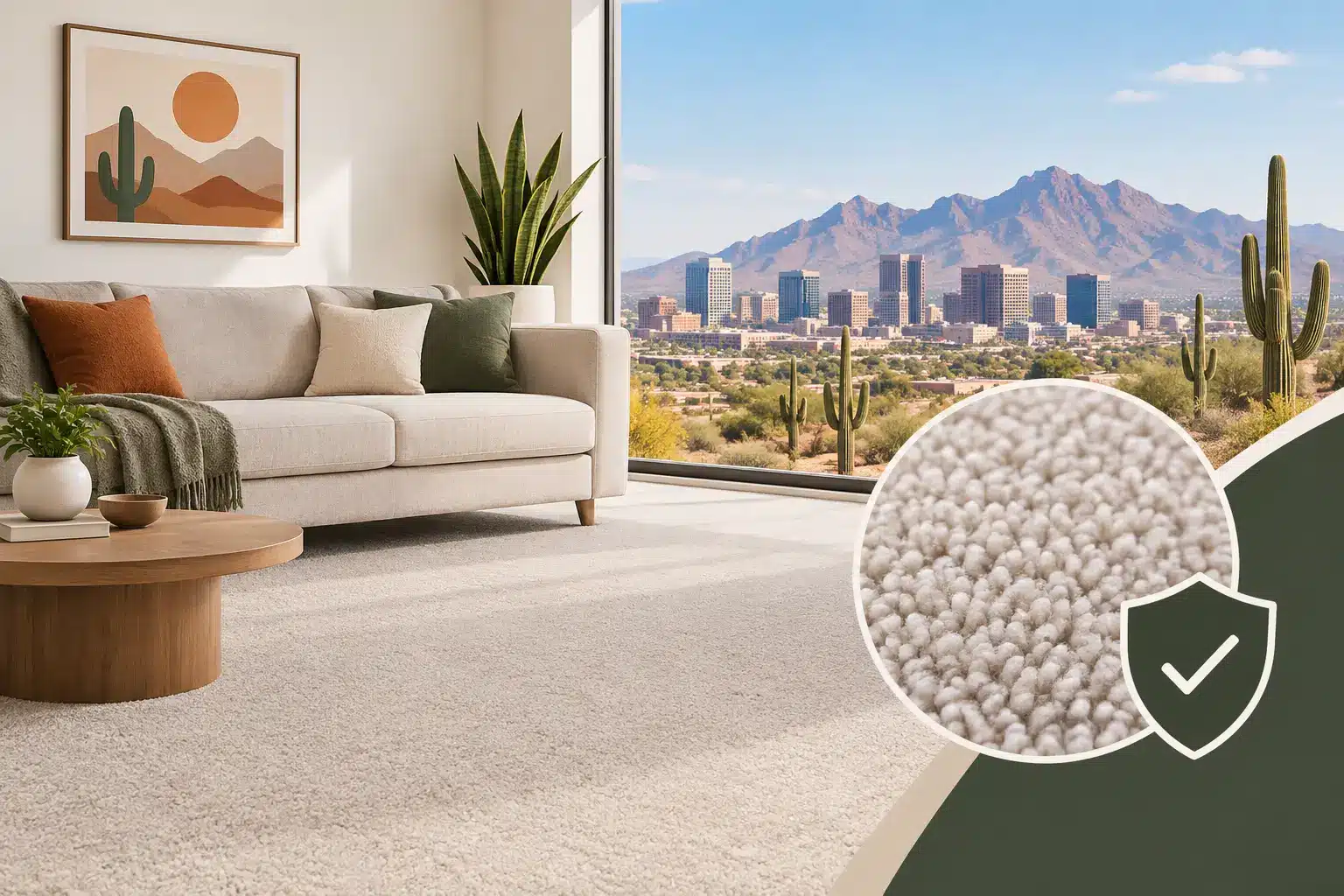
A carpet can look great under showroom lighting and still be the wrong choice for a busy Phoenix household. Shaw carpet quality is a strong consideration for homeowners, rental-property owners, and commercial buyers because the brand offers a wide range of fibers, constructions, colors, and performance levels. The key is selecting the right Shaw product for the room, traffic level, and budget rather than assuming every carpet in the line will perform the same way.
For more than 30 years, Premium Carpet Tile Stone and Wood has helped East Valley customers make that distinction. A carpet for a quiet primary bedroom has very different requirements than flooring for a family room with pets, a rental turnover, or a busy office. Understanding where Shaw excels, and where specifications matter most, makes the decision much easier.
What Shaw Carpet Quality Means in Practice
Shaw is one of the largest flooring manufacturers in the United States, with product lines ranging from value-oriented residential carpet to premium soft surfaces and commercial carpet tile. That range is a benefit, but it also means “Shaw quality” is not one single standard. The fiber, face weight, twist level, backing, and warranty can vary substantially between collections.
At the higher end, Shaw carpets can offer excellent softness, stain resistance, color retention, and long-term appearance. Entry-level options can be a sensible value for bedrooms, lower-traffic areas, or rental properties where budget is a major factor. The most useful question is not whether Shaw makes good carpet. It does. The better question is whether a specific product is built for how you will use it.
For Phoenix-area homes, that often means considering tracked-in dust, dry climate conditions, children, pets, pool traffic, and intense sunlight coming through large windows. Carpet is generally best suited for bedrooms, upstairs spaces, media rooms, and other areas where warmth and sound control matter. For high-moisture entries or rooms directly connected to a pool area, luxury vinyl, tile, or stone may be the more practical choice.
Fiber Makes the Biggest Difference
The carpet fiber affects how the floor feels, resists stains, cleans up, and wears over time. Shaw offers carpets in several major fiber categories, each with a different purpose.
Nylon for long-term wear
Nylon is widely regarded as one of the best-performing carpet fibers for active homes. It has strong resilience, meaning the fibers are better able to bounce back after foot traffic and furniture weight. A quality nylon Shaw carpet is often a smart investment for stairs, halls, family rooms, and other areas where traffic patterns are likely to show.
Nylon can cost more than polyester, but that added cost may make sense when replacing carpet frequently would be more expensive and disruptive. Look closely at the product’s stain treatment and warranty, particularly if pets or young children are part of the picture.
Polyester for softness and value
Polyester carpet is known for a soft feel and strong inherent stain resistance. It is a popular choice for bedrooms and lower-traffic rooms, especially when homeowners want a comfortable surface at a manageable price point. Many Shaw polyester styles provide attractive color options and a plush appearance.
The trade-off is resilience. In heavily used areas, some polyester carpets may flatten or mat sooner than a comparable nylon product. That does not make polyester a poor choice. It simply means matching it to the right room is important.
Triexta for stain resistance and active households
Triexta is another performance-focused synthetic fiber found in many residential carpet options. It is often selected for homes that need softness along with dependable stain resistance. For households with pets, kids, or frequent entertaining, triexta can be worth comparing alongside nylon and polyester.
As with any material, construction still matters. A well-built carpet with appropriate density and padding will usually perform better than a less substantial product, even when both use the same fiber type.
Construction Details That Affect Shaw Carpet Performance
Carpet samples can be deceiving because every piece looks full and fresh when it is new. The specifications behind the sample provide a more reliable picture of how it may perform after years of use.
Face weight is one consideration. It refers to the amount of fiber in the carpet pile, but heavier is not automatically better. A lower face weight carpet with a tight, dense construction can outperform a heavier but looser style. Density, pile height, and fiber twist all work together.
For a textured residential carpet, a tighter twist often helps reduce the visible effects of daily traffic. Patterned loop and cut-loop styles can also do a good job disguising footprints, vacuum marks, and minor wear. Plush carpet can feel especially luxurious, but it typically shows shading and traffic patterns more readily. That may be completely acceptable in a formal room or primary bedroom, but it is worth considering before installing it throughout a busy home.
Color deserves the same level of thought. Very light carpet may make a room feel open, yet it can show dirt faster near exterior doors and hallways. Very dark colors can reveal lint, pet hair, and light-colored dust. A mid-tone neutral with texture or subtle pattern is often one of the most forgiving choices for active Phoenix homes.
Why Padding Is Part of Shaw Carpet Quality
Even an excellent carpet will not perform at its best over the wrong cushion. Carpet padding supports the pile, affects underfoot comfort, and can help the flooring recover from regular use. It also influences how the carpet wears over time.
Homeowners sometimes choose the thickest pad available assuming it is the best option. In reality, the correct choice depends on the carpet and the installation area. Padding that is too thick or too soft can allow certain carpets to flex excessively, which may affect appearance and wear. A quality rebond pad or another approved cushion with the proper density is often a practical option for residential installations.
For commercial settings and rental properties, the right backing system and installation method may matter just as much as cushion. Shaw commercial carpet tile can be a useful solution for offices, corridors, and spaces that need easier spot replacement. If one area becomes damaged or badly stained, a tile can often be replaced without removing the entire floor.
Warranties Are Helpful, but Read Them Carefully
Shaw offers warranties on many products, including coverage that may address stain resistance, texture retention, pet stains, soil resistance, or manufacturing defects. These protections can add confidence, but they should not be treated as a substitute for selecting the right carpet.
Warranty terms vary by collection and may require proper installation, approved padding, regular cleaning, and reasonable maintenance. They also have limits. A texture-retention warranty does not mean a carpet will look identical after years of traffic, and a stain warranty may exclude certain substances or conditions.
Before buying, ask to see the specific warranty for the style under consideration. It is especially useful to compare coverage across two similar-looking products with different prices. The more expensive option may offer a stronger fiber, better construction, or more meaningful long-term protection.
Choosing the Right Shaw Carpet for Your Space
A productive carpet consultation starts with the room, not the color. Consider how people move through the space, whether shoes are commonly worn indoors, whether pets use the room, and how long you plan to keep the flooring. A homeowner preparing to stay in the house for 10 years may choose differently from an investor updating a rental before listing it.
For bedrooms, comfort and appearance may be the priorities, making a soft polyester or triexta carpet a reasonable choice. For stairs, hallways, and family rooms, a more resilient nylon or a tightly constructed textured style may offer better value over time. For offices and commercial interiors, carpet tile or a low-profile commercial broadloom product can support durability, maintenance, and professional appearance.
Bring home samples whenever possible. Look at them in morning and afternoon light, next to wall colors and furniture, and in the exact room where the carpet will be installed. Phoenix sunlight can change how a neutral color reads from one part of the day to another.
Installation Protects Your Investment
Proper installation is one of the most overlooked parts of carpet performance. Accurate measuring reduces unnecessary seams and material waste. Correct stretching helps prevent ripples. Seam placement, transitions to hard surfaces, and stair work all affect how finished flooring looks and functions.
A professional installer can also identify subfloor concerns, existing moisture issues, or uneven areas before they become visible problems. This is particularly valuable in remodels, where older flooring removal may reveal conditions that were not apparent during initial planning.
The best Shaw carpet is the one that fits your lifestyle, your room, and your expectations for maintenance. Comparing real samples and specifications with an experienced flooring professional can help you choose a floor you will still be happy to walk on years from now.



Leave A Comment