
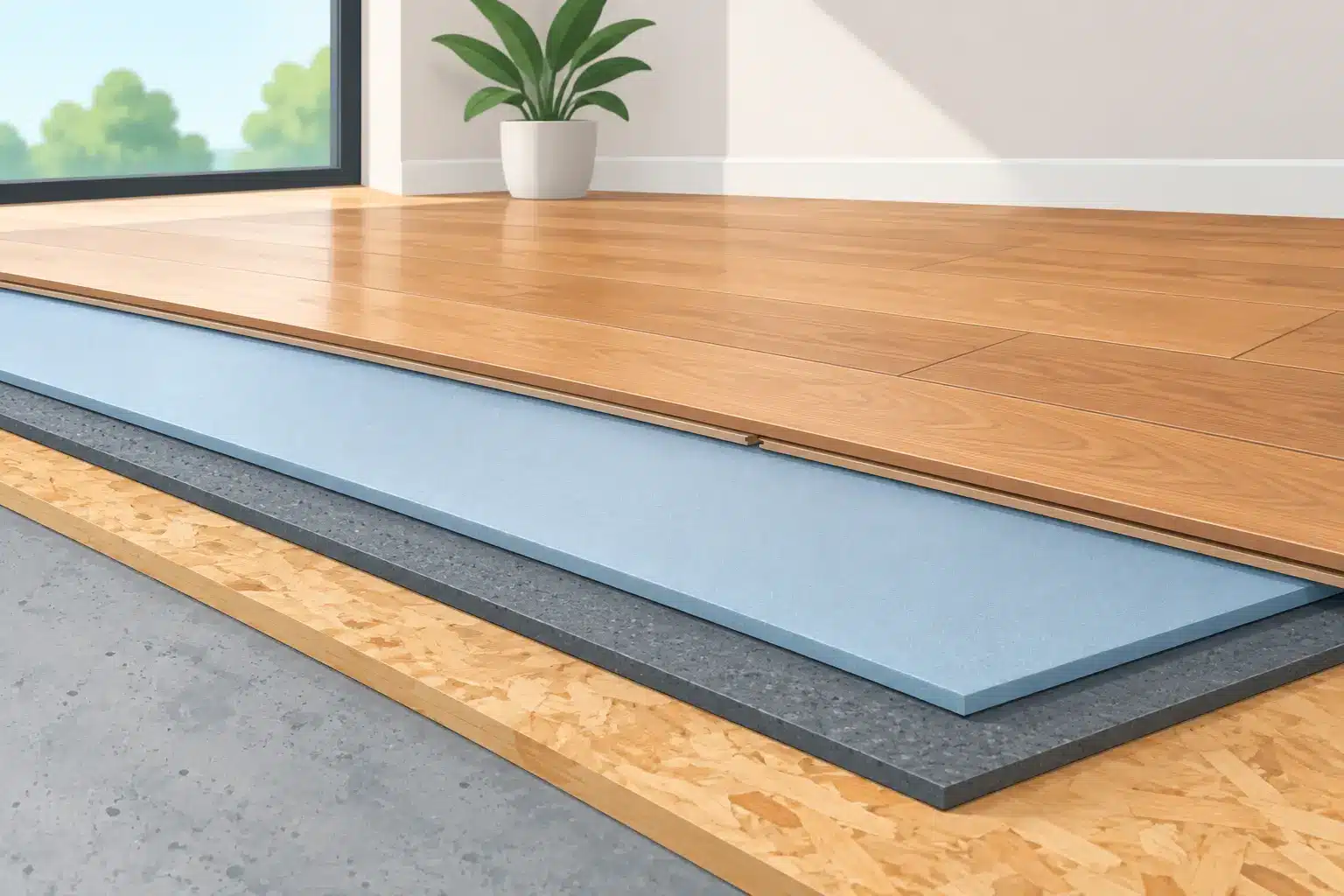
A beautiful new floor can still feel hollow, sound loud, or develop problems early if the layer beneath it is wrong. Flooring underlayment is often out of sight once installation is complete, but it can have a major effect on comfort, moisture control, noise, and the long-term performance of your investment.
For Phoenix and East Valley homes, the right choice starts with more than the flooring style you like. Your existing subfloor, whether the project is over concrete or wood, the room’s use, the product manufacturer’s requirements, and local moisture conditions all matter. The best underlayment is not automatically the thickest or most expensive one. It is the one designed for the floor you selected and the conditions below it.
What Flooring Underlayment Does
Underlayment is the material installed between the subfloor and the finished flooring. Depending on the material, it may provide cushioning, help reduce sound, smooth minor subfloor imperfections, manage moisture vapor, or support a proper installation.
It is not the same thing as a subfloor. The subfloor is the structural surface below your finished floor, typically concrete in many Arizona homes or plywood and OSB in raised-floor construction. Underlayment is an added layer that serves the flooring system. In tile projects, the comparable layer may be cement backer board or an uncoupling membrane rather than a soft roll of foam.
This distinction matters because an underlayment cannot correct a failing or severely uneven subfloor. If a concrete slab has high spots, cracks, moisture concerns, or an uneven surface, those conditions need to be evaluated and addressed before the new floor goes down.
The Right Underlayment Depends on the Floor
There is no universal underlayment that works equally well under every product. Choosing based on the floor type first helps avoid unnecessary cost and installation issues.
Luxury Vinyl Plank and Vinyl Tile
Many luxury vinyl plank and vinyl tile products are designed to install directly over a properly prepared subfloor. Adding a soft, thick pad under click-lock vinyl can allow too much movement at the locking joints, which may lead to damage or void the manufacturer warranty.
Some vinyl products permit a very thin, dense underlayment, particularly when sound reduction is needed in a multi-level property. Others include an attached pad and do not need another layer. The product instructions should guide the decision. For glue-down vinyl, a smooth, clean, flat surface is usually far more important than added cushioning.
Laminate Flooring
Laminate flooring commonly uses a foam or fiber underlayment. This layer can reduce the hollow sound often associated with floating floors and provides a slight amount of cushion underfoot. Over a concrete slab, laminate installations frequently require moisture protection as well, either through a separate vapor barrier or an underlayment with an integrated moisture barrier.
More padding is not always better. A laminate product needs stable support so its locking system can perform as intended. Using an underlayment that is too thick or too soft can cause movement and stress at the seams.
Engineered Hardwood and Wood Flooring
Wood flooring requires a careful look at moisture. Engineered hardwood is generally more dimensionally stable than solid hardwood, but both can be affected by moisture moving through a concrete slab or subfloor.
For floating engineered wood, an approved underlayment can provide sound control and vapor management. For glue-down or nail-down wood, the installation system is different, and the appropriate moisture-control product may be a liquid-applied barrier, membrane, adhesive system, or other approved method. The floor manufacturer’s installation specifications should always take priority.
In Arizona, dry outdoor air does not automatically mean a slab is ready for wood flooring. Concrete can hold and release moisture, especially in newer construction, ground-level homes, or areas with previous water exposure. Testing before installation is a practical safeguard.
Carpet
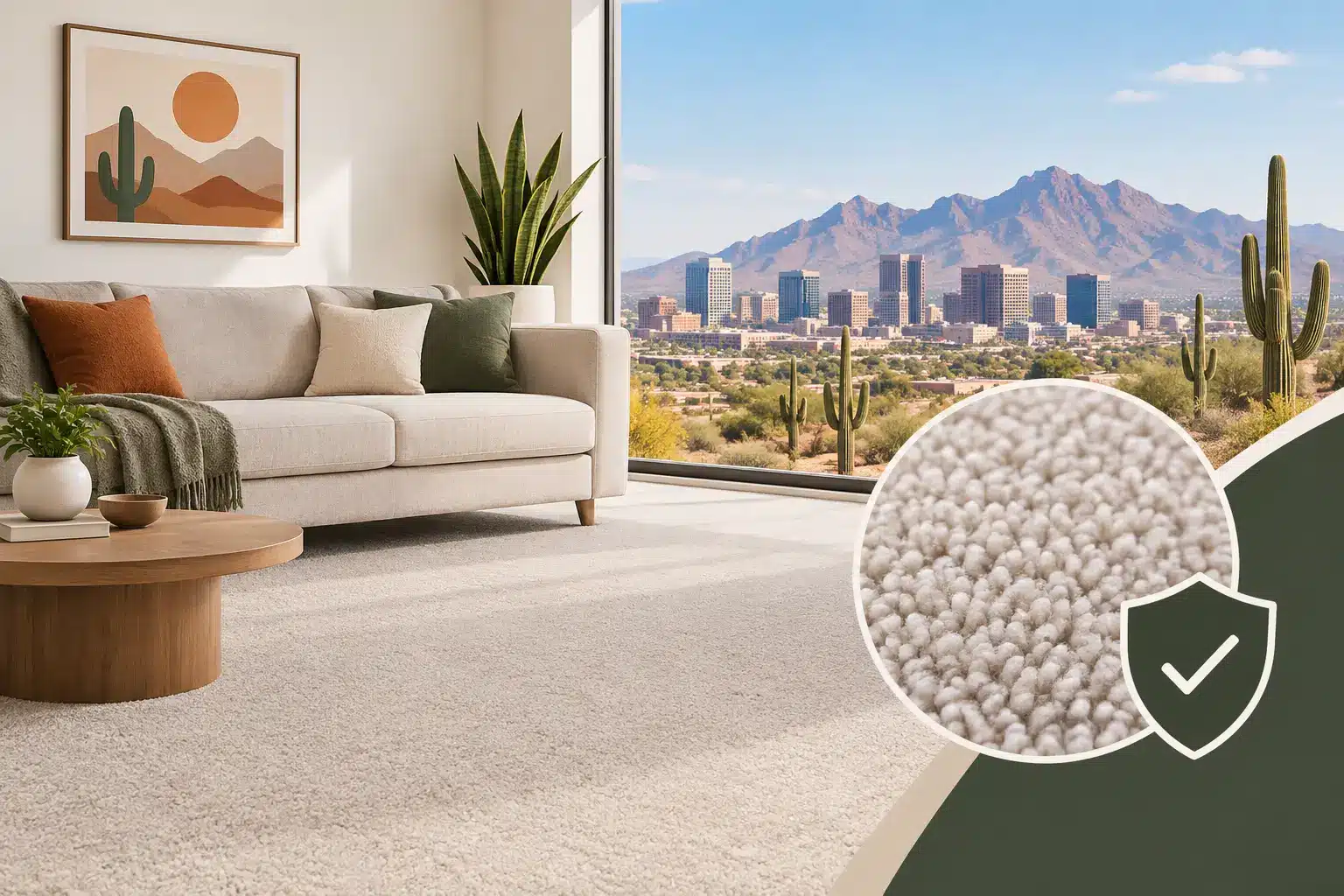
Carpet cushion, often called carpet pad, is the underlayment beneath carpet. It influences how the carpet feels, wears, insulates, and performs over time. Density and thickness both matter, but the best pad depends on the carpet style and how the room will be used.
A living room may benefit from a comfortable, supportive cushion, while stairs, hallways, rental properties, and commercial spaces often call for a denser pad that holds up under traffic. A pad that is too thick can reduce support and contribute to premature carpet wear. Quality carpet and the right cushion should be selected as a system.
Tile and Stone
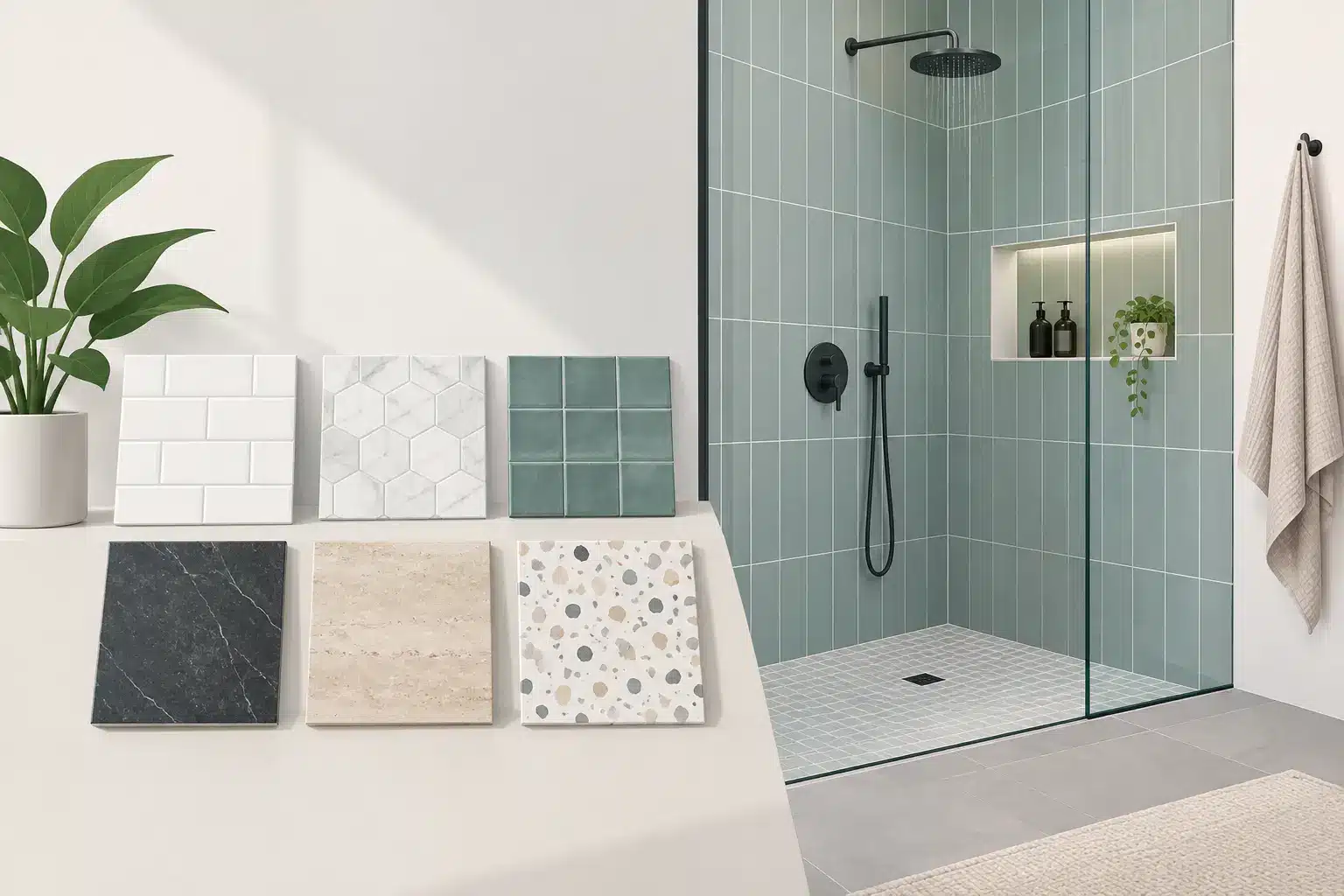
Tile and natural stone do not use foam flooring underlayment. They need a stable, properly prepared base that limits movement. Depending on the application, installers may use cement backer board, a crack-isolation membrane, an uncoupling membrane, or a mortar bed.
These materials serve different purposes. A crack-isolation membrane can help manage certain slab cracks, while an uncoupling membrane helps separate tile movement from movement below. Neither is a substitute for correcting major structural concerns or installing tile over a surface that is not flat enough for the selected tile size. Large-format tile, in particular, demands careful surface preparation.
Moisture Protection Is a System, Not a Guess
Moisture is one of the most misunderstood parts of a flooring project. A vapor barrier or moisture barrier can be necessary over concrete, but the correct product and method depend on the flooring type, moisture test results, and manufacturer requirements.
For example, a plastic sheet may be suitable beneath certain floating floors, but it is not an automatic solution for every wood, vinyl, or tile installation. Some products require a specific membrane, while others require a liquid moisture mitigation system or adhesive with defined performance ratings. Using a material that is not approved for the flooring can create a warranty issue and may trap moisture where it does not belong.
Bathrooms, kitchens, laundry rooms, and entry areas deserve additional attention because surface water is also part of the equation. Underlayment can assist with vapor management, but it does not make a floor waterproof. Proper transitions, perimeter sealing where required, and prompt cleanup still protect the finished floor.
Sound and Comfort: Know What You Are Trying to Improve
Homeowners often ask for a “soundproof” underlayment. In reality, underlayment can reduce some impact sound, such as footsteps, and may soften the sound of a floating floor. It will not eliminate voices, traffic noise, or noise traveling through walls and ceilings.
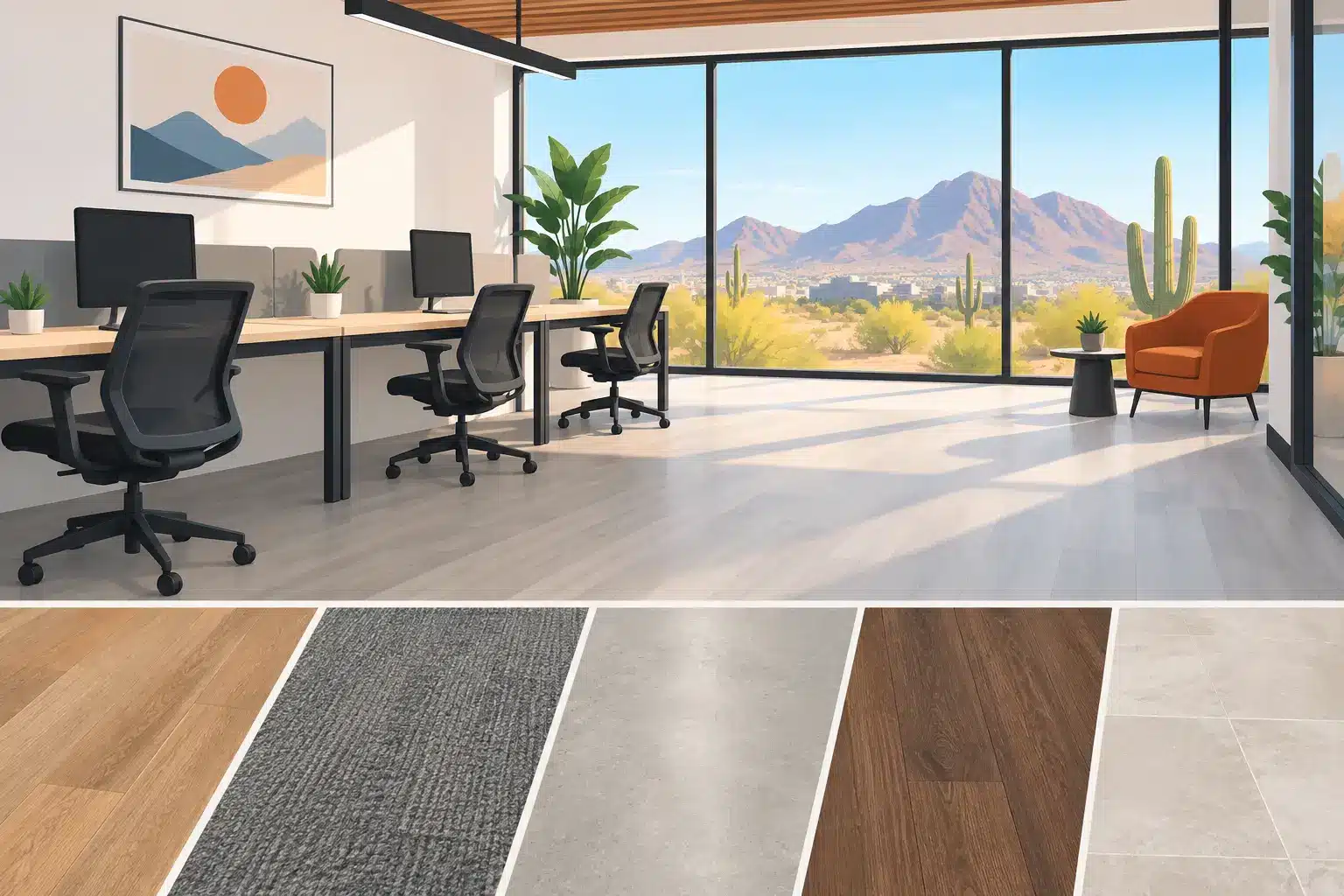
For second-story rooms, condos, offices, and occupied commercial spaces, sound performance may be a significant factor. Some buildings also have specific sound-rating requirements. In those situations, choose an underlayment with documented acoustic performance that matches the approved floor system. A product that performs well under laminate may not produce the same results under luxury vinyl or engineered hardwood.
Comfort is similarly product-specific. Carpet pad makes a noticeable difference in softness. Underlayment beneath laminate or floating wood can make a floor feel less rigid, but it should not create excessive movement. For vinyl plank, the wear layer, core construction, and attached backing often have more to do with underfoot feel than an added pad.
Preparation Comes Before Underlayment
A quality installation begins with a clean, dry, and flat surface. Before any underlayment is installed, the crew should evaluate the existing floor for moisture, cracks, dips, high spots, adhesive residue, and loose material.
This step is especially important when replacing old carpet, tile, or glued-down flooring. What appears to be a simple removal can reveal patching needs or slab conditions that affect the installation plan. Addressing those details upfront is more cost-effective than discovering them after the new floor has been delivered.
For floating floors, installers also need to account for expansion space at walls, doorways, and fixed objects. Underlayment is only one part of the system. The correct transitions, trim, and installation method allow the finished floor to move as designed without creating gaps or pressure points.
Questions to Ask Before You Buy
Before selecting an underlayment, ask whether the flooring manufacturer requires, permits, or prohibits one. Confirm whether your subfloor is concrete or wood, whether moisture testing is needed, and whether sound reduction is a priority. If you are installing over an existing floor, verify that the product allows it and that the surface meets flatness requirements.
It also helps to think about the room five years from now. A quiet guest room, a busy family room, a rental unit, and a commercial office have different traffic patterns and performance needs. The lowest-cost underlayment can be a smart choice when it meets the system requirements. Paying for premium features that do not apply to your project is not necessary value.
At Premium Carpet Tile Stone and Wood, LLC, a free in-home estimate gives homeowners and property owners a practical opportunity to evaluate the surface, review flooring samples, and match the installation system to the project rather than making a decision from a package label alone.
The layer beneath your floor may never be visible, but it should never be an afterthought. Bring the flooring product, room conditions, and subfloor condition into the same conversation before installation, and you will have a stronger foundation for a floor that looks right, feels right, and performs the way you expect.



Leave A Comment