
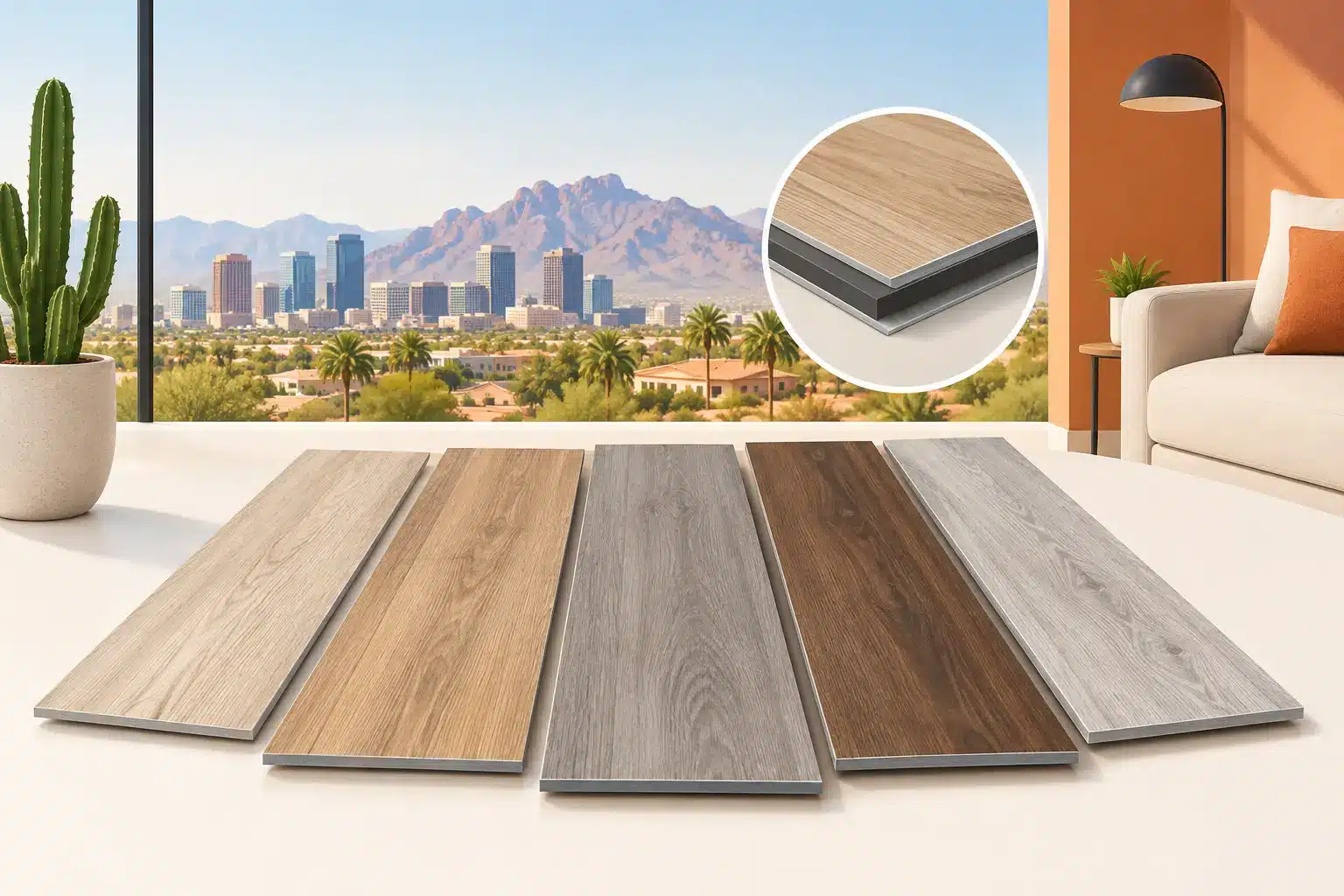
A vinyl plank comparison should start with the room, not the color sample. A beautiful floor that cannot handle a wet entry, active pets, rolling office chairs, or Arizona’s dry heat will become an expensive frustration. The right luxury vinyl plank can give a home or commercial space the look of natural wood with practical water resistance, easy care, and a wide range of price points. The key is knowing which product details actually affect performance.
Start Your Vinyl Plank Comparison With How You Live
Luxury vinyl plank, often called LVP, is designed to resemble hardwood in individual planks. It is a popular choice for Phoenix-area homes because it works well in busy kitchens, living areas, hallways, bedrooms, and many moisture-prone spaces where traditional wood may require more caution.
Not every plank is built for the same job. A family home with two dogs needs different protection than a lightly used guest room. A rental property may prioritize dependable value and quick replacement options. A medical office or retail space may need a commercial-rated product that stands up to daily foot traffic and frequent cleaning.
Before comparing brands or styles, consider where the floor will be installed, how much traffic it will receive, whether pets or children are part of the picture, and whether the subfloor is in good condition. These answers help narrow the selection quickly and prevent paying for features that do not fit the project.
Wear Layer: The Detail That Protects the Design
The wear layer is the transparent top layer that helps protect a vinyl plank from scratches, scuffs, stains, and everyday wear. It is commonly measured in mils, which is not the same as millimeters. A higher mil number generally means more protection, but it is only one part of the product’s overall quality.
For a low-traffic bedroom or a budget-conscious project, a 6-mil or 8-mil wear layer may be appropriate. For most active households, 12-mil to 20-mil products offer a stronger balance of durability and value. Commercial spaces, rentals with frequent turnover, and homes with large dogs may benefit from 20-mil or heavier options.
Do not assume the thickest wear layer is automatically the best purchase. If the floor is going into a rarely used room, putting the entire budget into a premium commercial-grade product may not make sense. On the other hand, choosing a thin wear layer for a busy kitchen simply because it costs less can lead to a shorter service life. A knowledgeable flooring professional can help match the rating to the actual demands of each room.
Vinyl Plank Comparison: Core Types Matter
Under the decorative image and wear layer is the core. This is where many vinyl plank products differ most. The core affects how the floor feels underfoot, how it handles minor subfloor imperfections, and how stable it remains as temperatures change.
SPC Vinyl Plank
Stone plastic composite, or SPC, has a dense, rigid core. It is a strong choice for high-traffic residential rooms and many commercial settings. SPC flooring typically resists dents well and holds up nicely under furniture, although it can feel firmer underfoot than other options.
Its rigid construction can help bridge small subfloor irregularities, but it does not eliminate the need for proper preparation. A severely uneven slab or damaged wood subfloor still needs attention before installation. Phoenix homes commonly have concrete slabs, making careful moisture testing and subfloor evaluation especially worthwhile.
WPC Vinyl Plank
Wood plastic composite, or WPC, has a more cushioned core. Many homeowners prefer it for bedrooms, living rooms, and spaces where comfort matters. It can feel warmer and quieter than SPC, particularly when paired with an attached pad.
WPC is often a good fit when you want a softer walking surface, but it may be less dent-resistant under very heavy furniture or rolling loads. For a busy office with heavy desks and task chairs, SPC may be the more practical choice.
Flexible Glue-Down Vinyl Plank
Glue-down vinyl plank is thinner and is installed directly to a properly prepared subfloor using adhesive. It is widely used in commercial projects because individual planks can be repaired more easily and the finished floor performs well with rolling traffic.
This option requires a smooth, clean, well-prepared surface. Installation quality matters greatly. It can be an excellent long-term choice for retail, offices, and multi-family properties, but it is less forgiving when the slab has cracks, uneven areas, or surface contamination.
Waterproof Does Not Mean Every Situation Is Risk-Free
Many luxury vinyl plank floors are marketed as waterproof. In practical terms, this means the plank itself will not absorb water the way hardwood or laminate can. That makes vinyl a sensible option for kitchens, bathrooms, laundry rooms, and homes with occasional spills.
Water can still reach the subfloor through gaps at walls, transitions, floor vents, or poorly sealed edges. A major plumbing leak, flooding event, or standing water left for an extended period can affect adhesives, underlayment, trim, and the subfloor beneath the planks. For bathrooms and other wet areas, correct installation details matter as much as the product label.
Ask how the selected floor is installed around tubs, showers, exterior doors, and cabinets. This is where experienced installation guidance protects the investment.
Attached Pad, Thickness, and Everyday Comfort
Vinyl plank thickness usually ranges from around 4 mm to 8 mm or more, not including every attached pad. A thicker plank can feel more substantial and may help disguise minor subfloor texture, but thickness alone does not guarantee durability. A thinner commercial glue-down product with a strong wear layer may outperform a thicker floating floor in the right setting.
An attached pad can improve sound absorption and comfort. It may also reduce the need for a separate underlayment, depending on the product and subfloor. However, adding another pad under a plank that already has one can void the manufacturer warranty or create instability. Always follow the specific product requirements rather than assuming more cushioning is better.
For upstairs rooms, condos, and offices, sound ratings may be part of the decision. For ground-floor homes on concrete, comfort and moisture-management requirements should guide the underlayment conversation.
Appearance Is More Than a Color Choice
The best vinyl floors do not just copy the color of wood. They use variation, texture, plank width, edge detail, and finish to create a more natural appearance. Wider planks can make an open-concept room feel expansive, while narrower planks may suit smaller rooms or a more traditional look.
Embossed-in-register texture aligns the surface grain with the printed wood pattern, creating a more realistic feel. Painted bevels and micro-bevels can define each plank, while square-edge products produce a cleaner, more continuous look. Neither is universally better. A beveled edge can look more like individual hardwood boards, while a square edge may be easier to maintain in some commercial settings.
For Phoenix interiors, light oak, warm natural wood tones, soft greige, and low-gloss finishes remain practical choices. Very dark floors can show dust, while very light floors may reveal dark scuffs in high-traffic areas. The right sample should be viewed in your actual lighting, not only under showroom lights.
Compare Installation Methods Before You Buy
Click-lock floating vinyl plank is popular for residential projects because it installs efficiently and allows the floor to expand and contract as designed. It is often a strong option over properly prepared concrete or wood subfloors. The trade-off is that a floating floor can sound hollow if the subfloor is uneven or the wrong underlayment is used.
Glue-down installation creates a more solid feel and is often preferred for commercial environments, large open areas, and rooms with frequent rolling traffic. It involves more subfloor preparation and installation labor, but it can be the better long-term answer for the right project.
Loose-lay and specialty installation systems also exist, though they are less common for typical residential projects. Product selection should come after an installer evaluates the subfloor, moisture conditions, layout, and transition needs.
Price Should Include the Full Project
A low price per square foot does not tell the whole story. Compare the complete project: material, underlayment if required, adhesive, moisture mitigation, floor preparation, removal of existing flooring, trim, transitions, furniture moving, and professional installation.
This is especially relevant when comparing quotes. One product may cost more initially but include a better wear layer, longer warranty, attached pad, or more realistic visual detail. Another may be the right value choice because the room has low traffic and the project budget is tight. Honest recommendations should explain that difference clearly.
At Premium Carpet Tile Stone and Wood, LLC, customers can compare samples and product options with guidance based on their room, budget, and installation requirements. A free in-home estimate helps identify the details that cannot be seen from a sample board alone, including subfloor condition and needed transitions.
Bring home a few samples, place them next to cabinets and wall colors, and look at them morning, afternoon, and evening. The vinyl plank that works best is the one that fits your space, your daily routine, and the level of service you expect from your floor for years to come.




Leave A Comment