
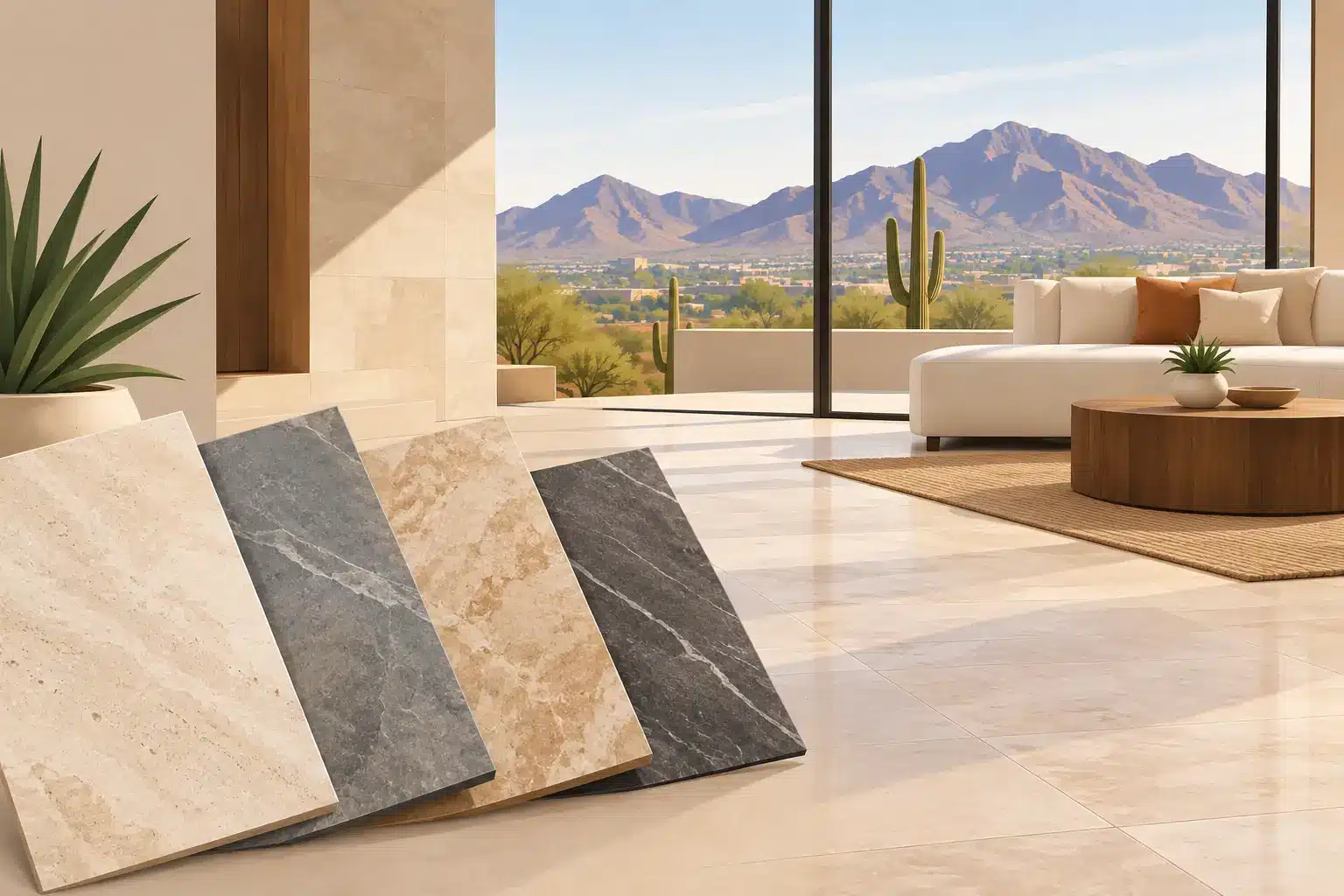
A stone floor can make a Phoenix home feel cooler, more substantial, and more connected to the Southwest than almost any other surface. But choosing stone is not simply a matter of picking a color you like in a showroom. Porosity, finish, room location, traffic, sunlight, and maintenance all affect whether a floor looks exceptional for years or becomes a source of frustration.
This natural stone flooring guide is designed to help homeowners, remodelers, and property owners make a confident choice before materials are ordered or installation begins. Natural stone offers real long-term value, but the best option depends on how you use the space and how much ongoing care you want to provide.
What Makes Natural Stone Different?
Natural stone is quarried from the earth, then cut and finished into tiles, pavers, or slabs. Each piece has natural variation in veining, movement, color, and texture. That variation is one reason buyers choose it. It gives floors a depth that manufactured materials can imitate but not fully duplicate.
It also means samples should be treated as a general representation, not an exact preview of every tile. A quality installation includes planning the layout, blending tiles from multiple boxes, and placing distinctive pieces intentionally. This is especially important with stone that has dramatic color range, such as slate or travertine.
Stone is durable, but it is not maintenance-free. Some varieties are dense and relatively forgiving. Others are softer or more porous, which makes sealing, cleaning, and prompt spill cleanup more important. A good flooring recommendation starts with the material’s real performance requirements, not just its appearance.
Natural Stone Flooring Guide: Compare the Main Types
Travertine
Travertine is a popular choice in Arizona because its warm creams, beiges, tans, and soft golds work naturally with desert architecture. It is available in polished, honed, brushed, and tumbled finishes, so it can suit anything from a formal entry to a relaxed indoor-outdoor living area.
Many travertine tiles have natural pits and holes. These may be filled for a smoother surface or left more open for a rustic look. Honed or filled travertine is often easier to live with than a highly polished finish because it tends to show fewer minor scratches and water marks. Travertine needs a quality sealer and routine care, particularly in kitchens, bathrooms, and homes with pets.
Marble
Marble brings a refined, high-end look that works well in foyers, powder rooms, formal living spaces, and upscale commercial interiors. Its veining can be subtle or dramatic, from quiet white and gray patterns to deep greens, browns, and blacks.
The trade-off is that marble is a softer calcite stone. It can etch when exposed to acidic products such as vinegar, citrus, or some bathroom cleaners. Etching is not always a stain – it is a dull mark caused by a change in the stone surface. A honed marble finish can be a practical choice for active households because it disguises light etching and wear better than a high-polish finish.
Granite
Granite is known for strength and resistance to scratching. While many people associate it with countertops, granite tile can be an excellent flooring option for high-traffic areas, commercial spaces, and homes where durability is the priority. It is available in a wide range of colors and grain patterns.
Polished granite can be slick when wet, so finish selection matters in bathrooms, entryways, and pool-adjacent spaces. A textured or honed option may provide better footing. Granite is generally lower maintenance than softer stones, but it still benefits from professional sealing when recommended for the specific product.
Slate
Slate has a distinctive layered texture and a more organic, earthy appearance. It is often selected for rustic, contemporary, or Southwestern-style homes. Colors can range from charcoal and black to rust, green, purple, and multicolor blends.
Because slate has cleft texture, it offers natural traction and can work well in entries, patios, and areas where a less formal surface fits the design. However, its uneven character can make cleaning more involved than with smooth tile. Some slate types are more stable and dense than others, so product quality matters. A flooring professional can help identify a slate suited to the intended location.
Limestone
Limestone creates a quiet, understated floor with soft neutral color variation. It is often chosen for open-concept homes where the goal is a calm, continuous look rather than bold veining. Its appeal is timeless, especially in warm beige, cream, and gray tones.
Like marble and travertine, limestone requires care around acidic spills and harsh cleaners. It is best suited to homeowners who appreciate a natural patina and understand that stone develops character over time.
Choose the Right Finish for the Room
The finish can be as important as the type of stone. Polished stone reflects light and creates a more formal appearance, but it can show smudges, scratches, and etching more readily. Honed stone has a satin-like surface that feels more relaxed and generally conceals everyday wear better.
Brushed, tumbled, and textured finishes bring more traction and a casual, aged appearance. They are often a smart fit for entries, bathrooms, and homes that transition to patios or pool areas. The trade-off is that texture can collect more dust and require more detailed cleaning.
For Phoenix homes, also consider sunlight. Large windows and strong afternoon exposure can highlight glossy floors, grout lines, and surface variation. A sample viewed in your actual home, at different times of day, is more useful than a quick decision under showroom lighting.
Plan for Installation Before You Fall in Love With a Tile
Natural stone installation is more demanding than many other flooring projects. Stone is heavier than ceramic or porcelain tile, and large-format pieces require a flat, well-prepared subfloor. If the floor structure, concrete slab, or surface preparation is not right, the result can include lippage, cracking, loose tile, or uneven grout joints.
Tile size and pattern affect both cost and appearance. Large-format stone creates fewer grout lines and a more open visual field, but it requires precise preparation. Smaller tiles, mosaics, borders, and intricate patterns add labor and can increase material waste. In older homes, floor leveling or crack-isolation work may be needed before installation.
Grout selection matters, too. A close color match can make the stone feel continuous, while a contrasting grout emphasizes the tile pattern. In kitchens and busy commercial areas, a practical grout color often saves time on cleaning. Your installer should also discuss movement joints, transitions to adjacent flooring, and the proper underlayment or membrane for the project.
Understand the Real Cost of Stone Flooring
Natural stone pricing is not limited to the cost per square foot of tile. The final investment can include material grade, finish, tile size, layout complexity, delivery, demolition, subfloor preparation, sealing, grout, trim pieces, and installation labor.
A lower-priced stone can become expensive if it has significant variation, requires extra sorting, or needs substantial floor preparation. Conversely, a higher-quality material may install more efficiently and provide better consistency. The most useful estimate explains what is included so you can compare options fairly.
For rental properties or commercial projects, consider the lifecycle cost as well as the initial price. A dense, easy-to-maintain stone may be the better value if it reduces repair and cleaning needs over time. For a forever home, a more distinctive stone may be worth the investment when it matches the design and your expectations for care.
Care That Protects the Investment
Most natural stone floors benefit from regular dry dust mopping to remove grit that can dull the finish. Clean with a pH-neutral stone cleaner and a soft mop or cloth. Avoid vinegar, bleach, ammonia, acidic bathroom cleaners, and abrasive powders unless the product is specifically approved for your stone type.
Use mats at exterior doors and felt pads under furniture. Wipe spills promptly, especially oil, wine, coffee, citrus, and pet accidents. Sealing does not make stone stain-proof, but it gives you more time to clean a spill before it penetrates the surface.
Resealing frequency varies by stone, finish, traffic, and product. Rather than following a one-size-fits-all schedule, test the surface or ask a flooring professional for guidance. If water no longer beads on the floor and darkens the stone quickly, it may be time to evaluate the sealer.
Make the Choice With Real Samples and Expert Advice
Natural stone is a material worth seeing in person. Compare several pieces, not just one sample, and look at them beside cabinets, wall colors, and furnishings. Think through the rooms your family uses hardest, where wet shoes or pool traffic enter, and whether you prefer a pristine finish or a surface that gains character with use.
Premium Carpet Tile Stone and Wood can help Phoenix and East Valley customers compare stone options, understand installation requirements, and request a free in-home estimate before making a final decision. The right floor should look like it belongs in your home while fitting the way you actually live in it.



Leave A Comment