
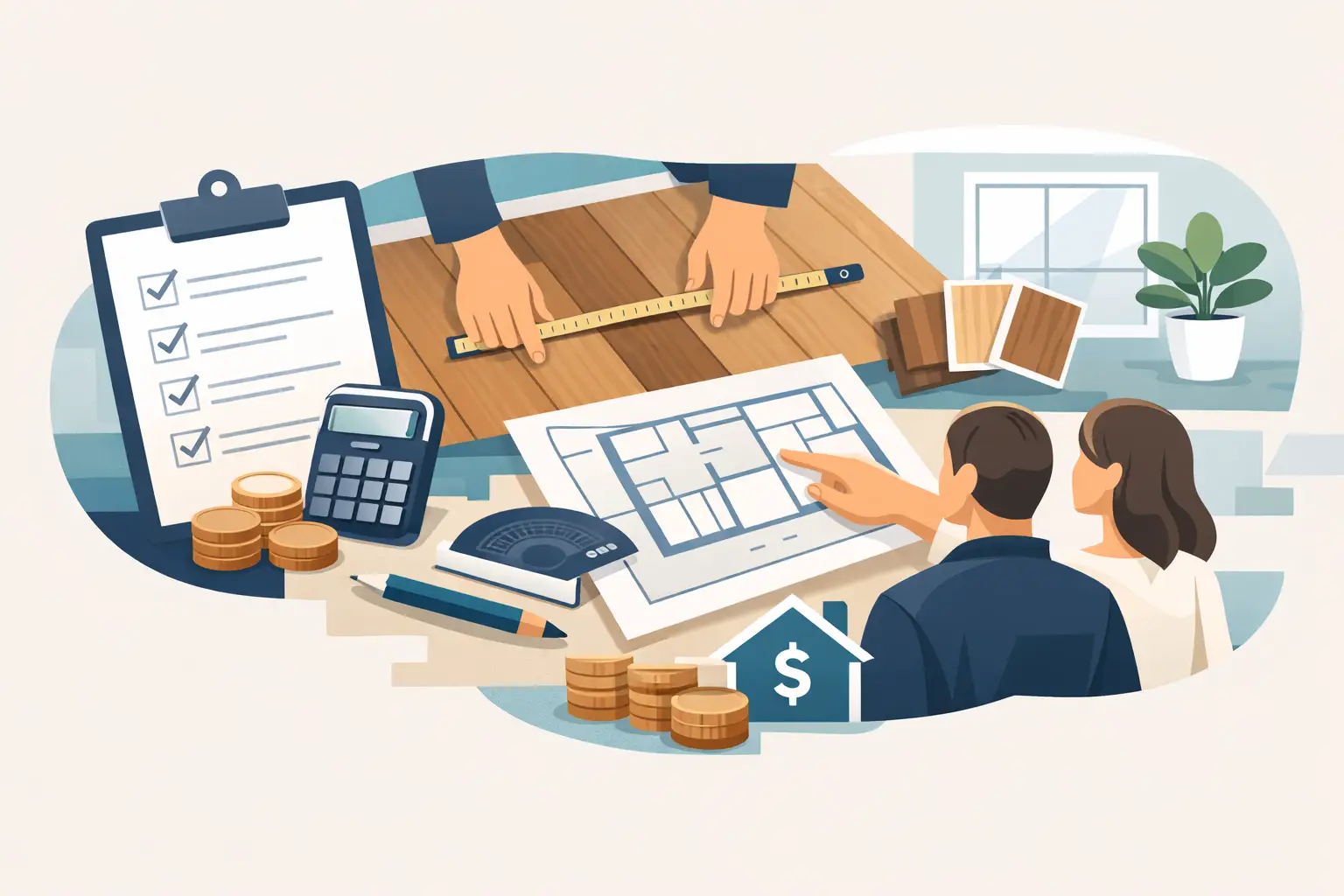
Sticker shock usually happens before the first plank or tile is installed. A flooring estimate can look simple at first, then grow once demolition, subfloor repairs, transitions, and installation details enter the conversation. If you are trying to figure out how to budget flooring project costs realistically, the goal is not just finding the cheapest product. It is building a number that reflects the way the space will actually be used and what the finished job really requires.
That matters whether you are updating one bedroom, replacing flooring throughout a Phoenix home, or planning a commercial refresh in the East Valley. A smart budget helps you compare options clearly, avoid mid-project surprises, and choose a floor that gives you value over time.
How to budget flooring project costs without missing the real expenses
Most buyers start with price per square foot. That is understandable, but it is only one part of the total. Flooring budgets usually include four layers: material, labor, site preparation, and finishing details. If you focus on only the product cost, your estimate will probably come in low.
Material pricing can vary widely even within the same category. Carpet, luxury vinyl plank, hardwood, tile, and stone each have entry-level, mid-range, and premium options. Two products may look similar in a sample, but wear layer, thickness, finish quality, and warranty can change the long-term value.
Labor also shifts based on project complexity. A straightforward rectangular room is different from stairs, custom layouts, furniture moving, or commercial spaces that need scheduling around business hours. Tile and stone usually carry higher installation costs because of the prep and precision involved. Carpet and some floating floors may install faster, but that does not automatically make them the better value for every room.
Then there is prep work. This is where many budgets fall apart. Old flooring may need to be removed and hauled away. Subfloors may need leveling, patching, or moisture treatment. Baseboards might need to be removed and reinstalled. Door clearances, transitions between rooms, and trim details all affect the final cost.
Start with the space, not the product
One of the best ways to budget accurately is to define the room conditions before choosing materials. A primary bedroom, a busy family room, a rental unit, and a retail space do not need the same flooring solution.
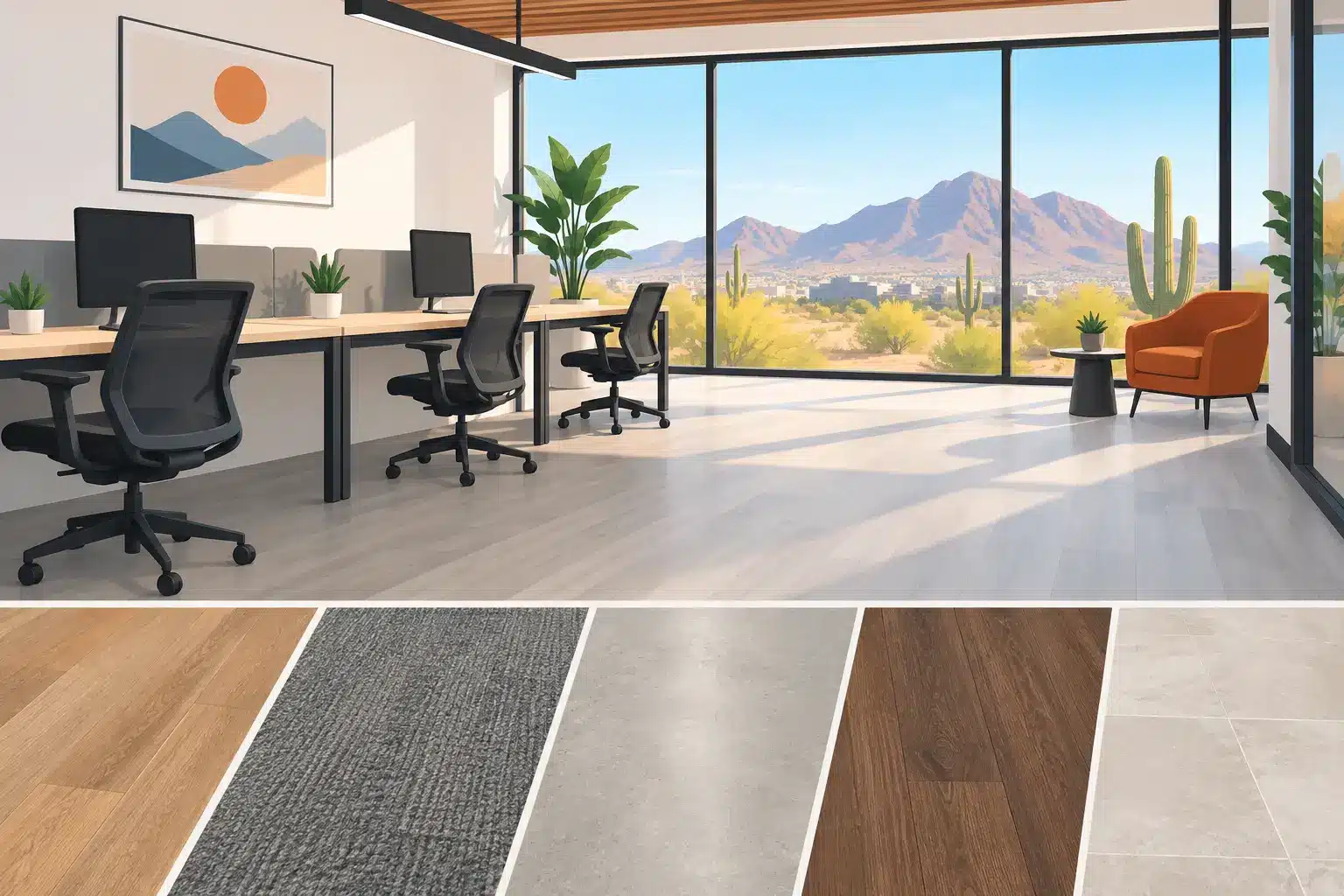
In Arizona, local conditions matter too. Heat, dust, sun exposure, and foot traffic all influence performance. A low-cost option that works in a guest room may be a poor fit for a high-traffic main living area. If it wears out early, the lower upfront price stops looking like a bargain.
That is why budgeting should begin with questions like these: How long do you want the floor to last? Is moisture a concern? Are pets, kids, or heavy traffic part of everyday use? Do you need something easy to maintain between tenant turnovers or business hours? Once those answers are clear, the right price range becomes easier to identify.
Build your flooring budget in three tiers
A practical approach is to create a good, better, and best budget instead of a single hard number. This gives you room to compare trade-offs instead of forcing every decision into all-or-nothing thinking.
Your good tier is the budget-conscious option that still meets the basic needs of the space. For some projects, that could mean a dependable carpet, an entry-level vinyl, or a straightforward tile selection. The better tier often lands in the sweet spot for many homeowners and property owners because it balances appearance, durability, and price. The best tier is where upgraded visuals, thicker wear layers, premium finishes, or more specialized materials come into play.
This structure helps prevent two common mistakes. The first is overspending on spaces that do not need premium materials. The second is underbuying for spaces that take daily abuse. Not every room deserves the same spend, and that is okay.
Account for material waste and layout realities
Square footage alone is not your final material number. Every flooring project needs extra product for cuts, waste, and layout adjustments. The amount depends on the flooring type and room shape.
Straightforward plank installations in simple rooms may need less overage than patterned tile, diagonal layouts, or rooms with multiple angles. Stairs, closets, and transitions can also change the total. Ordering too little can create delays or product mismatch issues if the same dye lot or run is no longer available.
A realistic estimate usually includes a waste factor from the beginning. That is not padding. It is part of planning the job correctly.
Labor is not just installation
When people compare flooring quotes, they often focus on the bottom-line number without asking what is included. That can lead to confusion later.
Labor may include measuring, demolition, furniture moving, subfloor prep, installation, cleanup, and disposal. Or it may include only part of that work. A lower bid is not always lower value if key steps are missing and will show up later as change orders.
This is especially important in older homes and commercial spaces. Uneven slabs, damaged subfloors, moisture issues, and complicated room transitions are not unusual. A careful estimate should reflect that possibility. Honest guidance at the front end saves money and frustration later.
How to budget a flooring project by room priority
If your full wish list exceeds the budget, do not assume the project has to stop. Many successful flooring projects are phased.
Start with the rooms that affect daily life the most or create the strongest visual impact. For homeowners, that often means main living areas, kitchens, or primary bedrooms. For property owners, it may be turn-sensitive units or common areas. For commercial buyers, it could be customer-facing spaces first and back-of-house areas later.
Phasing works best when the plan is intentional. Choose products and transitions with future work in mind so the project still feels cohesive. In some cases, spending more in the first phase on the right core areas is smarter than stretching the budget thin across the entire property.
Know where saving money makes sense and where it does not
There are places to control cost without sacrificing the outcome. Product category changes can make a big difference. For example, a well-chosen luxury vinyl plank may deliver the look a customer wants at a lower total installed price than hardwood or stone. Carpet remnants or in-stock materials can make sense for smaller rooms or budget-sensitive updates.
At the same time, some shortcuts tend to cost more later. Skipping subfloor prep, choosing a product that does not fit the traffic level, or hiring based on the lowest labor number alone can reduce the life of the floor. A floor is only as good as the surface under it and the way it is installed.
This is where working with an experienced local flooring team matters. A showroom appointment, product comparison, and in-home estimate can help identify the right fit before money is spent in the wrong place. For buyers in Phoenix and the East Valley, that level of guidance often leads to a better budget decision than shopping by sample alone.
Leave room for the costs people forget
Even a well-planned budget should include a contingency. In most flooring projects, there is at least one surprise. It may be subfloor damage under old carpet, extra leveling for tile, baseboard touch-up, or the need for better underlayment.
A contingency fund helps keep those issues from derailing the job. The exact amount depends on the age of the property, the flooring type, and whether hidden conditions are likely. Older homes and remodels usually need more flexibility than new, clean-slab installations.
It also helps to ask about timing. If the project has to be completed quickly, scheduling demands or special-order materials may affect the price. Budget is not only about dollars. It is also about planning around the realities of product availability and installation windows.
The smartest flooring budget is built around value
A flooring project should feel clear, not confusing. The best budget is not the one with the lowest number on paper. It is the one that accounts for material quality, installation needs, room use, and the true scope of the job.
At Premium Carpet Tile Stone and Wood, LLC, that is why the conversation starts with the space, the goals, and the real budget range rather than pushing a one-size-fits-all product. When you match the floor to the way the property is actually used, you make a better investment from the start.
If you are budgeting flooring right now, give yourself room to compare options carefully, ask what is included, and plan for the parts of the project that are easy to miss. A well-built floor starts with a well-built estimate.




Leave A Comment