
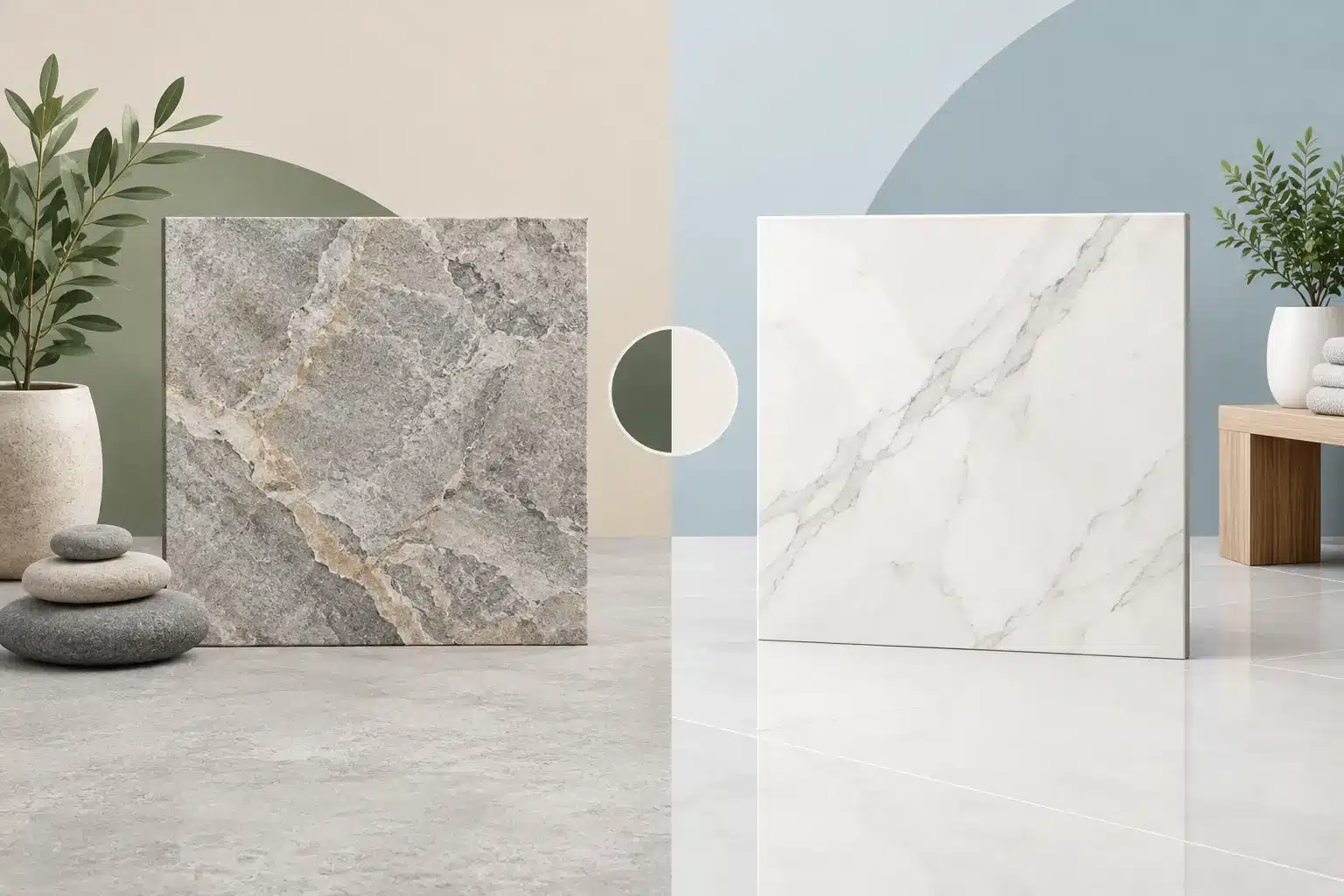
A tile sample can look very different once it covers an entire kitchen, shower, patio, or commercial entry. When comparing stone versus porcelain tile, the right choice comes down to more than color. Phoenix-area buyers need to consider heat, foot traffic, moisture, maintenance expectations, installation conditions, and the look they want to live with for years.
Natural stone brings one-of-a-kind character that cannot be copied exactly. Porcelain offers impressive durability, lower routine maintenance, and a wide range of stone-look styles. Both can be excellent investments when the material matches the space and the way it will be used.
Stone Versus Porcelain Tile at a Glance
Natural stone is cut from materials such as travertine, marble, granite, slate, limestone, and quartzite. Every piece has natural variation in veining, texture, and color. That variation is often the reason homeowners choose it. A stone floor, wall, or countertop makes the material itself part of the design.
Porcelain is a manufactured ceramic tile fired at very high temperatures. It is dense, hard, and typically absorbs very little water. Modern porcelain can recreate the visual movement of marble, the warmth of travertine, the texture of slate, and even the grain of wood, often with large-format options and consistent sizing.
Neither material wins in every setting. A honed travertine floor may be exactly right for a relaxed Southwest-style home, while a porcelain marble look may be the better fit for a busy household that wants a refined appearance without frequent sealing.
Appearance: Natural Variation or Consistent Design
Stone has depth that comes from nature, not a printed pattern. Veins, pits, fossils, mineral deposits, and tonal changes give each installation an individual look. Travertine is especially popular in Arizona because its warm, earthy appearance works naturally with desert-inspired architecture, patios, and open living spaces.
That individuality requires realistic expectations. Samples show the general color family, not every variation that will appear in the final installation. Some stones also have natural holes, fissures, or texture that may be filled or left visible depending on the finish.
Porcelain gives buyers more control over the finished look. If you prefer cleaner color consistency, a particular marble pattern, or a contemporary large-format floor with narrow grout joints, porcelain provides more predictable results. Premium porcelain has become remarkably convincing, but it will not have the exact surface depth and irregularity of real stone.
For a project where authenticity is the priority, stone is hard to replace. For a project where design consistency and a broad selection of looks matter most, porcelain is often the practical choice.
Durability and Daily Wear
Porcelain is one of the most durable flooring materials available. Its dense surface handles everyday traffic, pet nails, dropped items, and furniture movement well. It is a strong option for kitchens, hallways, rental properties, retail spaces, offices, and other areas where easy upkeep matters.
Stone is durable too, but the type of stone makes a meaningful difference. Granite and quartzite are generally harder and more resistant to scratching than marble, limestone, or travertine. Softer stones can develop patina over time, especially in high-traffic areas. Some homeowners appreciate that lived-in character; others prefer a surface that stays more uniform.
Finish matters as much as material. Polished stone can show etching or scratches more readily than honed stone. Textured or tumbled finishes can be more forgiving, although their surface texture may require more attention during cleaning. For commercial entries, bathrooms, pool areas, and exterior spaces, slip resistance should be part of the product selection from the start.
Moisture, Heat, and Arizona Conditions
Both stone and porcelain can work well in Phoenix homes, but porcelain has a clear advantage in consistently wet areas. Because it has very low water absorption, it is well suited for showers, laundry rooms, bathroom floors, mudrooms, and commercial restrooms.
Natural stone can be used in these spaces, but it requires the correct stone, a proper installation system, and ongoing sealing. Marble or travertine in a shower can be beautiful, yet it asks more of the owner than porcelain does. Soap residue, minerals in water, and cleaning products can affect some stone surfaces if they are not cared for correctly.
Arizona heat also calls for thoughtful planning outdoors. Tile can become hot in direct sun, regardless of whether it is stone or porcelain. A lighter color, a textured finish, and appropriate material rated for exterior use can make a major difference around patios and pool decks. Not every indoor tile belongs outdoors, so product specifications and installation details should be confirmed before ordering.
Maintenance: The Difference Many Buyers Feel Later
Porcelain is usually the easier material to maintain. Regular sweeping and cleaning with a tile-safe, neutral cleaner are generally enough. Grout still needs attention, especially in light colors or heavy-use areas, but the tile itself does not typically need sealing.
Stone needs more deliberate care. Most natural stone should be sealed periodically, although the timing depends on the stone type, finish, location, and level of use. A quality sealer helps reduce staining, but it does not make stone maintenance-free. Acidic products, including many common bathroom and kitchen cleaners, can etch or dull sensitive materials such as marble, limestone, and travertine.
This does not mean stone is difficult or unsuitable for an active home. It means the buyer should be comfortable following the right care routine. For homeowners who want a floor they can clean without much thought, porcelain is usually the safer recommendation.
Cost Depends on More Than the Tile Price
Comparing material prices alone can be misleading. Natural stone pricing varies widely by type, grade, thickness, finish, and availability. Porcelain also ranges from economical options to high-end large-format and designer collections. A premium porcelain may cost more than an entry-level stone, while an exotic natural stone can cost considerably more than either.
Installation affects the real project budget. Stone may require additional preparation, careful layout, sealing, specialized cutting, and more labor because of variation in thickness or edge details. Large-format porcelain also requires skilled installation, flat subfloors, and proper mortar coverage. It is not automatically a low-cost installation simply because it is porcelain.
For an accurate comparison, look at the complete project: material, removal of existing flooring, floor preparation, trim, grout, waterproofing where needed, labor, and future maintenance. A free in-home estimate can identify site conditions that a showroom sample cannot reveal.
Where Each Material Makes the Most Sense
Porcelain is often the best fit for busy kitchens, family bathrooms, showers, laundry rooms, rental homes, and commercial spaces. It offers reliable performance with less maintenance and gives buyers flexibility to choose stone-look, concrete-look, or wood-look designs.
Stone is especially compelling in primary living areas, fireplaces, feature walls, upscale bathrooms, patios, and projects where natural material is central to the design. Travertine, marble, slate, and quartzite can create a level of visual character that is worth the additional care for the right buyer.
There are also hybrid approaches. A homeowner may choose porcelain for shower walls and floors, then use real stone for a fireplace surround or statement wall. A commercial property may use porcelain in high-traffic public areas while incorporating granite or marble at a reception desk. Good design does not require using one material everywhere.
Installation Quality Protects Your Investment
Whether you choose stone or porcelain, installation has a direct effect on appearance and performance. The substrate must be properly prepared, layouts should account for cuts and focal points, and movement joints need to be handled correctly. In wet areas, waterproofing and drainage details are essential.
Large tiles can make a room feel more open, but they also demand a flatter surface and experienced setting techniques. Natural stone requires installers who understand the material’s variation, cutting needs, and sealing requirements. The best tile selection can still disappoint if the installation plan is incomplete.
At Premium Carpet Tile Stone and Wood, LLC, buyers can compare materials with guidance based on their budget, space, and maintenance preferences, then plan the project with professional installation support. The most useful next step is to bring in photos, measurements, and a few inspiration images so the options can be evaluated in the context of your actual space.
Choose the surface that fits how you use the room, not just how it looks under showroom lighting. A well-chosen porcelain tile can simplify a demanding space, while the right natural stone can give a home or business lasting character that feels personal from the first day.



Leave A Comment