
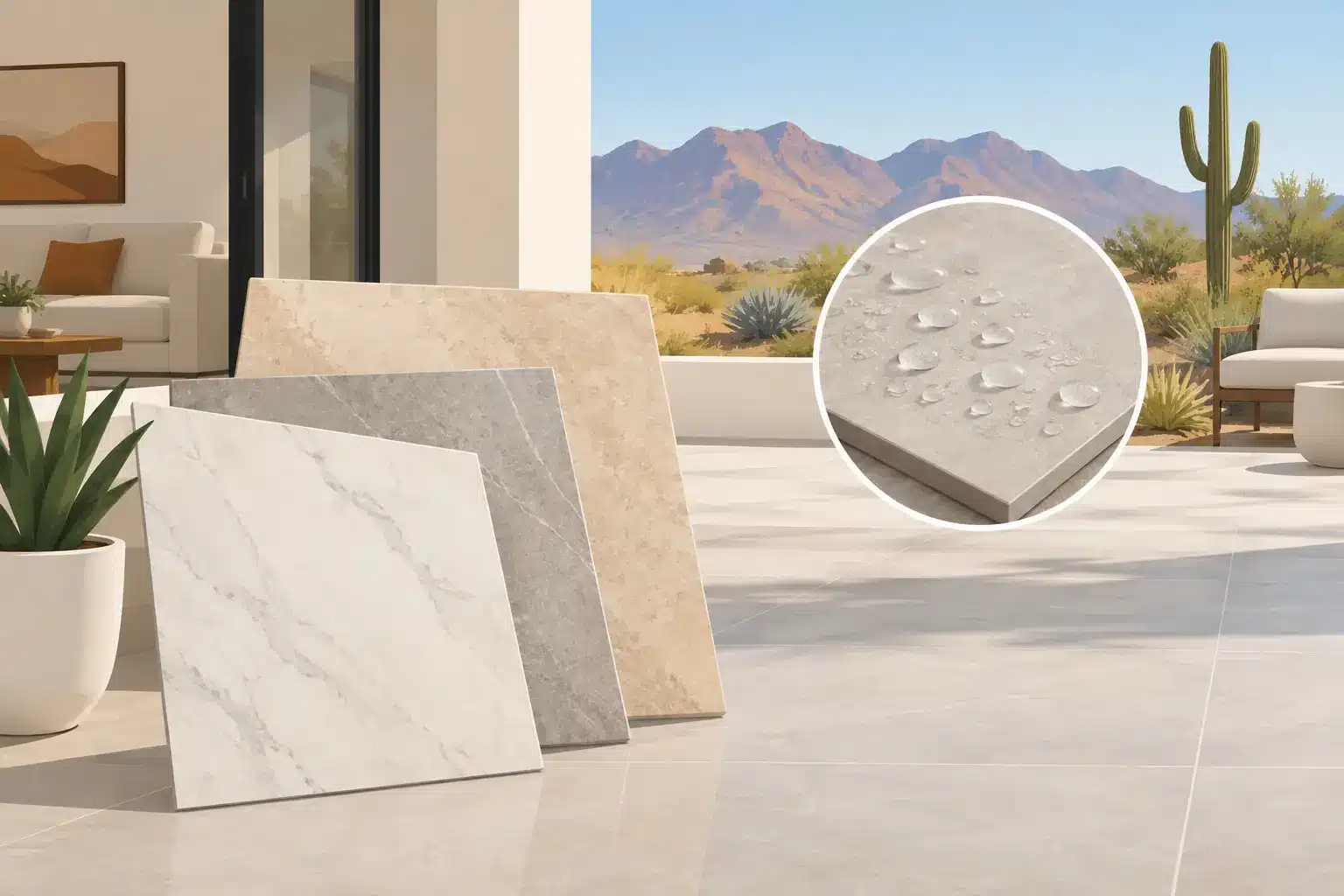
A porcelain tile review should answer more than whether a sample looks good under showroom lighting. For Phoenix and East Valley homes, the real questions are how the tile handles daily traffic, desert dust, pets, pool areas, direct sun, and the movement of a concrete slab. Porcelain performs very well in many of those conditions, but the right product and installation details make the difference between a floor that stays beautiful and one that becomes a source of frustration.
Porcelain Tile Review: The Short Answer
Porcelain tile is one of the strongest all-around flooring choices for Arizona homes and many commercial spaces. It is dense, low-absorption, easy to clean, and available in looks that range from natural stone and concrete to realistic wood planks. It works especially well in kitchens, bathrooms, entryways, laundry rooms, living areas, and high-traffic rental or retail properties.
Its biggest advantages are durability and low maintenance. A quality porcelain tile does not absorb moisture the way many natural materials can, and it resists scratches better than most resilient flooring and wood products. The trade-off is that tile is hard underfoot, colder than carpet on winter mornings, and less forgiving when glassware or dishes hit the floor. Installation also requires more skill and preparation than many homeowners expect.
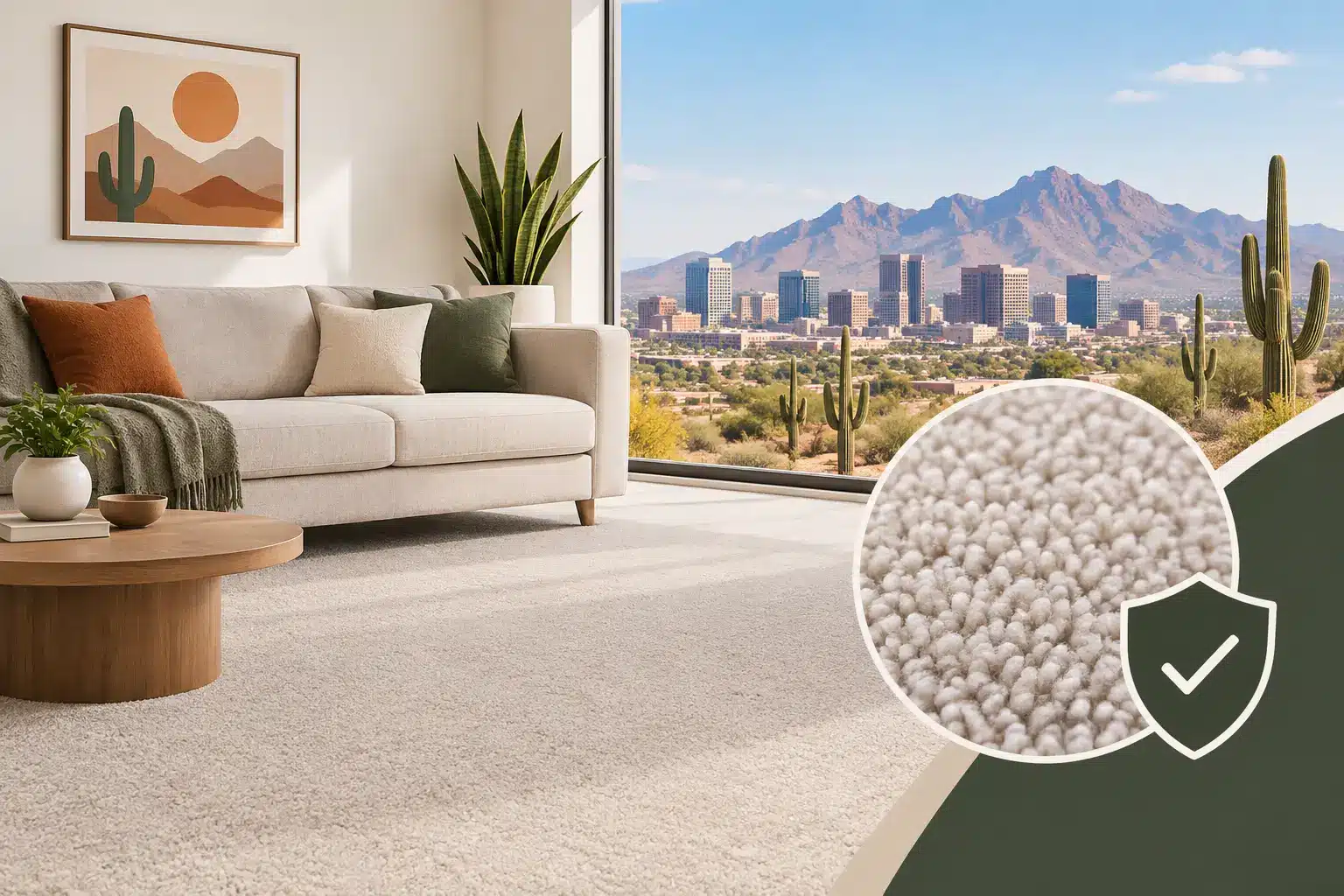
For buyers who want a long-term surface with a clean, upscale look, porcelain is often worth the initial investment. For a bedroom, a quiet upstairs room, or a space where comfort is the highest priority, carpet, luxury vinyl, or engineered wood may be a better fit.
What Makes Porcelain Different From Ceramic Tile?
Porcelain is a type of ceramic tile, but it is made from refined clay and fired at higher temperatures. The result is a denser tile with very low water absorption, generally 0.5% or less. That density is why porcelain is commonly selected for wet areas, busy households, and commercial applications.
Not every tile labeled ceramic offers the same performance. Standard ceramic can be an excellent value for a decorative bathroom wall or a low-traffic room, but porcelain is generally the safer choice when the floor will see frequent use, moisture, or tracked-in grit. In Arizona, fine sand and dust can act like abrasive material on flooring over time. A durable porcelain finish is well suited to that reality.
The category alone does not guarantee quality. Thickness, glaze quality, rectification, finish, and the manufacturer’s recommended application all matter. A low-cost porcelain may be appropriate for a guest bath, while a large-format, rectified tile with a commercial-grade finish may be the smarter choice for an open-concept main floor.
Where Porcelain Tile Performs Best
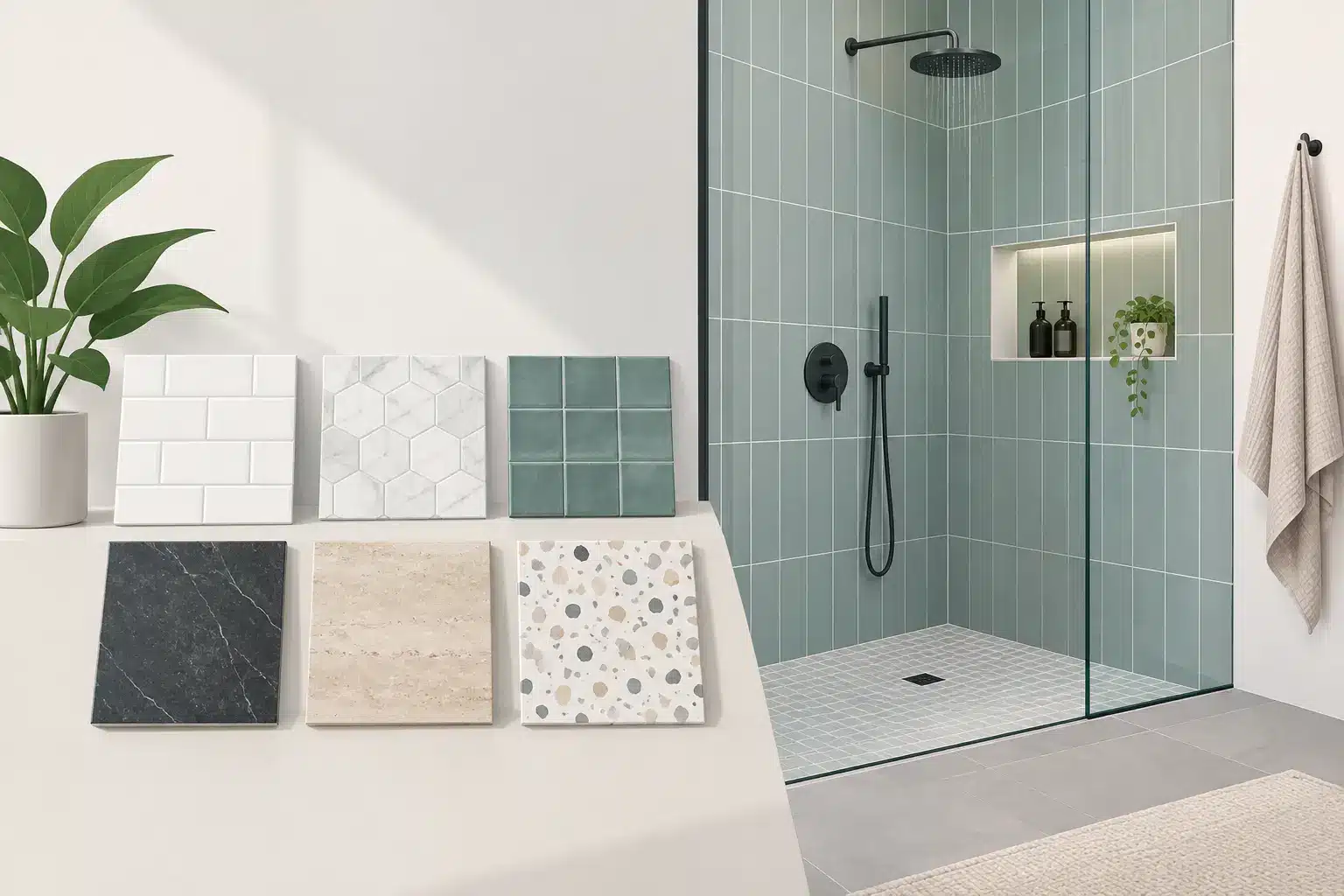
Porcelain is a practical flooring choice in rooms that need both style and resilience. In a kitchen, it handles food spills, water near the sink, and constant foot traffic. In bathrooms, its low water absorption helps it stand up to humidity and splashes. In entryways, it gives homeowners a surface that can be swept quickly after dust, rain, or debris is brought in from outdoors.
It is also a strong option for homes with dogs. Claws, water bowls, and the occasional accident are easier to manage on porcelain than on many other materials. That said, a highly polished tile can show paw prints and streaks more readily than a matte or textured finish. Families who want low visual maintenance often prefer a satin, matte, or stone-look porcelain with variation in color and pattern.
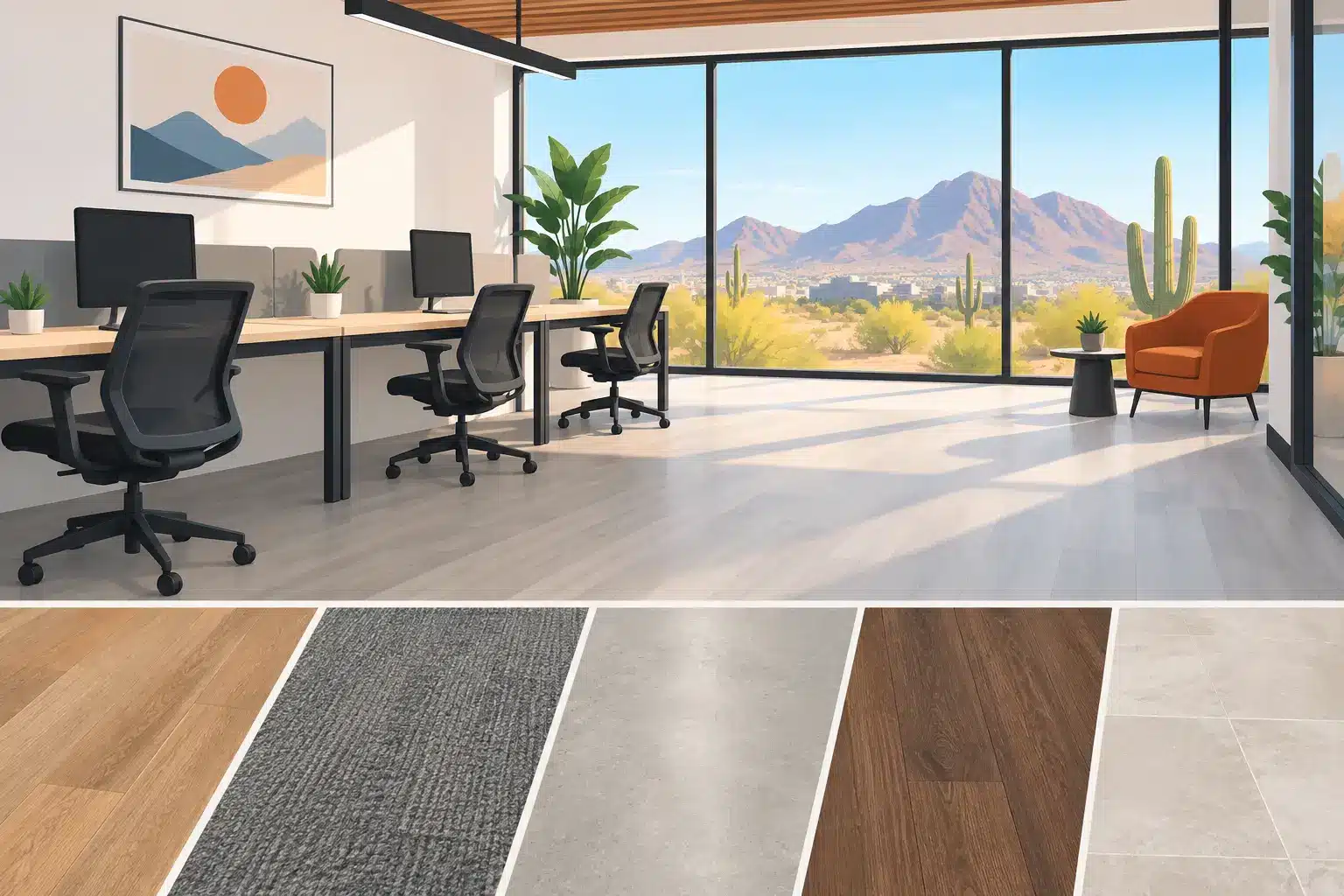
For commercial spaces, porcelain can work well in offices, lobbies, retail stores, and rental properties where appearance and longevity matter. Select the tile based on the expected traffic level, and do not assume a residential wall tile belongs on a commercial floor.
Outdoor and Pool-Area Considerations
Porcelain can be used outdoors, but outdoor tile selection is not just an indoor design decision moved outside. Arizona sun creates intense surface heat, and wet pool decks require slip resistance. A smooth polished tile that works beautifully in a dining room is not the right choice beside a pool.
Look for an exterior-rated porcelain with an appropriate slip-resistance rating and a textured finish. Lighter colors may feel less hot in direct sun, although every hard surface can become uncomfortable during peak summer temperatures. Proper drainage, substrate preparation, grout selection, and movement joints are equally important outdoors.
The Installation Details That Matter Most
A porcelain floor can be only as good as the surface beneath it. Many Valley homes have concrete slabs, and those slabs can have cracks, moisture concerns, uneven areas, or minor movement. A professional installer should evaluate the condition of the subfloor before tile is set.
Cracks do not always mean tile is impossible, but they may require crack-isolation material or other preparation. Moisture testing may also be appropriate, particularly in certain slab-on-grade homes or commercial settings. Skipping these steps to reduce the upfront price can lead to cracked grout, loose tile, or visible lippage later.
Large-format porcelain deserves particular attention. Bigger tiles create a modern, continuous look with fewer grout lines, but they demand a flatter substrate and careful installation. If the floor is not properly prepared, tile edges can sit at different heights. This is called lippage, and it is one of the most common complaints with large tile installations.
Tile layout also affects the finished appearance. A wood-look porcelain plank should not automatically be installed in a 50/50 brick pattern, because long planks can have a slight natural bow. Many manufacturers recommend an offset of no more than one-third. An experienced installer will follow the product guidance rather than force a pattern that increases lippage.
Cost: What Homeowners Should Expect
Porcelain tile pricing varies widely. Entry-level options can provide a clean, durable floor at an accessible material price, while premium imported tiles, large-format slabs, detailed mosaics, and specialty finishes cost more. Material is only part of the budget.
Installation costs depend on tile size, layout complexity, demolition, floor leveling, pattern work, stair details, transitions, and the condition of the existing surface. A simple square tile installed over a well-prepared floor is very different from a patterned kitchen, a shower surround, or a large-format tile installation requiring extensive leveling.
It is wise to compare complete project quotes rather than comparing tile price per square foot alone. A lower material price can disappear quickly if the selected tile needs substantial prep work or if the installation scope leaves out removal, underlayment, grout, trim, or furniture moving. Clear estimates make it easier to understand where the budget is going.
Maintenance Is Simple, but Grout Needs Attention
Porcelain itself is easy to maintain. Regular sweeping or vacuuming removes abrasive dirt, and a damp mop with a tile-safe cleaner is usually enough for routine cleaning. Avoid waxes, oily cleaners, and harsh products that can leave residue or dull the appearance of the floor.
Grout is the part of a tile floor that usually needs the most attention. Light grout can show soil in busy kitchens and entryways, while very dark grout can make dust and mineral residue more visible. A mid-tone grout often gives homeowners the best balance. Grout sealers can help in some applications, but performance depends on the grout type and proper maintenance.
If easy upkeep is the goal, choose a tile with visual variation, a practical grout color, and a grout joint sized appropriately for the tile. Extremely narrow joints may look sleek, but the tile’s size variation and the manufacturer’s specifications should determine what is realistic.
Is Porcelain Tile Worth It?
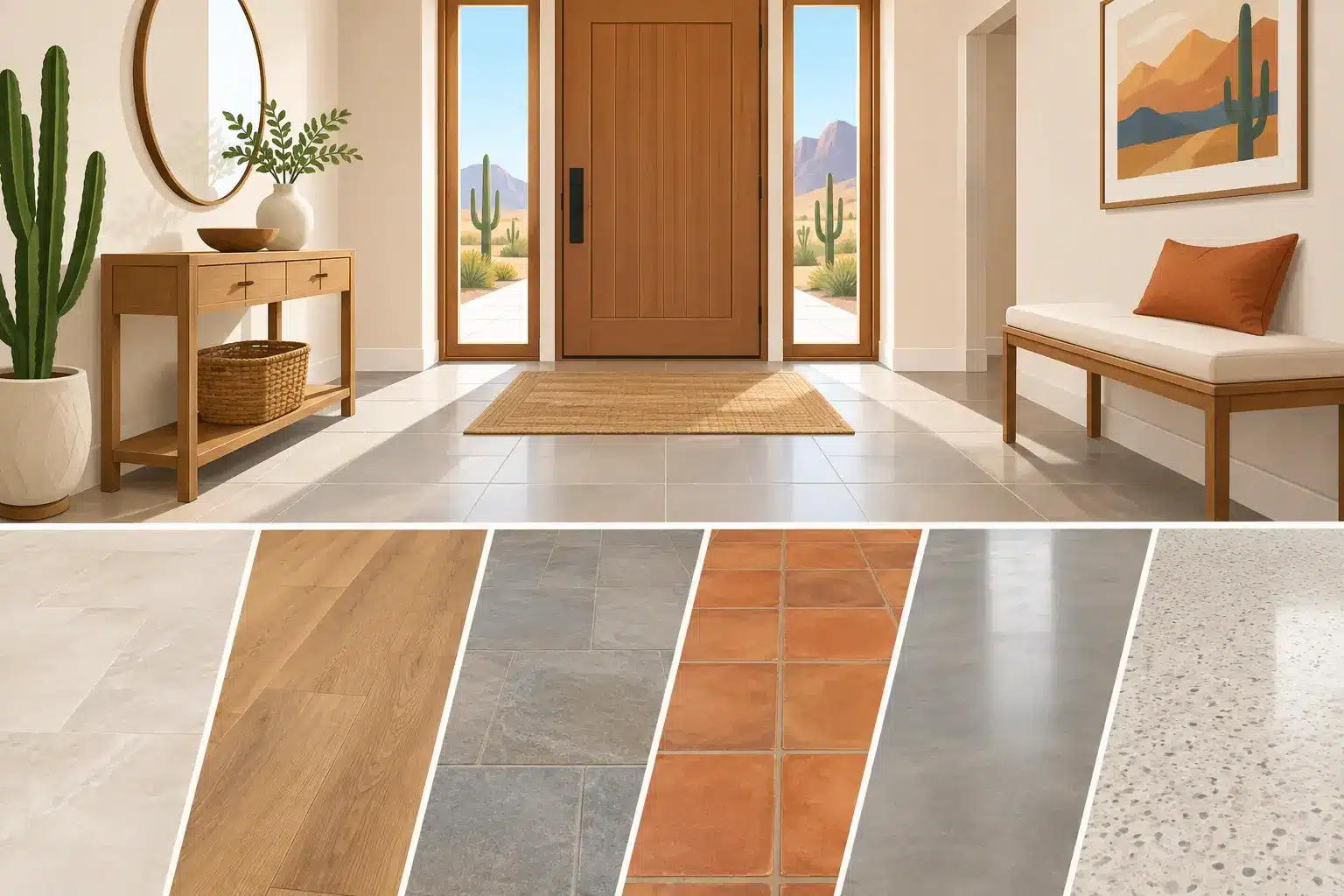
For many Arizona households, yes. Porcelain is especially worthwhile when you want a floor that can handle pets, kids, frequent entertaining, moisture, and years of daily use without requiring extensive care. It offers design flexibility that allows homeowners to create a stone, wood, or contemporary concrete look without taking on the maintenance demands of every natural material.
The best choice still depends on the room and your priorities. If standing comfort is essential, consider area rugs in key zones or use tile in shared spaces while choosing a softer surface for bedrooms. If you want the warmth and character of real wood, compare porcelain against engineered hardwood before deciding. If speed and lower installation disruption matter most, luxury vinyl may deserve a close look.
A showroom appointment and an in-home estimate can turn a broad porcelain tile review into a recommendation that fits your actual space. Premium Carpet Tile Stone and Wood can help homeowners and commercial buyers compare samples, evaluate installation conditions, and choose a tile that makes sense for their budget and daily routine.
The right porcelain floor should not simply photograph well. It should feel appropriate for the way your property is used, hold up through Arizona summers, and still be a surface you are happy to live with years from now.



Leave A Comment