
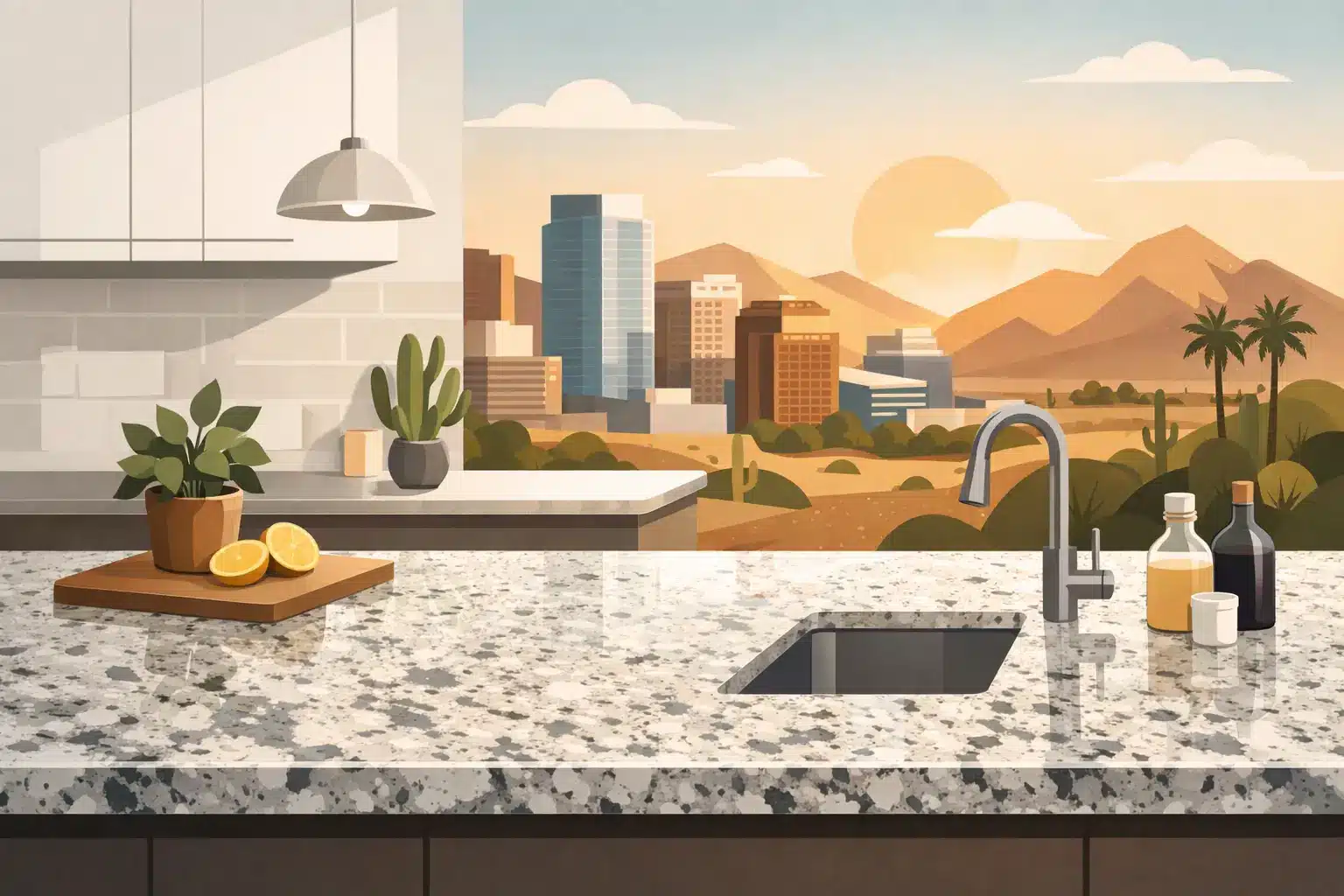
A granite countertop can change the feel of a kitchen, bath, bar, or commercial reception area in a single installation, but the slab you choose is only part of the decision. This granite countertop buying guide explains what Phoenix and East Valley buyers should compare before ordering, from the look of the actual stone to the fabrication details that affect the final price and performance.
Start With the Actual Granite Slab
Granite is a natural stone, so no two slabs are identical. A small showroom sample can help narrow down a color family, but it cannot show the full movement, veining, mineral deposits, or variation across an island-sized piece of stone. Before making a final selection, view the full slab or slabs reserved for your project.
This matters most with granite that has strong movement, large veins, or distinct color shifts. A dramatic slab may be exactly what makes a large island stand out, but it can also feel busy if the kitchen already includes patterned flooring, a bold backsplash, or heavily grained cabinetry. More consistent granites are often easier to coordinate in rental properties, commercial settings, and kitchens where the cabinetry is the main design feature.
Lighting can change a granite color more than many buyers expect. Bring cabinet doors, flooring samples, paint swatches, and backsplash choices when possible. View the slab under good light and consider how it will look in your home at different times of day. Warm beige granite may lean gold beside white cabinets, while a gray slab can show blue, green, or brown undertones depending on the surrounding finishes.
Choose Granite for Your Daily Use
Granite is valued for its natural beauty, heat resistance, and durable surface. It performs well in hardworking kitchens, bathrooms, outdoor living spaces, and commercial applications when it is properly selected and installed. Still, it is not a material that should be chosen on appearance alone.
A polished finish is the most common choice for indoor countertops because it reflects light and brings out the stone’s color. Honed granite has a softer, matte appearance that can work well in contemporary spaces, although it may show fingerprints, oils, or water marks more readily on darker colors. Leathered granite adds texture and can help disguise smudges, making it a practical option for busy homes that prefer a less glossy finish.
If your household cooks frequently, granite offers a strong work surface, but use cutting boards rather than cutting directly on the countertop. Granite can dull knives, and sharp impacts near edges can chip stone. Hot pans are generally less of a concern than they are with some manufactured surfaces, but trivets remain a good habit, especially near seams and overhangs.
For outdoor kitchens in the Phoenix area, ask specifically about the intended location. Direct sunlight, heat, and exposure to dust and rain can affect how a material looks and how often it needs maintenance. Dark stones may become extremely hot in full sun, while lighter colors are often more comfortable and practical for uncovered outdoor counters.
Understand What Drives Granite Countertop Cost
Granite pricing is not based on square footage alone. The slab material is one part of the budget, but fabrication and installation can be just as significant. A low-cost stone selection may still require additional work if the design includes a large island, multiple cutouts, complicated wall angles, thick edges, or extensive seam work.
Several factors commonly affect the final quote:
- Slab availability, color rarity, thickness, and the number of slabs required
- Countertop layout, including long runs, curved areas, waterfall ends, and oversized islands
- Fabrication details such as sink cutouts, cooktop cutouts, edge profiles, drain grooves, and backsplash pieces
- Removal and disposal of existing countertops, plumbing disconnection, and site-access conditions
- Installation requirements, including seams, support for overhangs, and adjustments for uneven walls or cabinets
A clear quote should identify what is included rather than presenting only a price per square foot. Ask whether the estimate includes templating, fabrication, delivery, installation, sink cutout, edge detail, backsplash, removal, and any plumbing-related work. Comparing quotes line by line gives you a more accurate picture of value.
Wholesale pricing can make a meaningful difference, but the least expensive bid is not automatically the best choice. Natural stone requires careful measuring, skilled fabrication, proper transport, and experienced installation. An inaccurate template or poorly planned seam can create a problem that is far more costly than the initial savings.
Plan the Layout Before Fabrication Begins
Once granite is fabricated, changes are limited. The layout stage is where homeowners can make sure the finished countertop supports both the room’s design and the way the space will be used.
Start by deciding where seams are likely to fall. Every fabricator will approach seam placement based on slab size, kitchen layout, stone movement, and safe handling requirements. Seams are normal in many kitchens, particularly on long countertop runs and large islands. They should be placed thoughtfully, with attention to visibility, structural support, and the direction of veins or patterns.
Vein direction is especially important with movement-heavy granite. Some buyers prefer the pattern to run continuously along the length of the counter, while others want a bookmatched effect where adjacent pieces mirror each other. These choices can require more material and increase fabrication complexity, but they can be worthwhile on a feature island or statement wall.
Also consider the sink and faucet before the template appointment. An undermount sink creates a clean, easy-to-wipe edge and is a popular choice with granite. It needs correct cabinet support and coordination with the fabricator. If you are using a farmhouse sink, provide the exact model early because cabinet modifications and countertop measurements must account for its dimensions.
Pick an Edge Profile That Fits the Room
The edge profile is a small detail that has a noticeable effect on the finished look. A simple eased edge has a clean, slightly softened line and works well in most kitchens. A pencil edge offers a more contemporary appearance. Rounded profiles can feel more traditional and may be a practical choice for households with young children because they soften the corner.
More decorative edges can add character, but they also add cost and may not suit every project. In a busy commercial space or a straightforward rental renovation, a simple edge often delivers the best balance of appearance, cleaning ease, and budget. In a custom kitchen with detailed cabinetry, a more substantial profile may be a better visual match.
Thickness also changes the look. Standard granite is often fabricated in a thinner profile, while built-up edges can create the appearance of a thicker, more substantial countertop. Discuss the options when reviewing your slab so the edge detail complements the cabinets and does not create unexpected costs.
Know the Maintenance Expectations
Granite is durable, but natural stone benefits from regular care. Most granite countertops should be sealed, although how often depends on the stone’s porosity, finish, and use. Some stones resist staining better than others, so ask about the recommended sealing schedule for your specific material rather than relying on a general rule.
For day-to-day cleaning, use a soft cloth and a stone-safe cleaner or mild soap and water. Avoid harsh acidic cleaners, abrasive powders, and products not intended for natural stone. Wipe up spills promptly, particularly cooking oils, wine, coffee, citrus, and strongly colored foods. Proper care helps preserve the finish and reduces the risk of staining around sinks and food-prep areas.
A simple water test can indicate whether resealing may be needed. If water darkens the stone or absorbs instead of beading on the surface after several minutes, it may be time to check the sealer. Your installer or stone professional can recommend the right product and application method for the granite you selected.
Work With a Local Team That Can Verify the Details
A countertop purchase involves more than choosing a color from a display. The best results come from accurate measurements, realistic expectations, clear communication, and a team that can explain the options before fabrication starts. For Phoenix-area projects, a free in-home estimate can help identify cabinet conditions, wall variations, access limitations, and the design details that shape the final scope.
Premium Carpet Tile Stone and Wood, LLC helps homeowners, remodelers, and commercial buyers compare granite options with the same practical focus used across every flooring and surface project: match the material to the budget, the space, and the way it will be used. Bring your samples, measurements, and project questions to a showroom appointment, then choose a slab and installation plan with confidence.







Leave A Comment