
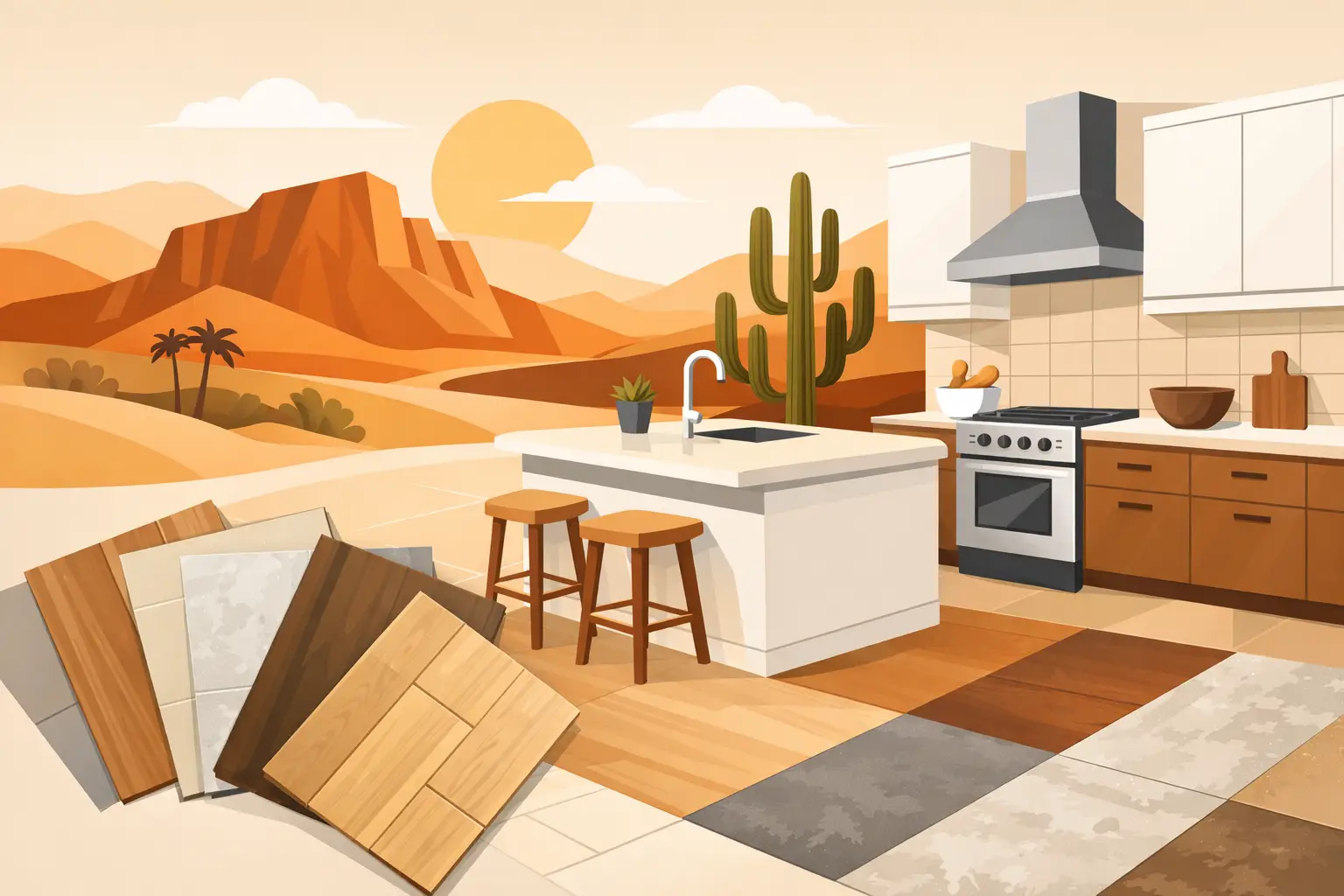
A kitchen floor has to handle more than daily foot traffic. It sees dropped utensils, pet bowls, chair movement, spills, heat, and frequent cleaning – often all before lunch. The best kitchen flooring options balance that real-world wear with the look, comfort, and budget that fit your home.
For homeowners in Phoenix, Mesa, and the East Valley, the decision also comes down to how the floor performs in a dry climate, how it connects to nearby living spaces, and whether the home is a primary residence, rental, or remodel for resale. There is no single right material for every kitchen. There is, however, a right choice for your household and project priorities.
What a Kitchen Floor Needs to Do
Kitchen flooring should be durable, easy to clean, and capable of standing up to moisture. Those basics matter, but the details matter too. A busy family may need a forgiving, water-resistant surface. A homeowner planning a high-end renovation may prioritize natural materials and long-term visual appeal. A rental owner may need dependable performance at a controlled installed cost.
Before choosing a color or plank width, consider how the kitchen is used. Ask whether spills are common, whether pets or children are part of the household, how much direct sunlight enters the room, and whether the flooring will continue into the great room or hallway. Those answers narrow the field quickly.
The Best Kitchen Flooring Options to Compare
Luxury Vinyl Plank and Luxury Vinyl Tile
Luxury vinyl plank, often called LVP, is one of the most practical choices for kitchens. It is designed to look like hardwood while providing strong water resistance, easy care, and a softer feel underfoot than tile or stone. Luxury vinyl tile offers the same performance benefits in looks that resemble tile, concrete, or natural stone.
For many East Valley homes, LVP is an especially smart option when an open floor plan calls for one continuous floor from the kitchen into living areas. It handles everyday spills well, resists scratches better than many natural materials, and comes in a wide range of wood tones and textures. Quality varies significantly, so wear-layer thickness, core construction, and installation method should be part of the conversation, not an afterthought.
The trade-off is that vinyl does not offer the same natural-material character or potential refinishing life as genuine hardwood. Still, for active households and value-minded remodels, it is difficult to beat for performance per dollar.
Porcelain and Ceramic Tile
Porcelain and ceramic tile remain classic kitchen choices for good reason. They are highly durable, water-resistant, easy to clean, and available in nearly unlimited colors, formats, and styles. Porcelain is generally denser and less porous than ceramic, making it a strong choice for busy kitchens and homes where long-term durability is the priority.
Tile works particularly well in Arizona because it stays cool underfoot and performs well in rooms with strong natural light. Large-format porcelain can create a clean, modern look with fewer grout lines, while wood-look tile provides the visual warmth of planks with the moisture resistance of tile.
The main consideration is comfort. Tile is hard, and it can feel cold during cooler months. It is also less forgiving when a glass or dish falls. Choosing a quality grout, proper subfloor preparation, and professional installation makes a major difference in how the finished floor looks and holds up over time.
Natural Stone
Natural stone brings a level of character that manufactured products cannot fully duplicate. Travertine, marble, slate, and limestone each have distinct movement, color variation, and texture. In the right home, stone can make the kitchen feel connected to the architecture and surrounding desert landscape.
Stone is durable, but it is not maintenance-free. Many types need sealing to protect against stains and moisture, and some are more vulnerable to acids or scratches than porcelain tile. Travertine, for example, is a popular Arizona choice, but it benefits from routine care and a homeowner who appreciates natural variation rather than a perfectly uniform surface.
A stone floor is often best for homeowners who value authentic materials and are comfortable with a little upkeep. It is also important to account for material, preparation, and installation costs early in the planning process.
Hardwood Flooring
Hardwood gives a kitchen warmth that few flooring materials can match. It can make an open-concept home feel cohesive, particularly when the kitchen flows directly into dining and living spaces. Oak, hickory, and engineered hardwood options offer a broad range of colors and grain patterns, from traditional to contemporary.
Water is the deciding factor with hardwood. A well-finished wood floor can handle occasional spills if they are wiped up promptly, but standing water and repeated moisture exposure can cause damage over time. Homes with a history of appliance leaks, frequent pet accidents, or heavy kitchen use may be better served by luxury vinyl or tile.
Engineered hardwood can be a practical middle ground. Its layered construction can offer added dimensional stability while retaining a real hardwood surface. The best choice depends on the product, subfloor, kitchen layout, and expected maintenance habits.
Laminate Flooring
Modern laminate has improved substantially in both appearance and durability. It can provide a wood-look floor at a budget-friendly price and is often a good fit for rental properties, light-use kitchens, or homeowners updating multiple rooms at once.
The critical question is water performance. Some newer laminate products are designed with water-resistant features, but not every laminate floor is suitable for a kitchen. Water that reaches seams or sits too long can still create problems. Product selection and installation details matter here.
For a lower-cost project, laminate can be worth considering. For a kitchen that sees frequent spills or needs maximum moisture protection, luxury vinyl usually offers more peace of mind.
Sheet Vinyl
Sheet vinyl is sometimes overlooked, but it remains a practical kitchen material. Because it has few or no seams, it offers excellent resistance to surface moisture and is easy to clean. It is also comfortable underfoot and can be an economical choice for utility-minded renovations.
Design options are more limited than LVP, tile, or hardwood, though current patterns can look far more refined than older vinyl products. Sheet vinyl is often a sensible option for laundry-adjacent kitchens, rental properties, and projects where waterproof performance and budget are the main concerns.
Concrete and Polished Concrete
Concrete works well in contemporary homes, commercial spaces, and certain desert-modern designs. It is durable, visually distinctive, and can be stained, polished, or finished for different looks. In a kitchen, it creates a clean, architectural foundation that pairs well with wood cabinetry and natural stone counters.
Like tile, concrete is hard underfoot. It can also crack as a home settles, and proper sealing is necessary to prevent staining. This is not usually the first choice for every residential remodel, but it can be an excellent fit when the existing slab and design direction support it.
Carpet Tile for Adjacent Areas, Not the Kitchen
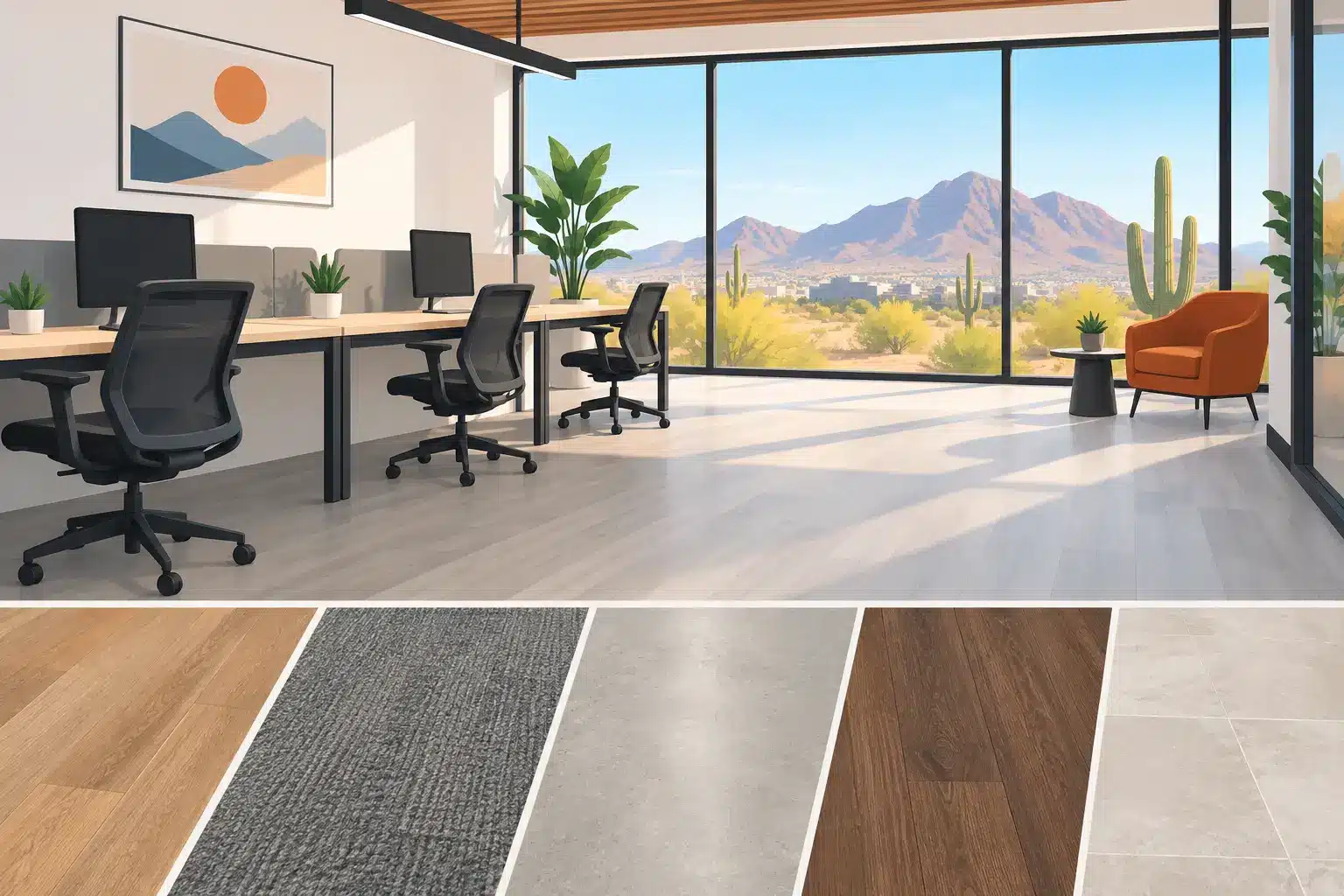
Carpet tile is a versatile commercial and residential flooring product, but it is generally not the right surface for an active kitchen. Food, grease, and moisture make it difficult to maintain in a cooking area. It can, however, be a smart companion material for nearby offices, playrooms, or commercial break areas where comfort and replaceable sections are useful.
How to Choose the Right Floor for Your Kitchen
Start with the demands of the room, then narrow your choices by style and budget. If maximum water resistance and easy cleanup lead the list, porcelain tile, luxury vinyl, and sheet vinyl should be strong contenders. If you want a natural, higher-end look, hardwood or stone may be worth the additional care and investment.
Next, think about transitions. A kitchen floor does not exist by itself. In many Phoenix homes, it needs to connect smoothly with flooring in the great room, hallways, and bedrooms. Matching floor heights, coordinating colors, and planning transitions before installation helps the finished space feel intentional.
Finally, do not judge materials from a small online image. See samples in your home, where cabinet color, wall paint, window light, and existing furnishings can change how a floor reads. A free in-home estimate is also the right time to identify subfloor conditions, appliance clearances, and installation needs that affect the final price.
Premium Carpet Tile Stone and Wood has helped local homeowners and property owners compare flooring choices for more than 30 years. A showroom appointment and professional guidance can make it easier to compare materials honestly, from wholesale-priced luxury vinyl to tile, stone, and hardwood.
The best kitchen floor is the one that supports the way you actually live, not just the one that looks best in a showroom. Choose a material you will feel good cleaning, walking on, and seeing every day – then have it measured and installed with the care a high-use room deserves.




Leave A Comment