
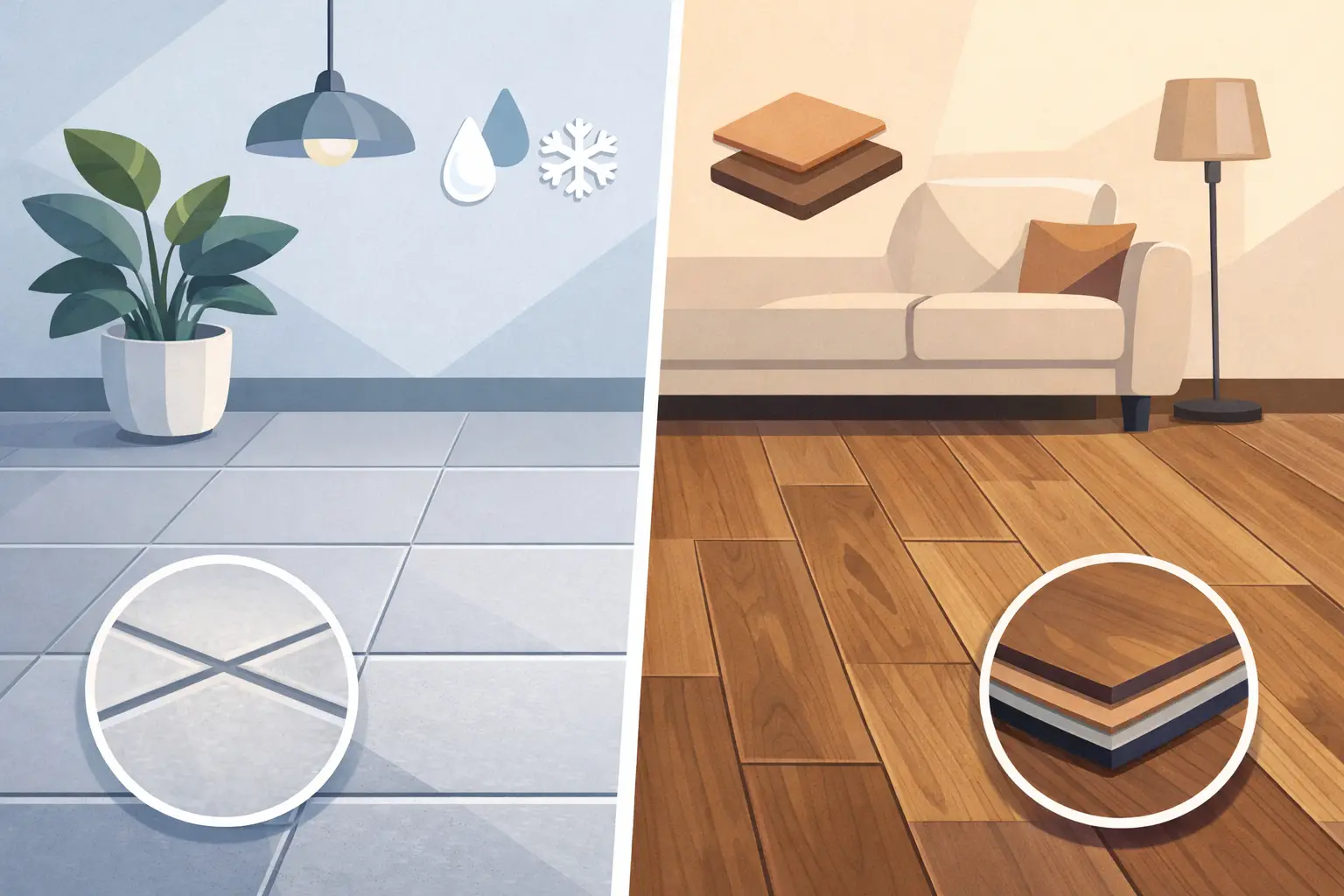
A floor can look great in a showroom and still be the wrong choice for the way you live. When comparing tile versus luxury vinyl, Phoenix-area homeowners and property managers usually need more than a color comparison. They need to know how each material will handle heat, pets, water, heavy use, cleaning, and the budget for installation.
Both are proven flooring choices. Tile brings long-term durability, a premium finish, and natural cooling underfoot. Luxury vinyl offers impressive design options, greater comfort, and practical performance at a price that often leaves more room in the project budget. The right choice depends on the room, the existing subfloor, and what matters most after the installation is complete.
Tile Versus Luxury Vinyl at a Glance
Ceramic and porcelain tile are hard-surface materials installed with thinset mortar and grout. Porcelain is especially dense and well suited for areas exposed to moisture, frequent traffic, and demanding cleaning routines. Tile can closely match a home’s existing stonework or create a distinctive look with wood-look planks, large-format styles, or decorative patterns.
Luxury vinyl is available as luxury vinyl plank (LVP) and luxury vinyl tile (LVT). It is a layered flooring product with a realistic printed design and a protective wear layer. Many products mimic wood, stone, or concrete with convincing texture and visual variation. Most luxury vinyl floors use either a click-lock floating system or a glue-down installation method.
The difference is not simply traditional versus modern. Tile and luxury vinyl solve different problems well. A busy household may appreciate the softer, quieter feel of LVP in bedrooms and living areas, while tile may be the better long-term choice for a shower-adjacent bathroom, a high-traffic entry, or a commercial space that needs a hard, permanent surface.
Durability Depends on What Your Floor Faces
Tile has a strong reputation for durability because it can last for decades when it is properly installed and maintained. Porcelain tile resists scratches, moisture, and everyday wear extremely well. It is a practical choice for homes with dogs, active families, and areas that see tracked-in sand and dirt.
That said, tile is not indestructible. A dropped cast-iron pan can chip it, and cracks can occur if the subfloor or concrete slab moves. Proper surface preparation and the right installation materials are essential, particularly in Arizona homes where slab conditions must be evaluated before work begins. Grout lines also need periodic cleaning and, depending on the grout type, may benefit from sealing.
Luxury vinyl handles normal household traffic very well, especially products with a quality wear layer. It is more forgiving when something falls, and it is less likely to chip than tile. However, sharp furniture legs, dragged appliances, and abrasive debris can scratch or gouge vinyl. Unlike tile, a deeply damaged plank or tile may need replacement rather than repair.
For rental properties, offices, and retail spaces, glue-down luxury vinyl can be a practical option because individual damaged pieces are often easier to replace. The best commercial choice depends on traffic patterns, maintenance expectations, and the condition of the concrete below.
Water Resistance Is Not the Same as Worry-Free
Tile is one of the most water-resistant flooring choices available. Porcelain tile itself does not absorb much moisture, and correctly installed tile is a dependable option for kitchens, bathrooms, laundry rooms, and entryways. Water can still reach grout, transitions, or the substrate if the installation is not done correctly, so the details matter.
Luxury vinyl is commonly marketed as waterproof or water resistant, and many products perform very well against everyday spills. A wet dog bowl, a kitchen spill, or a bathroom mishap usually will not damage the surface when cleaned up promptly. This makes luxury vinyl a popular choice for whole-home flooring.
The limitation is beneath the floor. Water that gets through an open seam, around the perimeter, or under a floating floor can become trapped and create problems with the subfloor or adhesive. For a full bathroom remodel, shower area, or space with recurring standing water, tile remains the more dependable material when paired with proper waterproofing.
Comfort, Heat, and Noise Matter in Phoenix Homes
Tile feels cool underfoot, which many Arizona homeowners appreciate during the hottest months. It is also compatible with radiant heating systems for those who want warmth during cooler desert mornings. Its firmness can be a benefit in kitchens where easy cleaning is a priority, but some people find tile tiring to stand on for long periods.
Luxury vinyl is warmer and softer underfoot. Its slight give can make a noticeable difference in a kitchen, playroom, bedroom, or second-floor living area. It also absorbs more sound than tile, which can help reduce footfall noise in multi-story homes, condos, and office interiors.
Sun exposure deserves special attention in the East Valley. Large windows and direct Arizona sunlight can raise floor temperatures quickly. Quality luxury vinyl products can perform well, but they must be installed according to manufacturer requirements for expansion space, window coverings, and temperature conditions. Tile is generally less affected by heat and sunlight, although its surface can become warm in direct sun.
Style: Natural Stone Looks or Softer Wood Visuals
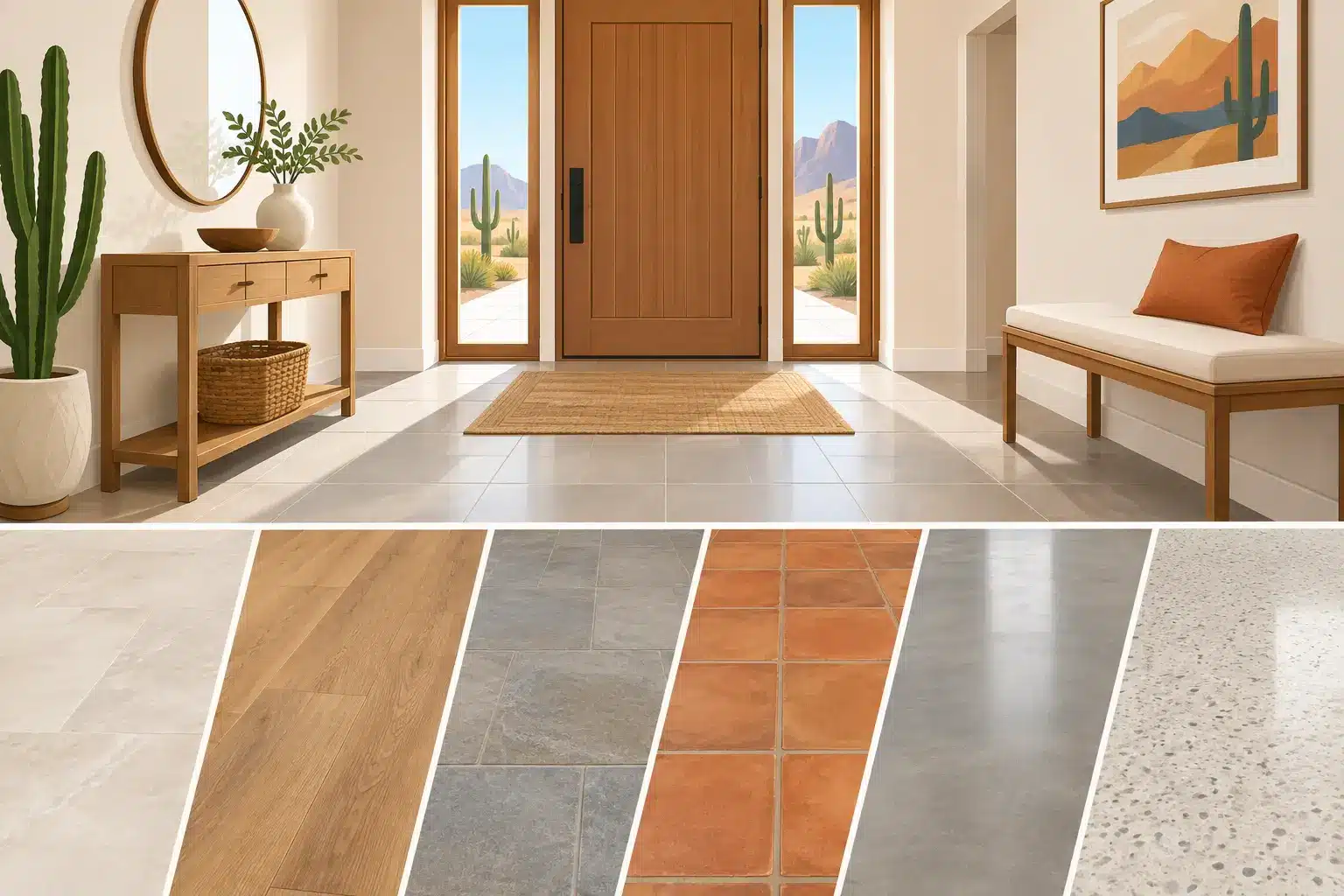
Tile offers a level of visual depth that is difficult to duplicate. Porcelain can resemble marble, travertine, limestone, concrete, and wood, while ceramic tile provides a wide selection of colors and decorative options. Large-format tile can create a clean, contemporary look with fewer grout lines, while smaller tile can add texture and detail.
Luxury vinyl has become a strong design choice, especially for realistic wood visuals. Wide planks, embossed textures, and low-gloss finishes can give a room the appearance of hardwood without the same concern over everyday water exposure. LVT also offers stone and tile looks, often with a more comfortable walking surface than actual tile.
If a homeowner wants flooring throughout bedrooms, halls, living areas, and the kitchen with minimal transitions, luxury vinyl can create a cohesive result. If the goal is a high-end bath, a dramatic entry, or a surface designed to stay beautiful through decades of use, tile may deliver more of the look and permanence you want.
Installation and Budget Should Be Evaluated Together
Material price is only part of the cost comparison. Tile installation is typically more labor-intensive because the surface must be carefully prepared, tile must be set and grouted, and the finished floor needs time to cure. Layout complexity, tile size, demolition, leveling, and pattern details all affect the final quote.
Luxury vinyl can often be installed more quickly, particularly when a suitable existing floor can remain in place and the subfloor is flat. But it is not a shortcut around preparation. Uneven concrete, moisture concerns, and damaged subfloors can affect the performance and appearance of any vinyl installation. A floating floor needs the correct expansion space, while glue-down vinyl requires proper adhesive and moisture testing.
For a budget-conscious remodel, luxury vinyl may offer a lower installed cost and a fast visual upgrade. For a long-term investment in a room where water, heat, and traffic are constant concerns, tile may justify the higher upfront expense. The best value is not always the lowest initial number. It is the floor that fits the use of the space without creating an early replacement project.
How to Choose for Each Room
In kitchens, either choice can work. Select tile when durability, coolness, and a more permanent hard surface are priorities. Choose luxury vinyl when comfort, quieter footfall, and a wood-look design are more important.
For bathrooms, tile is often the stronger recommendation, especially where moisture is frequent or a tiled shower is part of the project. Luxury vinyl can work well in a powder room or low-moisture bathroom when the product and installation method are appropriate.
In bedrooms and living rooms, luxury vinyl is often favored for warmth and comfort. Tile can still be a smart choice for homeowners who prefer its clean look, have allergy concerns, or want a floor that stays cooler in summer.
For commercial properties, consider the type of traffic first. Tile performs well in lobbies, restrooms, and high-wear public spaces. Glue-down luxury vinyl can be a practical choice for offices, retail areas, and rental turns where maintenance and individual plank replacement matter.
A flooring sample tells part of the story. A free in-home estimate can reveal the rest, including subfloor conditions, natural light, room transitions, and installation needs. Premium Carpet Tile Stone and Wood can help Phoenix and East Valley customers compare actual tile and luxury vinyl options side by side, so the decision is based on how the floor will perform in your space, not just how it looks under showroom lighting.
Before selecting a color, think about the next five to ten years of use. The right floor should make daily life easier, whether that means cooler tile under summer feet or comfortable luxury vinyl that keeps up with a full house.


Leave A Comment