
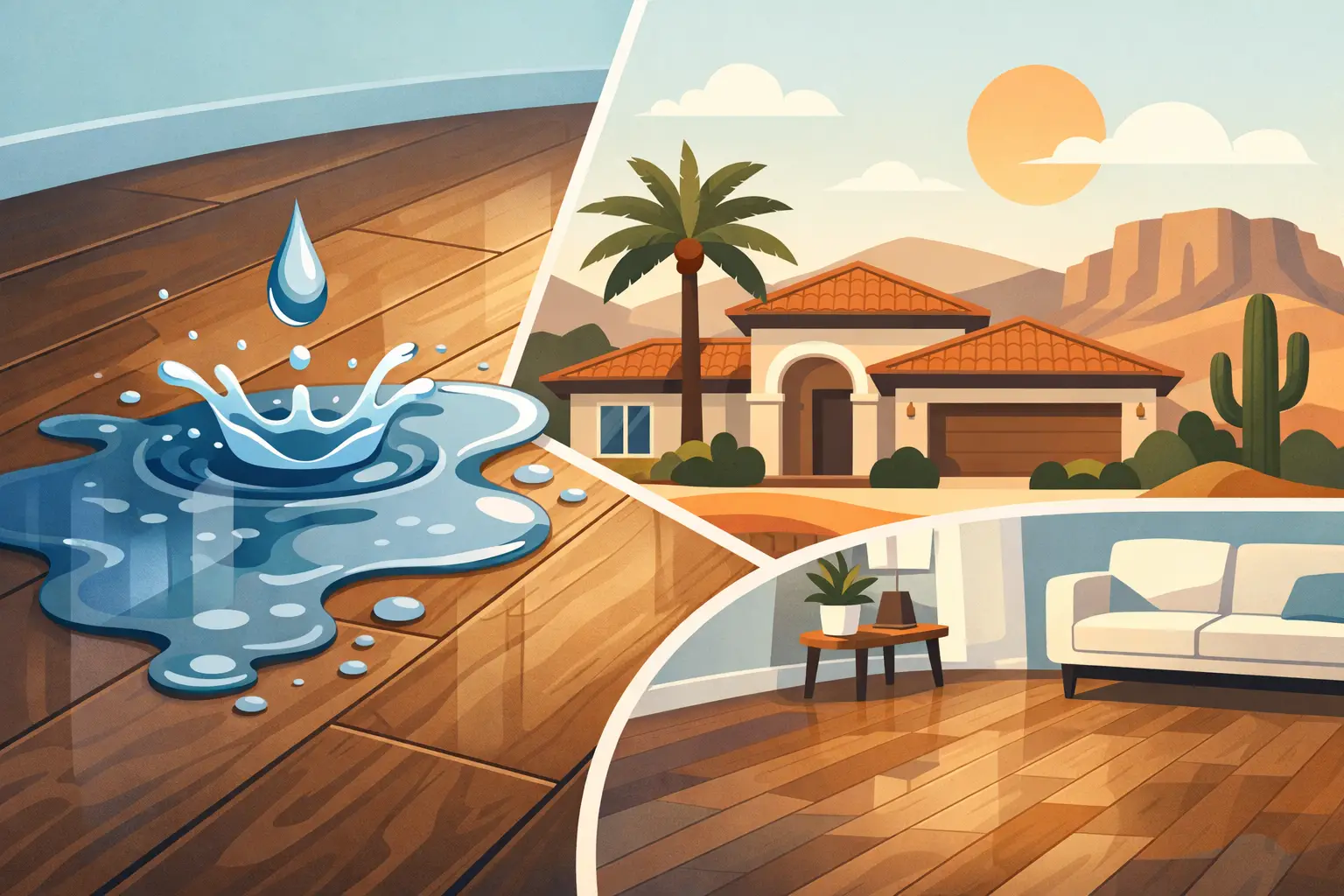
A leaking refrigerator line can ruin the wrong floor before you have time to find a towel. That is why homeowners often ask, is luxury vinyl waterproof before choosing flooring for kitchens, bathrooms, laundry rooms, and active family spaces. In most cases, the luxury vinyl product itself is waterproof. The more useful question is whether the entire installed floor can handle the water exposure your home or business may face.
Luxury vinyl plank (LVP) and luxury vinyl tile (LVT) are practical choices for Phoenix and East Valley properties because they offer the appearance of wood or tile without the same sensitivity to everyday moisture. Still, not every luxury vinyl floor is built the same way, and installation details matter as much as the plank or tile you select.
Is Luxury Vinyl Waterproof From Top to Bottom?
The vinyl layers in quality LVP and LVT do not absorb water the way hardwood, laminate, or carpet can. A spilled drink, wet shoes by the entry, a bathroom splash, or routine mopping will not cause the vinyl material to swell, cup, or rot. This is the core reason luxury vinyl is described as waterproof.
Most luxury vinyl flooring is made with several layers: a protective wear layer, a printed design layer, a waterproof vinyl core, and a backing layer for stability or comfort. Some products use a flexible vinyl core, while rigid-core options use WPC or SPC construction. All can offer strong water resistance, but their feel, dent resistance, and installation requirements vary.
Waterproof does not mean water can never get past the flooring. Moisture may enter at perimeter gaps, around plumbing penetrations, through poorly sealed transitions, or between planks if the floor is damaged or incorrectly installed. Once water reaches the subfloor, it may create problems below the surface even when the luxury vinyl itself looks fine.
That distinction matters. A waterproof plank can survive a spill. It cannot necessarily prevent a major leak from affecting drywall, baseboards, adhesives, concrete conditions, or a wood subfloor.
Where Luxury Vinyl Performs Best
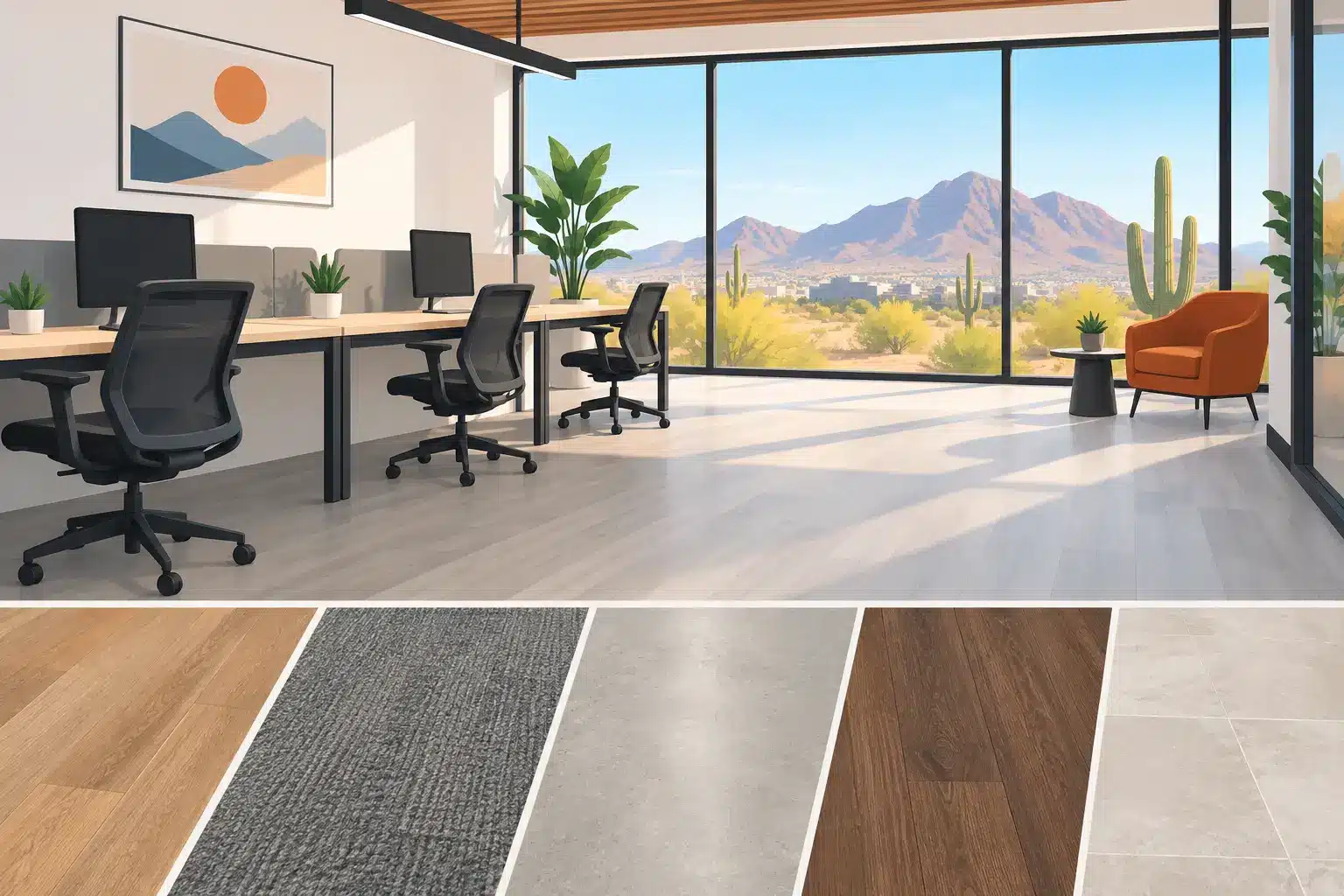
Luxury vinyl is a strong option in rooms where moisture is part of normal life. It is especially well suited to kitchens, bathrooms, laundry rooms, mudrooms, hallways, and ground-floor living areas. For rental properties and commercial spaces, it can also make sense in offices, retail areas, break rooms, and corridors where easy cleaning and durable performance are priorities.
In Arizona homes, luxury vinyl has another advantage: it is typically easier to live with than natural wood in spaces that see temperature changes, tracked-in dust, pets, and frequent traffic. A good wear layer helps resist scuffs and scratches, while the waterproof construction makes routine cleanup less stressful.
For homes with pools, luxury vinyl can work well in adjacent interior areas, provided water is wiped up in a reasonable amount of time. It is not a substitute for proper drainage, entry mats, or attention to persistent water exposure. The goal is to select a floor that fits everyday use, not to assume any flooring can ignore neglect or plumbing failures.
The Difference Between Waterproof and Water-Resistant
Flooring descriptions can be confusing because manufacturers use terms such as waterproof, water-resistant, spill-resistant, and moisture-resistant. These terms do not always mean the same thing.
A waterproof luxury vinyl product has a core and surface that are not damaged by water exposure under normal conditions. Water-resistant flooring can handle limited moisture but may swell, stain, or break down if water sits too long. Traditional laminate is a common example of a product that may be water-resistant without being fully waterproof.
The warranty is where the details become clear. One manufacturer may cover topical spills as long as they are cleaned promptly. Another may offer broader protection against pet accidents or wet mopping. Neither warranty is likely to cover damage from a failed appliance, a flood, poor site conditions, or moisture coming up through an unprepared concrete slab.
Before making a decision, ask what the warranty covers, how long standing water is allowed to remain, and whether the product is approved for the room you have in mind. That is particularly important for bathrooms, laundry rooms, and commercial applications.
Why Installation Still Matters
Even premium luxury vinyl can underperform when installed over the wrong subfloor or without the required preparation. Flooring installation is not simply a matter of clicking planks together. The subfloor must be clean, level, dry, and structurally sound according to the product specifications.
On concrete, installers need to evaluate moisture conditions before installation. Concrete can release moisture vapor even when it looks dry on the surface. Depending on the product and site conditions, the project may require moisture testing, a vapor barrier, or a moisture-mitigation system. Skipping this step can lead to adhesive issues, odors, mold concerns below the floor, or problems with the flooring warranty.
In a bathroom or laundry room, the finished floor should also be planned around transitions, toilets, cabinets, and baseboards. A floating floor needs proper expansion space. An adhered product needs the correct adhesive and substrate preparation. Trying to seal every edge without following the manufacturer’s instructions can create a different set of problems.
Professional installation helps protect the investment because it accounts for these details before the first plank is installed. It also gives you a clear plan for removing and replacing flooring if a serious leak occurs later.
Choosing the Right Luxury Vinyl Construction
The best waterproof luxury vinyl floor depends on the room, traffic level, subfloor, and budget. The appearance is important, but it should not be the only factor.
WPC, or wood-plastic composite, often has a slightly softer and warmer feel underfoot. It can be a comfortable choice for living areas and bedrooms, and it may help soften sound. SPC, or stone-plastic composite, is generally denser and more resistant to dents from heavy furniture or busy commercial traffic. It is often a practical choice for kitchens, hallways, rentals, and spaces where durability is the main concern.
Wear-layer thickness matters as well. A thicker wear layer usually provides better protection from scratches and wear, especially in homes with large dogs, children, or frequent entertaining. For commercial projects, the product should be rated for the intended use rather than selected solely by color or price.
Texture and finish deserve attention, too. Embossed wood-look planks can provide a more realistic visual effect, while matte finishes often hide dust and light surface marks better than high-gloss floors. In a bright Arizona home, requesting samples and viewing them in the actual room can prevent surprises once the flooring is installed.
What to Do When Water Gets Under the Floor
If you have a significant leak, act quickly. Shut off the water source, remove standing water, and contact a restoration professional when the affected area is extensive. Do not assume the floor is fine simply because the vinyl surface is intact.
For a small spill, wipe it up and allow the area to dry. For water that has traveled beneath planks or into a wood subfloor, sections of the floor may need to be removed so the materials underneath can be inspected and dried. Depending on the locking system and condition of the planks, some flooring may be reusable, but that is not guaranteed.
Watch for signs of trapped moisture, including a musty odor, loose planks, staining at baseboards, soft areas, or changes around transitions. Addressing these issues early is less disruptive than waiting for hidden moisture to affect surrounding materials.
Get Advice Based on Your Actual Space
Luxury vinyl gives many homeowners and property managers the moisture protection they want without giving up the look of wood or tile. But the right product is only part of the decision. Room conditions, subfloor preparation, installation method, and expected traffic all affect long-term results.
At Premium Carpet Tile Stone and Wood, LLC, our team can help you compare LVP and LVT options, review samples, and plan an installation that fits your home, rental, or commercial project. A free in-home estimate is a practical way to confirm what your space needs before you commit to a floor that should serve you well for years.


Leave A Comment