
A countertop can look great in the showroom and still be the wrong fit once real life starts happening on it. Hot pans, spilled coffee, kids doing homework, tenants moving in and out, or a busy office break room all put surface materials to the test. When customers ask about granite countertops vs quartz, they usually want more than a style opinion. They want to know which one will hold up, what it will cost over time, and which choice makes the most sense for the way the space is actually used.
Granite countertops vs quartz: the real difference
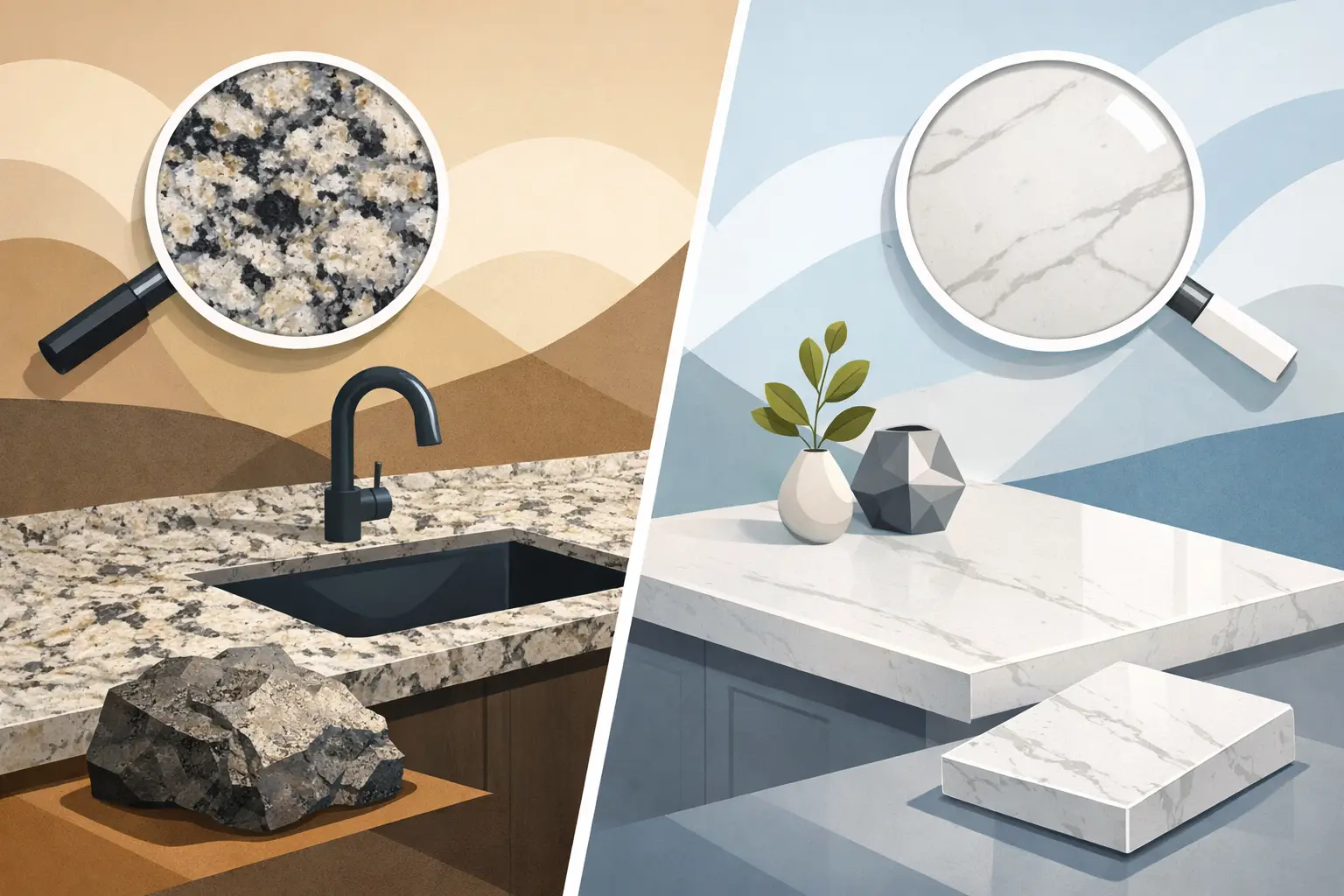
Granite is a natural stone cut from slabs formed by the earth. Every slab has its own movement, mineral pattern, and color variation. Quartz countertops are engineered surfaces made from crushed quartz combined with resins and pigments. That difference matters because it affects appearance, maintenance, consistency, and performance.
If you like the one-of-a-kind look that comes from natural material, granite usually has the edge. No two slabs are exactly alike, and many homeowners like that sense of depth and variation. If you want a more controlled appearance with predictable patterning, quartz tends to be easier to match across a kitchen, bath, or commercial space.
Neither option is automatically better. The right choice depends on how much maintenance you want, how you use the space, and whether you prefer natural variation or a cleaner, more uniform look.
Appearance and design flexibility
For many buyers, the first decision is visual. Granite often appeals to people who want a high-end natural look with movement, veining, speckling, or bold mineral detail. Some slabs are subtle and understated. Others become the focal point of the room.
Quartz offers more control. Because it is manufactured, colors and patterns can be designed to create a cleaner look, including styles that resemble marble or concrete. That makes quartz attractive for modern kitchens, commercial interiors, and remodels where consistency matters.
This is also where your cabinets, flooring, and lighting come into play. A busy granite slab can be beautiful, but it may compete with dramatic tile or patterned flooring. Quartz can be easier to coordinate if the rest of the room already has a lot going on. On the other hand, if the room needs warmth and natural character, granite can bring that in a way engineered products sometimes do not.
Durability in everyday use
Both granite and quartz are durable surfaces, and both perform well in active homes and many commercial settings. That said, they do not behave exactly the same way.
Granite is very hard and resists scratching well under normal use. It also handles heat better than quartz, which matters if you occasionally set down a hot pan or use the kitchen heavily. Quartz is also strong and durable, but because it includes resin, it is generally more vulnerable to heat damage from direct contact with hot cookware.
Quartz has an advantage when it comes to stain resistance because it is non-porous. Granite is naturally porous, so it needs proper sealing to help protect against staining from oil, wine, coffee, and similar spills. In a busy household or rental property, that maintenance difference can matter more than people expect.
If you want a surface that asks less from you day to day, quartz often wins. If heat resistance and natural stone appeal are higher priorities, granite remains a strong option.
Maintenance and long-term care
This is often the deciding factor.
Quartz is low maintenance. It does not need sealing, and routine cleaning is simple with mild soap and water or an appropriate stone-safe cleaner. For many homeowners, that convenience is a major selling point.
Granite needs more attention. It should be sealed periodically, depending on the stone and how heavily the countertop is used. Some granites are denser and less absorbent than others, so the maintenance schedule is not identical across every slab. Still, granite ownership comes with a little more responsibility.
That does not mean granite is difficult to own. It just means you need to be realistic. If you enjoy natural materials and do not mind occasional upkeep, granite can serve you well for many years. If you want to install it and think about it as little as possible, quartz is usually the easier fit.
Cost: upfront price vs long-term value
Price is one of the most common questions, and the honest answer is that both materials come in a range of price points. The cost depends on the specific color, slab availability, edge profile, square footage, cutouts, fabrication details, and installation complexity.
Granite can be very competitive in price, especially when you choose from readily available colors. Some premium exotic slabs cost more, but not every granite project is a luxury-only purchase. Quartz also ranges from accessible to premium, depending on the brand and design.
The better way to think about cost is value. Granite may have a lower initial price in some cases, but it can require sealing and a little more care over time. Quartz may cost more in certain selections, yet its low-maintenance nature appeals to buyers who want predictable ownership. For property owners or commercial buyers, consistency and reduced upkeep can justify the investment.
This is also why an in-person quote matters. Two kitchens with the same square footage can price differently based on layout, sink openings, backsplashes, and installation conditions.
Granite countertops vs quartz for Phoenix-area homes
In Arizona, materials need to work with real conditions, not just design trends. Homes in Phoenix, Mesa, and the East Valley often feature open floor plans, strong natural light, and kitchens that get a lot of daily use. That can influence how a countertop looks and performs.
Quartz is often a smart choice for households that want easy maintenance and a clean, consistent finish. It works well in updated kitchens, bathrooms, and investment properties where simplicity matters. Granite remains a popular choice for buyers who want natural stone character and strong heat performance in a hardworking kitchen.
Sunlight is another factor worth discussing during selection. Large windows and bright interiors can change how patterns and colors read throughout the day. A slab that feels calm indoors under showroom lighting may look more active in direct natural light. That is one reason product guidance and sample review matter so much before installation.
Best uses for each material
Granite is a strong fit for kitchens where natural beauty, heat resistance, and long-term stone appeal are top priorities. It also works well in spaces where variation is welcome and where the owner is comfortable with basic ongoing care.
Quartz is often ideal for busy family kitchens, bathrooms, office break rooms, rental properties, and commercial applications where low maintenance and visual consistency are important. It is especially appealing for buyers who want a polished look without sealing requirements.
There are also style-driven decisions. If you are matching multiple surfaces across a large project, quartz may make coordination easier. If you want your countertop to feel more organic and unique, granite has a strong advantage.
Which one should you choose?
Choose granite if you want a natural stone surface with distinctive character, strong scratch resistance, and better heat tolerance. It is a practical choice for buyers who appreciate authentic slab variation and do not mind periodic sealing.
Choose quartz if you want easier maintenance, dependable stain resistance, and a more uniform look. It is often the simpler choice for busy households, commercial interiors, and anyone who wants fewer care requirements after installation.
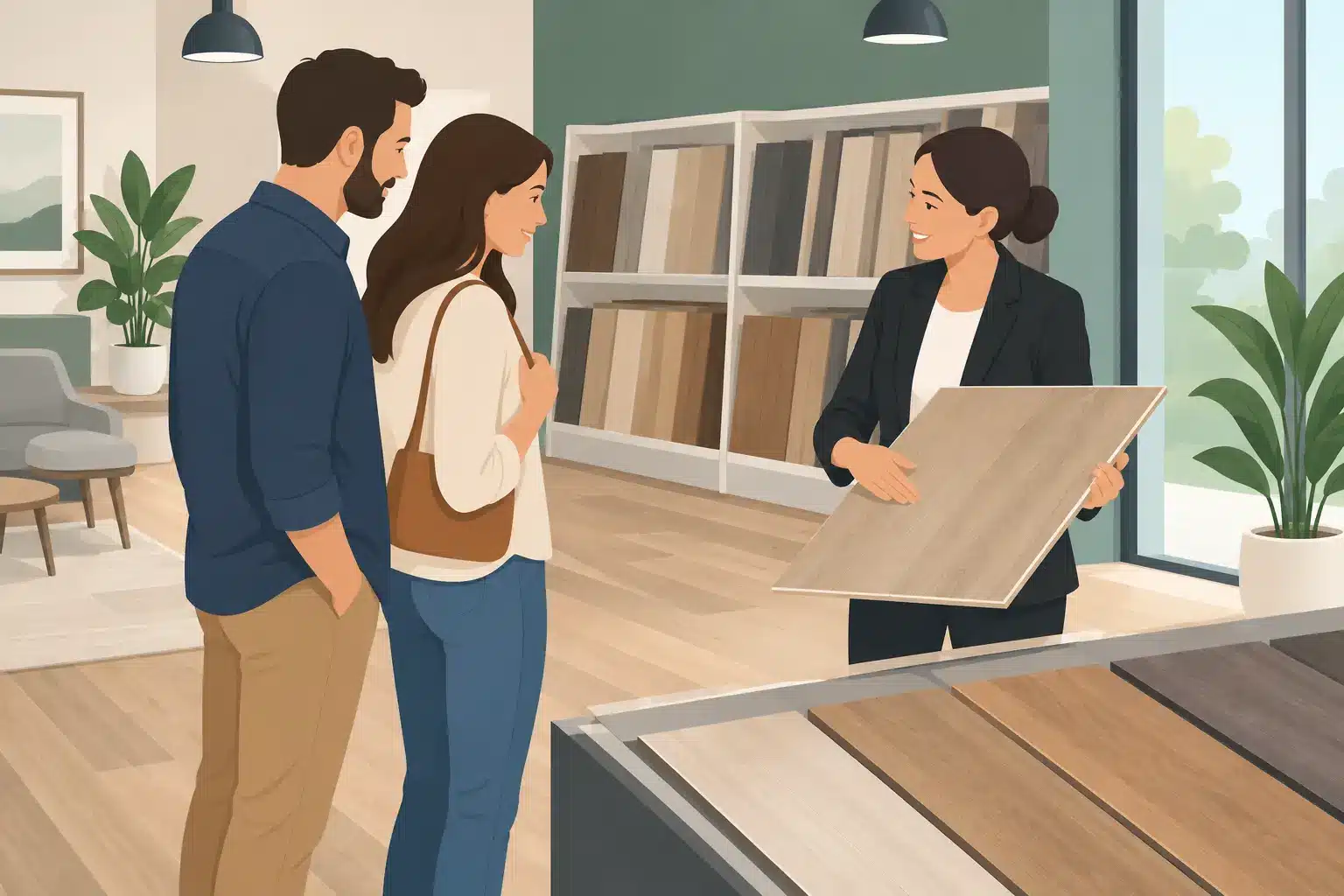
For many customers, the decision becomes clear once they compare actual samples against cabinets, flooring, and lighting conditions. A countertop is not selected in isolation. It has to work with the rest of the room and with the way the property is used. That is why a consultative approach matters. At Premium Carpet Tile Stone and Wood, LLC, we help customers narrow the options based on design goals, budget, and day-to-day use, not just what looks good at first glance.
The best countertop is the one that still feels like the right decision after the remodel is done and life returns to normal.


Leave A Comment