
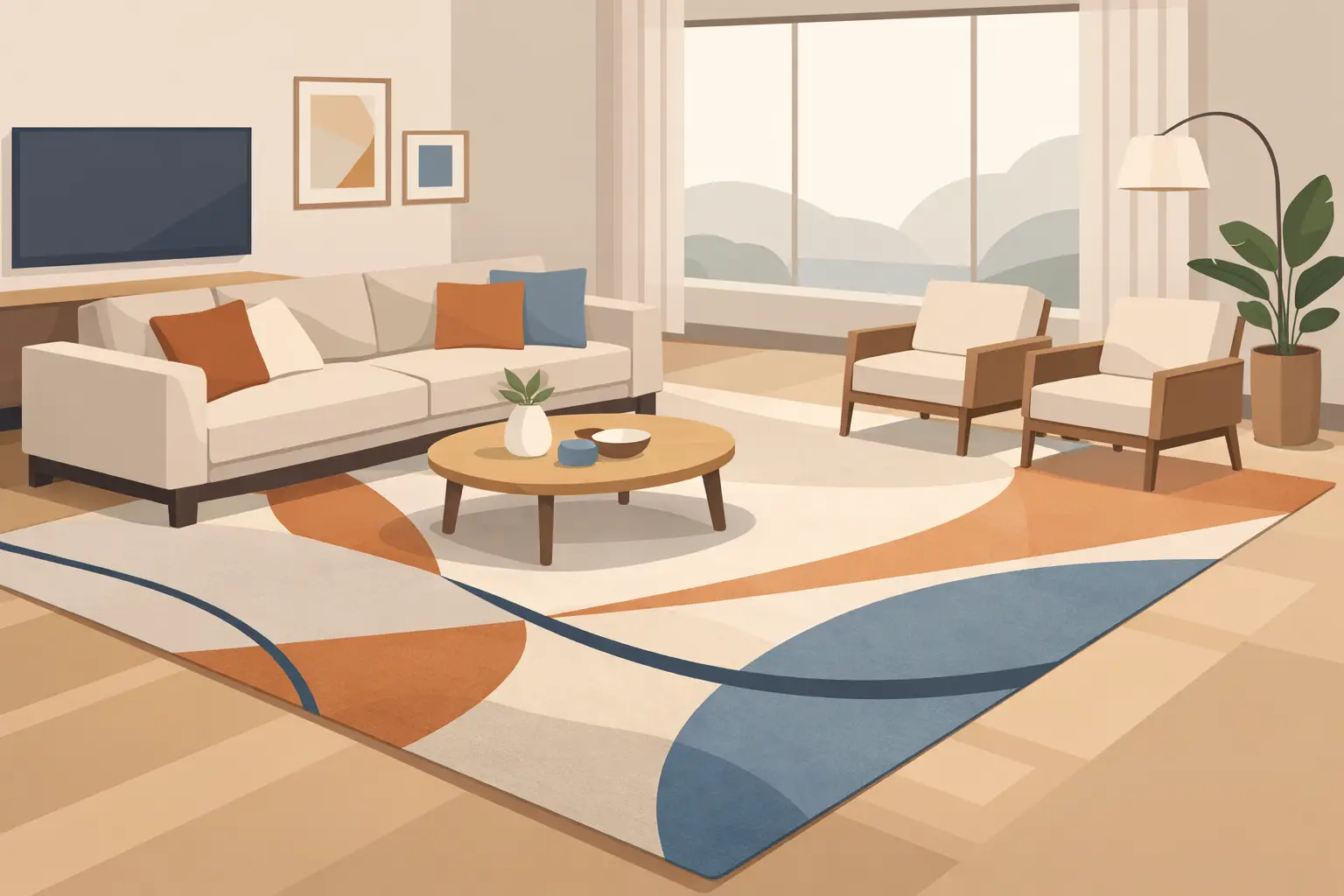
A large living room can be one of the hardest spaces to finish well. The furniture may fit, the paint may look right, and the lighting may be in place, but without the right rug, the room can still feel unfinished or disconnected. Choosing area rugs for large living room layouts is less about filling empty floor space and more about giving the room structure, comfort, and balance.
In many homes, the living room does several jobs at once. It may be where the family gathers, where guests sit, where kids play, or where an open-concept floor plan needs a clear visual boundary. A well-sized rug helps tie those functions together. The wrong rug usually does the opposite, making the room feel smaller, off-scale, or awkwardly arranged.
How to choose area rugs for large living room layouts
The first decision is size, and this is where many homeowners go too small. In a large room, a rug that floats in the middle with only the coffee table on top often looks out of place. It can make the seating area feel separated instead of grounded.
A better approach is to choose a rug large enough for at least the front legs of your main furniture pieces to sit on it. In many larger living rooms, that means moving beyond standard smaller sizes and considering dimensions that actually fit the seating plan. If your room is especially open, a rug large enough to hold the full furniture grouping can create a cleaner, more intentional look.
There is some flexibility here. If you have a formal sitting room with furniture arranged around the edges, you may prefer a larger rug that anchors nearly everything. If the room is used heavily every day, leaving a consistent border of exposed flooring around the rug can help the layout feel balanced while still protecting the areas that see the most use.
Common rug sizes that work in larger rooms
For many large living rooms, 8×10 is the minimum starting point, not the default answer. A 9×12 often works better when you have a full sofa, accent chairs, and a coffee table. In especially spacious homes, 10×14 or oversized custom options may be the better fit.
The right size depends on the furniture footprint, not just the room dimensions. That is why in-home measuring matters. A rug can look large in a showroom and still feel undersized once it is placed under a wide sectional or an expansive seating arrangement.
Shape matters more than people expect
Rectangular rugs are still the most common choice, but they are not the only option for a large living room. If your furniture layout is more square, a square rug can create better proportions. Round rugs can work in conversation areas or under central seating groups, but in larger rooms they need enough scale to avoid looking decorative rather than functional.
This is one of those areas where style and layout have to work together. A striking shape can help define a room, but only if the rug still supports the furniture placement.
Match the rug to the way the room is used
Not every large living room has the same demands. Some spaces are formal and lightly used. Others are high-traffic family rooms where pets, children, and everyday activity put materials to the test. The best rug is not just the one that looks good on day one. It is the one that still works six months and two years later.
If the room gets heavy daily use, durability should lead the conversation. Low-pile rugs are easier to maintain and tend to hold up better under furniture and foot traffic. They also collect less visible dust and debris than deep, plush textures. For households with pets or kids, stain resistance and cleanability matter just as much as color and pattern.
For lower-traffic living rooms, you have more freedom to prioritize texture and softness. Wool blends, patterned designs, and more refined finishes can all make sense when the space is used for entertaining rather than constant daily wear.
Material choices for area rugs for large living room spaces
Material affects appearance, comfort, maintenance, and lifespan. That is why it should be part of the decision early, not something handled after color and size.
Synthetic fibers are often a practical choice for busy households. They are generally budget-friendly, easier to clean, and available in a wide range of colors and patterns. For property owners or families looking for value and durability, this category often makes the most sense.
Wool rugs bring a more premium feel and can offer excellent resilience, but they usually come at a higher price point. They are a strong option when comfort and appearance are the priority, especially in formal living rooms or upscale remodels.
Natural fiber rugs can create a relaxed, textured look, though they are not always the easiest to maintain in every setting. In a desert climate like Phoenix, dust management and sun exposure should be part of the conversation. Some materials simply perform better than others in bright rooms with frequent use.
Color and pattern in a large room
A large living room gives you room to make a design statement, but that does not always mean bolder is better. In many cases, the rug should support the room rather than dominate it.
If your furniture is neutral, a patterned rug can add depth without making the space feel busy. If the room already has strong colors, textured upholstery, or visible wood grain, a quieter rug may be the better choice. The scale of the pattern matters too. Small, tight patterns can get lost in a big room, while oversized designs often read more clearly across a larger footprint.
Lighter rugs can open up the room visually, but they usually show wear and soiling more quickly. Darker rugs can hide some traffic but may make the room feel heavier if the rest of the palette is already dark. Mid-tone rugs often offer the best balance between style and everyday practicality.
Sunlight changes everything
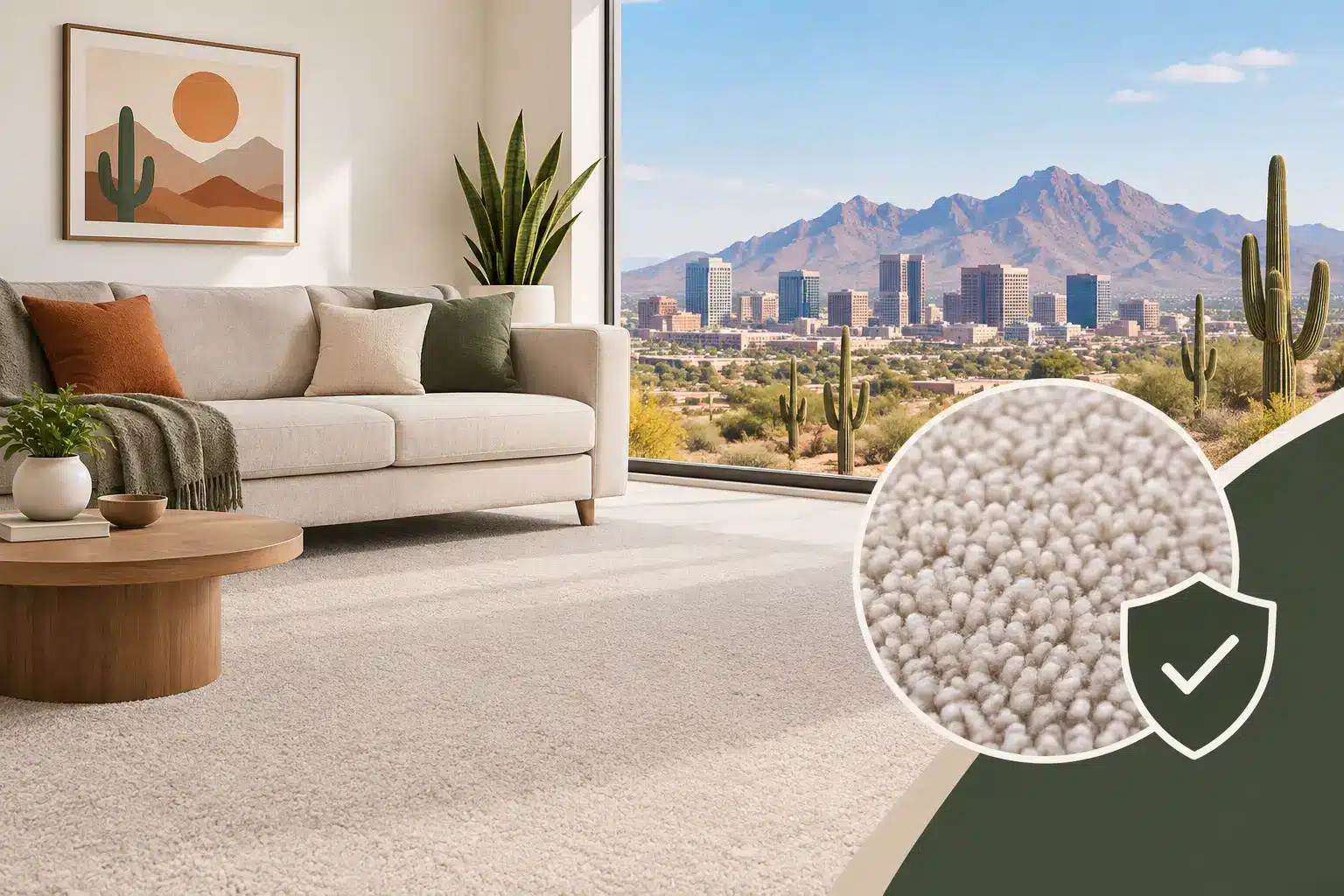
Large living rooms in Arizona often get plenty of natural light, which can be a benefit and a challenge. Strong sunlight can shift the way colors look throughout the day and may contribute to fading over time. That is one reason samples matter. A rug that looks warm gray in a showroom may read beige or taupe once it is placed in direct afternoon light.
This is also where expert guidance helps. Flooring and rug choices should be made with the actual room conditions in mind, not just a product tag or online photo.
Placement mistakes to avoid
The most common mistake is choosing a rug that is too small for the furniture grouping. It is usually done to save money, but it often hurts the overall look of the room. In a large living room, scale is not optional. The rug has to be sized to the space if you want the room to feel finished.
Another mistake is ignoring traffic flow. A rug should work with how people walk through the room, not create edges in the middle of a natural path. If a large room connects to a kitchen, hallway, or patio door, placement needs to account for that movement.
Padding is often overlooked too. A quality rug pad can improve comfort, reduce shifting, and help the rug wear more evenly. On hard surfaces, it also adds a measure of floor protection. That may not be the most visible part of the purchase, but it affects long-term performance.
When custom sizing makes sense
Some large living rooms do not fit standard rug dimensions well. This happens often in open-concept homes, rooms with oversized sectionals, or spaces with unusual proportions. In those cases, trying to force a standard size can leave the room looking slightly off, even if everything else is done right.
Custom options or broadloom rugs finished to size can be worth considering when you need a more exact fit. They can also be a smart solution for homeowners who want the softness and scale of a rug without compromising the room layout. For buyers who want more guidance, working with a local flooring expert such as Premium Carpet Tile Stone and Wood, LLC can simplify the process by matching product options to room measurements, lifestyle needs, and budget.
The best rug is the one that fits your room and your routine
There is no single best answer for every home. The right choice depends on room size, furniture layout, traffic level, maintenance expectations, and the look you want to achieve. A formal living room and a busy family gathering space may both need large rugs, but they rarely need the same rug.
That is why a practical, measured approach works best. Start with the actual layout, think about how the room is used, and choose a rug that supports both. When size, material, and placement all make sense together, the room feels more comfortable the moment you walk in – and that is usually the clearest sign you chose well.



Leave A Comment