
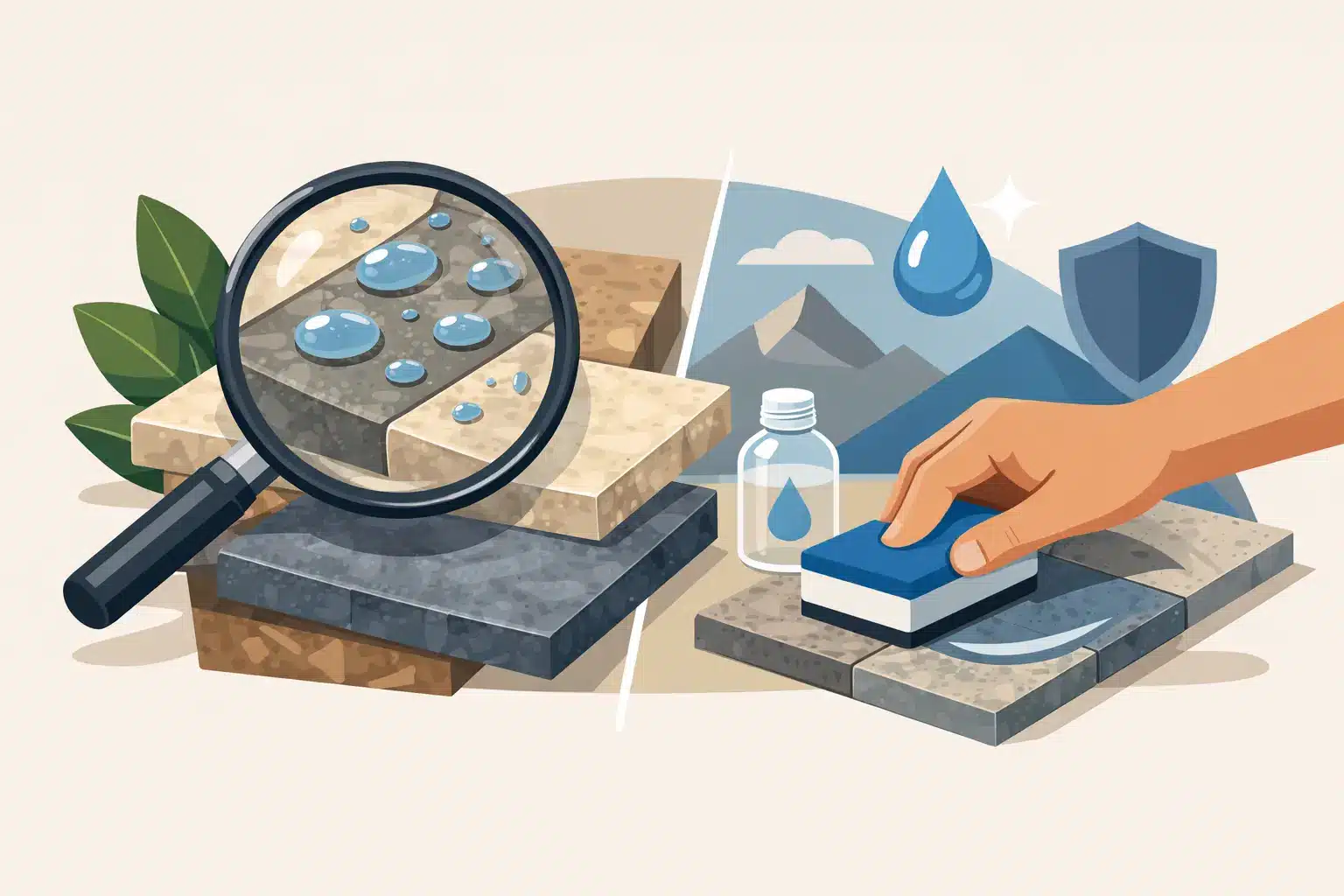
A new stone floor or countertop can look nearly indestructible, but its surface may still absorb water, oil, and everyday spills. So, does natural stone need sealing? In many cases, yes. The right sealer helps protect porous stone from staining and makes routine care easier. But the material, finish, location, and existing treatment all determine whether sealing is needed and how often it should be done.
For Phoenix-area homes and commercial properties, that distinction matters. Stone used around a pool, in a busy entry, on an outdoor patio, or in a kitchen faces very different conditions than stone installed on a low-traffic interior wall. A knowledgeable recommendation starts with the specific stone, not a one-size-fits-all sealing schedule.
Does Natural Stone Need Sealing in Every Application?
Not every natural stone needs the same level of protection. Natural stone is not a single product category. Granite, marble, travertine, limestone, slate, and quartzite each have different levels of density and porosity. Some readily take in moisture, while others are naturally more resistant.
Travertine and limestone usually benefit from sealing because they are more porous and can stain easily. Marble also often needs sealing, particularly on countertops, vanities, shower surrounds, and floors where spills are likely. Slate varies widely by type and finish, while granite and quartzite are often denser but may still need a sealer depending on the slab or tile.
Even two pieces of stone with the same name can perform differently. A polished granite countertop may resist water well, while a honed or textured version of a similar material can absorb more readily. This is why selecting a sealer based only on a label such as “granite sealer” can lead to disappointing results.
Sealing also does not make stone maintenance-free. A penetrating sealer is designed to slow absorption, giving you more time to wipe up a spill. It does not create an impenetrable plastic coating, prevent physical damage, or stop every type of discoloration.
What a Stone Sealer Can and Cannot Do
A quality penetrating sealer moves into the pores of the stone and helps repel water and oil. This is especially useful in kitchens, bathrooms, laundry rooms, entryways, and commercial spaces where moisture and traffic are part of daily use. It can reduce the chance that cooking oil, cosmetics, drinks, pet accidents, or tracked-in dirt leave a lasting stain.
What it cannot do is prevent etching. Acidic products such as lemon juice, vinegar, wine, and some cleaners can react with calcium-based stones like marble, travertine, and limestone. The result may be a dull or light mark on the surface. That is etching, not staining, and it can happen even on properly sealed stone.
A sealer also will not repair cracks, chips, loose tiles, or worn grout. It will not protect a polished countertop from scratches caused by dragging abrasive items across it. Proper material selection, professional installation, and realistic care expectations still matter.
How to Tell Whether Your Stone Needs Sealing
The simplest first check is a water-drop test. Place a few drops of water on a clean, dry, inconspicuous area of the stone. Let them sit for about 10 to 15 minutes, then wipe them away. If the stone darkens while wet and returns to its normal color after drying, it is absorbing moisture and may benefit from sealing.
This test is helpful, but it is not perfect. A stone can resist water while still being vulnerable to oil-based staining. Countertops in particular may need a more careful evaluation, especially if they are used heavily for cooking. A flooring professional or stone fabricator can help identify the material and recommend the correct sealer for its finish and use.
Avoid applying more sealer simply because the stone is old. Overapplication can leave a hazy residue, streaks, or a tacky surface that attracts dirt. If water continues to bead and the stone does not darken, another coat may not be necessary.
Signs It May Be Time to Reseal
Stone does not follow a universal calendar. A lightly used guest bathroom floor may go years between applications, while an active kitchen countertop or busy commercial lobby may need attention sooner. Watch for practical signs: water soaking in quickly, dark spots that linger after a spill, or a surface that seems harder to clean than before.
For many sealed interior stone surfaces, checking protection once a year is reasonable. High-use countertops, shower areas, and outdoor stone may need more frequent inspection. The water-drop test is generally more reliable than resealing on a fixed schedule.
Sealing Stone Floors, Countertops, and Outdoor Areas
Location should guide the decision. Stone flooring in a formal living room has different demands than travertine around a backyard pool. In Arizona, outdoor stone is exposed to intense sun, dust, sudden monsoon moisture, and frequent temperature changes. A suitable sealer can help with moisture and staining, but it should be selected for exterior use and should not create a slippery surface.
For outdoor patios, walkways, and pool decks, avoid assuming that a glossy or film-forming product is the best option. Some topical sealers can alter the stone’s appearance, trap moisture, or become slick when wet. A penetrating, breathable product is often the better choice, but the right option depends on the stone and the desired finish.
Kitchen countertops need protection from food and oil spills, while bathroom stone is more likely to encounter soap, cosmetics, and hard-water residue. In showers, sealing the stone and grout can help reduce absorption, but it does not replace proper waterproofing behind the tile. If a shower has drainage or moisture problems, applying more sealer will not solve the underlying installation issue.
Commercial properties should consider traffic patterns. A stone entryway, restaurant floor, retail space, or office reception area may benefit from a maintenance plan that includes routine cleaning, periodic testing, and professional resealing when needed. The goal is to protect the investment without disrupting operations or changing the appearance of the stone unnecessarily.
The Right Way to Seal Natural Stone
Preparation determines much of the result. Stone must be clean, fully dry, and free of waxes, coatings, and soap buildup before a penetrating sealer is applied. Sealing over trapped dirt can make stains harder to remove, and applying sealer to damp stone can reduce penetration.
Use a sealer designed for the specific stone and setting. Countertops require products appropriate for food-preparation areas when applicable. Exterior surfaces need products suited to weather exposure. Honed, tumbled, brushed, and textured stone may absorb more product than polished stone and may require more careful application.
Apply a controlled, even amount, allow it to dwell for the time directed by the manufacturer, and remove all excess before it dries on the surface. This final wipe is critical. Excess sealer that dries on top of stone can leave a cloudy appearance that is difficult to correct.
Grout should also be part of the conversation. Many natural stone tile installations include cement-based grout, which can be porous even when the stone itself is relatively dense. Sealing grout can help reduce discoloration and simplify cleaning. However, grout type, joint width, and installation method should be considered before choosing a product.
Daily Care That Protects Sealed Stone
The best protection is still prompt cleanup. Blot spills rather than wiping them across a larger area, especially oil, wine, coffee, and acidic foods. Use a pH-neutral cleaner made for natural stone or a mild cleaner recommended by your installer. Skip vinegar, acidic bathroom cleaners, harsh degreasers, and abrasive powders.
On stone floors, use mats at exterior entries and felt pads under furniture. Sweep or vacuum regularly to remove grit that can dull a finish over time. For countertops, use cutting boards and trivets instead of relying on the stone to handle every kitchen task.
Choosing natural stone is a long-term design decision, and proper sealing is one practical part of protecting that investment. Before applying any product, identify the stone, assess how it is being used, and test its current level of absorption. For a new floor, stone feature, or countertop project, Premium Carpet Tile Stone and Wood can help you compare materials and maintenance needs so the finished space fits both your style and your day-to-day life.



Leave A Comment