
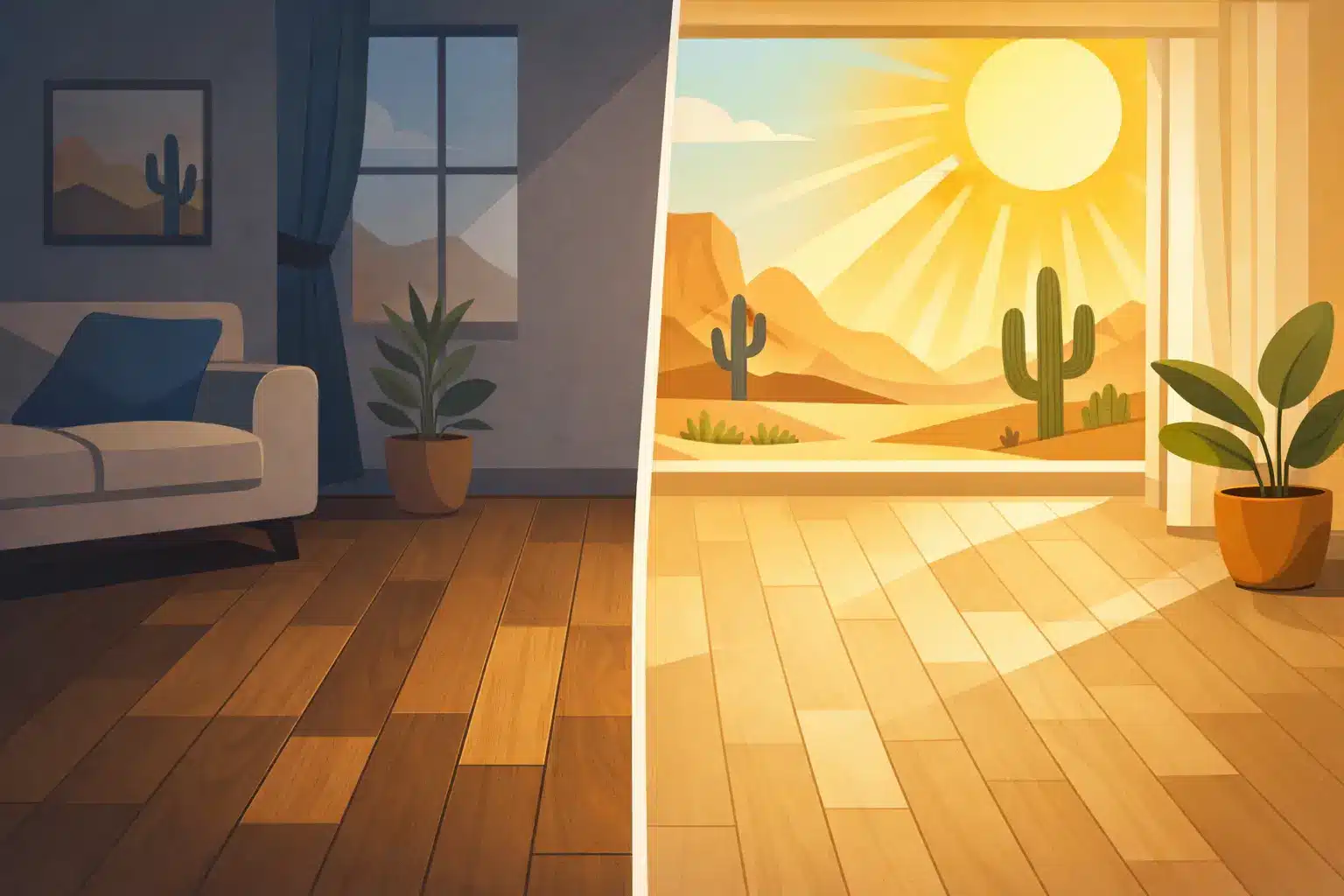
A bright Phoenix living room can receive far more direct sunlight than a room in most parts of the country. That makes one question especially practical before choosing a new floor: does vinyl flooring fade? It can, particularly when it is exposed to intense UV rays through uncovered windows day after day. However, quality luxury vinyl flooring is designed with protective layers that can greatly reduce visible color change when the right product and room protection are selected.
Vinyl is still a strong choice for many Arizona homes, rentals, offices, and retail spaces. It offers realistic wood and stone visuals, water resistance, comfortable footing, and excellent value. The key is understanding what sunlight can do to the floor over time and planning for it before installation.
Does Vinyl Flooring Fade in Direct Sunlight?
Yes, vinyl flooring can fade or change color from prolonged direct sunlight. UV radiation gradually affects the printed design layer and surface finish of the plank or tile. A floor that gets several hours of harsh afternoon sun every day is more likely to show change than a floor in a shaded bedroom or interior office.
Fading is not always dramatic. On a light oak or pale stone-look vinyl, it may take years before you notice a difference. Dark brown, charcoal, deep red, and richly colored designs can make fading more apparent. Sometimes the change is less about the entire floor looking faded and more about an uncovered strip near a sliding glass door looking lighter than the section beneath an area rug or piece of furniture.
Arizona heat adds another consideration. Heat itself is not the same as UV fading, but extreme sun exposure can warm the floor substantially. That combination places more demand on the material, especially in rooms with large south- or west-facing windows.
What Determines Whether Vinyl Flooring Will Fade?
Not every vinyl product performs the same way in sunlit spaces. Construction, finish quality, color selection, and the conditions inside the room all matter.
The quality of the wear layer and finish
Luxury vinyl plank and luxury vinyl tile have multiple layers. The decorative layer creates the wood, stone, or tile appearance, while the clear wear layer helps protect that image from scratches, scuffs, stains, and daily traffic. Better products often include enhanced protective finishes and UV inhibitors that help slow discoloration.
A thicker wear layer is valuable for active households and commercial traffic, but it is not the only factor in fade resistance. Ask about the manufacturer’s finish technology, warranty terms, and suitability for rooms with direct sunlight. A flooring professional can help compare products that look similar in a sample but have different performance specifications.
The color and pattern you choose
Color does not cause fading, but it affects how easily it can be seen. Medium-tone natural oak looks, warm greiges, and patterned stone visuals tend to disguise minor changes better than very dark, highly uniform floors. Variation in the print can also make a floor more forgiving in a sunny room.
This does not mean you need to avoid a dark floor if it fits your design. It simply means window treatments and product quality should become a bigger part of the decision.
Window direction and glass type
A room with broad west-facing glass in Mesa or Phoenix faces a different challenge than a room with a small north-facing window. Afternoon sun is intense, and low-angle sunlight can reach farther across the floor than homeowners expect.
Older windows without UV protection can expose flooring to more ultraviolet light. Newer low-E glass, solar screens, window film, exterior shades, and quality blinds can all reduce the amount of direct sun that reaches the floor. These improvements can also help with comfort and energy use.
Installation conditions
Vinyl flooring needs to be installed according to the manufacturer’s requirements, including proper expansion space and acceptable room temperatures. In sun-heavy rooms, direct heat can contribute to expansion, contraction, or stress at seams if the product is not installed correctly.
This is one reason professional installation matters. An experienced installer evaluates window exposure, subfloor conditions, product type, and transitions before the first plank is set. A floor can be a good product and still perform poorly if it is installed outside its specifications.
How to Prevent Vinyl Flooring From Fading
You cannot eliminate all natural color change over a floor’s lifespan, but you can reduce it significantly. The goal is to limit the harshest UV exposure while choosing vinyl made for the demands of the room.
Start with window coverings that can be closed during the strongest daylight hours. Solar shades are a practical option because they reduce glare and UV exposure without making the room feel closed off. Curtains, blinds, shutters, and exterior screens can also work well depending on the home’s style and window layout.
Move area rugs and furniture occasionally. This is especially useful in rooms with a large rug sitting in the same place for years. Rotating it a few times a year allows the floor to receive more even light exposure, reducing the chance of a noticeable outline when the rug is removed.
Keep the floor clean with manufacturer-approved products. Dirt and grit can dull the finish, which may make a floor appear older or more faded than it truly is. Avoid abrasive scrubbers, waxes, harsh solvents, and steam cleaning unless the manufacturer specifically approves them. The wrong cleaning method can damage the protective surface and create a dull, uneven appearance.
For rooms with extreme sun, discuss the situation before selecting the floor. A free in-home estimate gives you the opportunity to show where sunlight enters, how long it hits the floor, and whether the room has window coverings. That information helps narrow the selection to products that better match the space.
Is Luxury Vinyl Better Than Sheet Vinyl for Sun Exposure?
It depends on the specific products being compared. Both luxury vinyl and sheet vinyl can fade with prolonged UV exposure, and both are available with varying levels of protective finish quality. Luxury vinyl plank and tile generally offer more choices in wear-layer thickness, surface textures, and premium protective coatings, which can make it easier to find a product suited to a bright room.
Sheet vinyl can be a smart, budget-conscious choice for kitchens, laundry rooms, bathrooms, and rental properties. It is water-resistant and available in many attractive designs. Still, it is worth reviewing sun exposure and warranty details before using any vinyl product in a room with large uncovered glass.
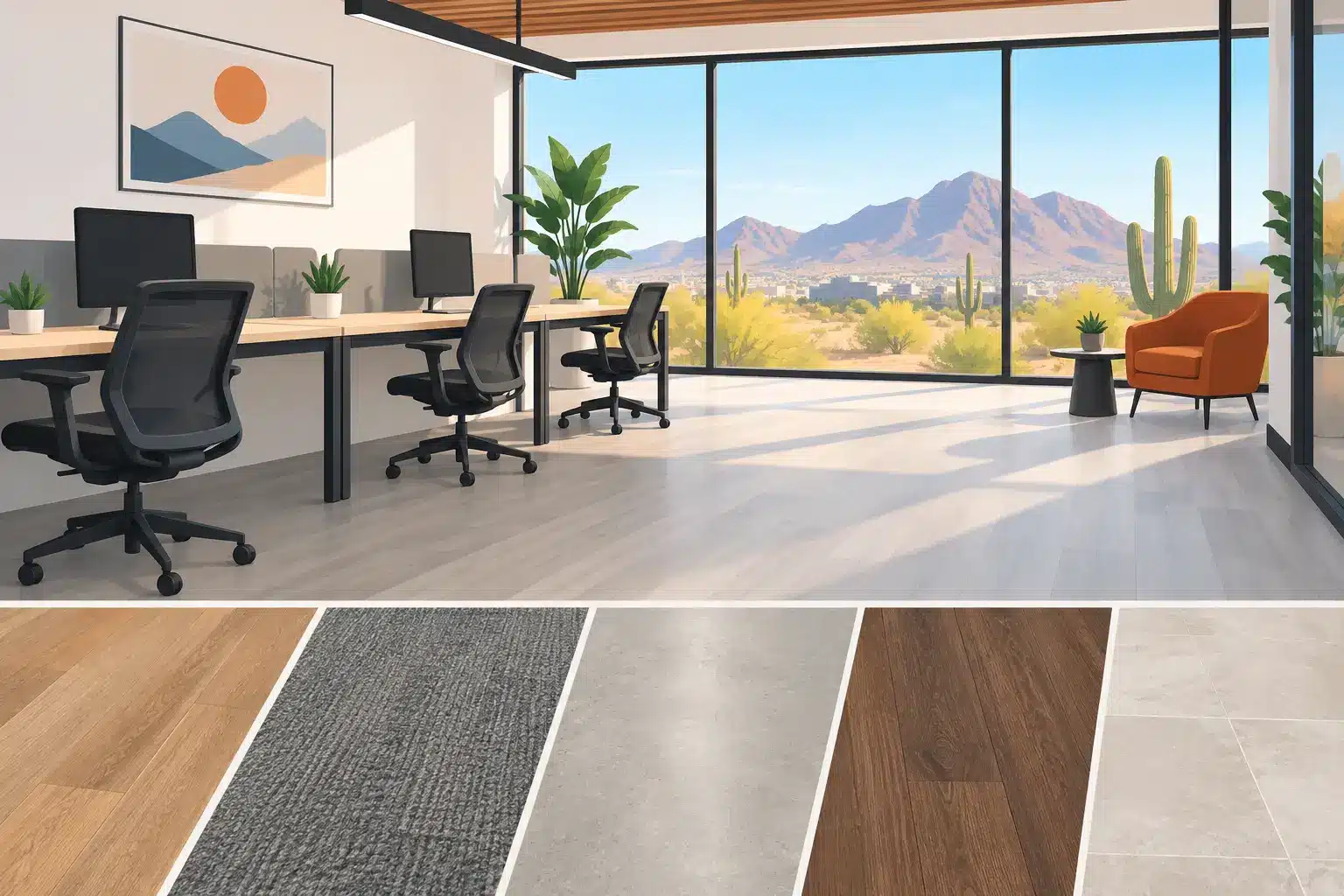
If you are considering vinyl for a commercial setting, consider more than sunlight. Entry traffic, rolling loads, cleaning routines, and furniture movement all affect long-term appearance. The best choice is the one that balances visual goals, maintenance expectations, traffic level, and budget.
Can a Faded Vinyl Floor Be Restored?
True UV fading in the decorative layer usually cannot be fully reversed with cleaning products or surface treatments. Products that promise to restore shine may temporarily change the appearance, but they do not replace lost pigment. In some cases, they can leave residue that attracts dirt or interferes with the manufacturer’s recommended maintenance process.
If only one sun-exposed area looks different, rearranging the room may make the contrast less noticeable. Replacing a few planks can be possible with certain luxury vinyl installations, provided replacement material is available and the product has not changed between production runs. A complete replacement may be the more consistent solution when fading is widespread.
This is another reason to keep extra material after installation. A few unopened cartons stored in a climate-controlled area can be helpful for future repairs, though they cannot guarantee a perfect match if the existing floor has aged in sunlight.
Choosing Vinyl Flooring for an Arizona Home
For a sunny Arizona home, do not judge vinyl flooring by the sample alone. Ask how the product performs in direct light, what the warranty covers, and which window-protection steps the manufacturer recommends. Bring home samples and view them morning, afternoon, and evening in the actual room. The floor color that looks right under showroom lighting may feel different beside your windows and wall colors.
Premium Carpet Tile Stone and Wood can help homeowners and commercial buyers compare vinyl options based on sun exposure, traffic, budget, and installation needs. With the right material and a realistic plan for managing direct sunlight, vinyl can provide a durable, attractive floor for years without making your bright Arizona rooms feel like a compromise.



Leave A Comment