

A floor can look great in a showroom and still be the wrong choice for a Phoenix home. Hot summers, dust, pool traffic, active pets, and open-concept layouts all affect how a material performs after installation. This residential flooring buying guide will help you narrow the options based on how you live, what you want to spend, and what your home truly needs.
Start With How Each Room Is Used
The right flooring is rarely one material throughout every room. Begin by looking at moisture, traffic, sunlight, cleaning needs, and comfort underfoot. A flooring choice for a quiet guest room does not need the same level of durability as flooring in a kitchen where kids, pets, and daily cooking create constant activity.
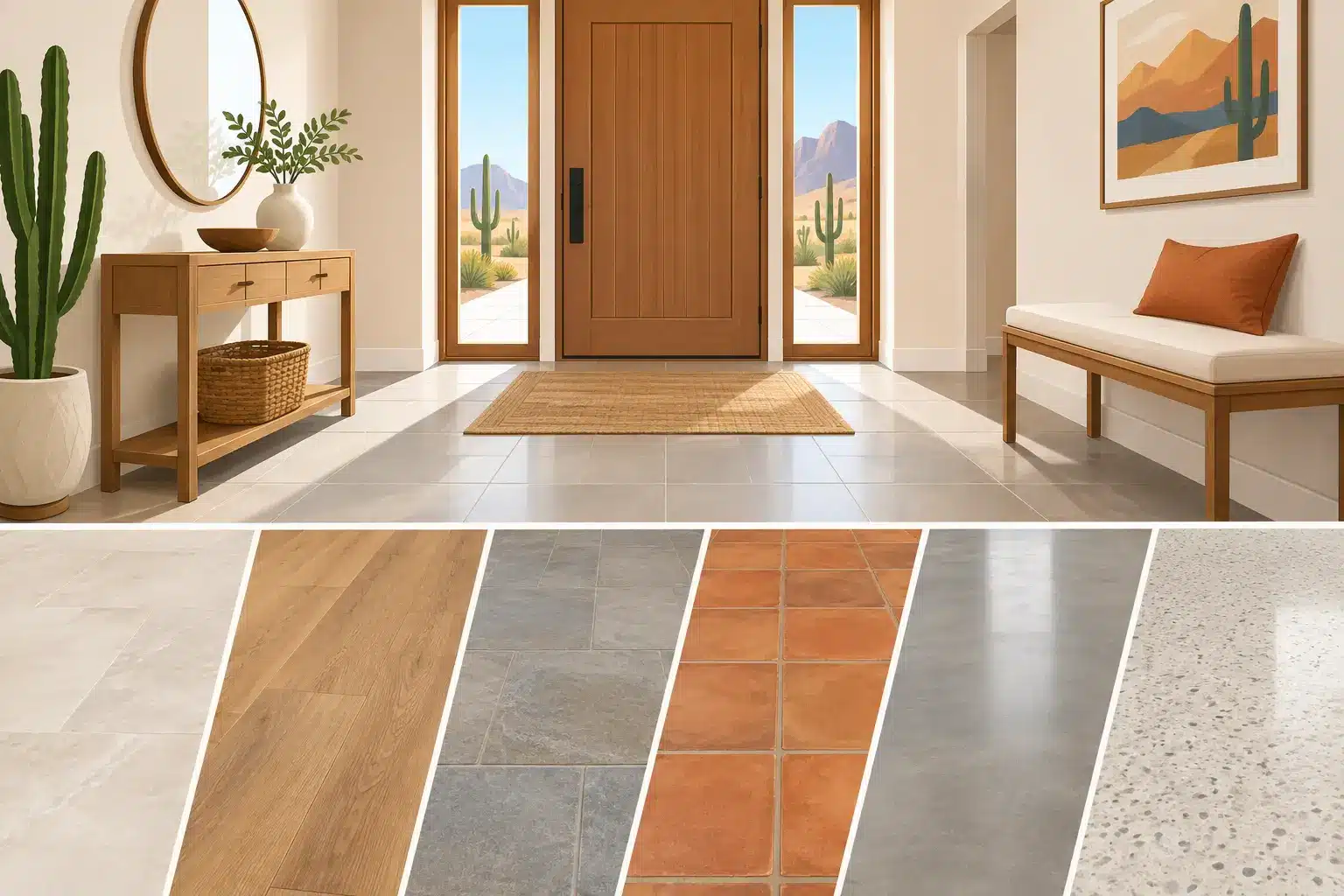
Entryways, kitchens, bathrooms, laundry rooms, and pool-adjacent spaces need materials that handle moisture and are easy to clean. Tile and luxury vinyl are often practical choices in these areas. Living rooms and bedrooms may give you more flexibility, allowing you to prioritize warmth, softness, or a specific design style.
Also consider the people using the space. Households with large dogs, young children, or frequent guests often benefit from scratch-resistant, stain-resistant materials. For a rental property, durability and easy replacement may matter more than selecting a premium natural wood species. For a forever home, you may decide that the appearance and longevity of hardwood or stone are worth a higher initial investment.
Compare the Main Flooring Options
Every flooring category has strengths. The goal is not to find one material that does everything perfectly, but to choose the right balance for each room.
Tile and Natural Stone
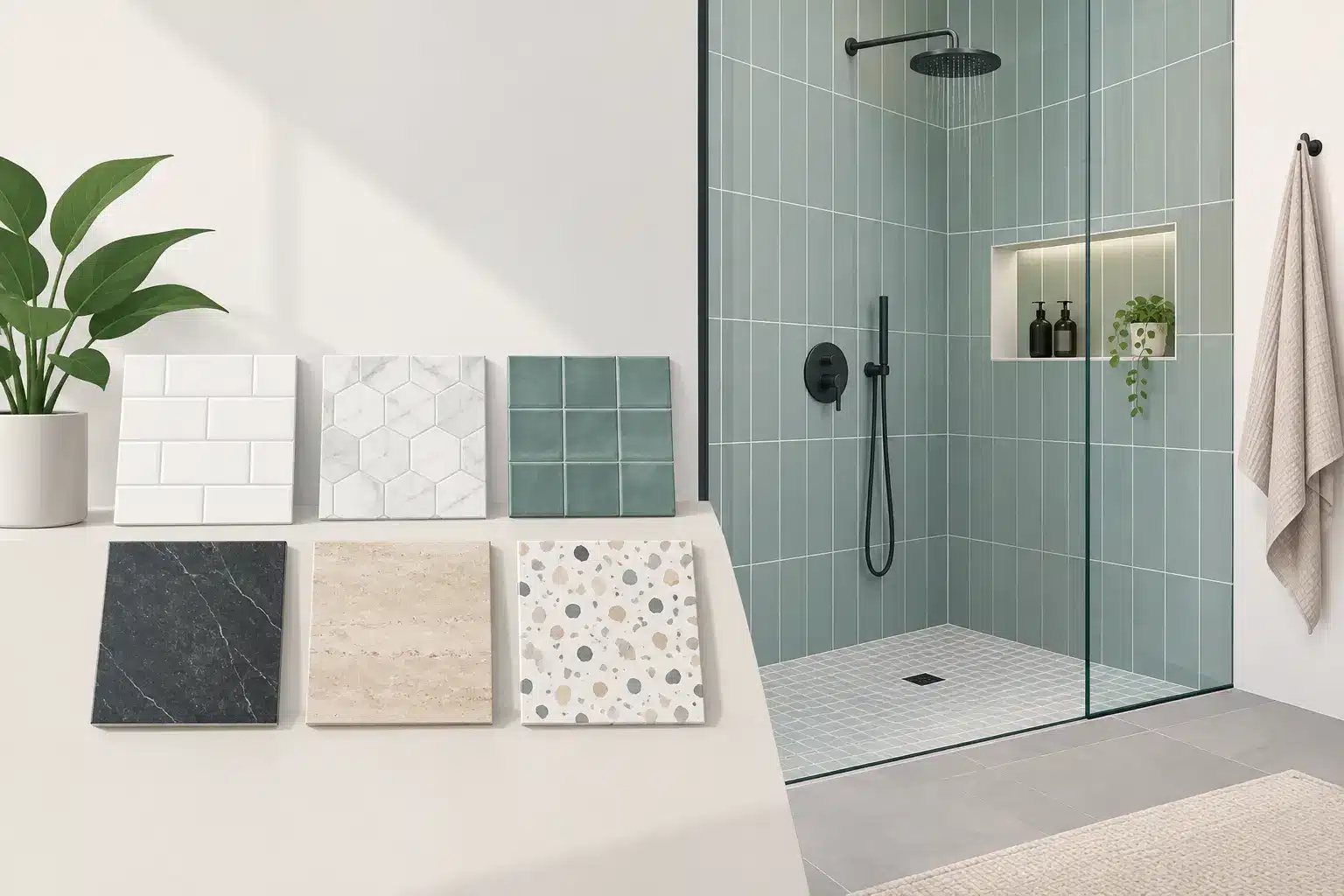
Porcelain and ceramic tile remain popular throughout Phoenix and the East Valley because they stand up well to heat, wear, and moisture. Tile is available in wood-look, stone-look, large-format, patterned, and modern styles, making it suitable for nearly any design direction. It is a strong option for kitchens, bathrooms, main living areas, and homes with pets.
Porcelain is typically denser and more water-resistant than ceramic tile, which can make it a better fit for high-traffic or wet areas. Grout selection matters as much as tile selection. A darker or stain-resistant grout can reduce visible maintenance, while narrower grout lines create a more continuous look.
Natural stone brings one-of-a-kind character, but it needs informed care. Materials such as travertine, marble, and slate can require sealing and may be more susceptible to staining or etching than porcelain. Stone is a beautiful long-term choice when you understand the maintenance requirements and choose a finish appropriate for the room.
Luxury Vinyl Plank and Vinyl Tile
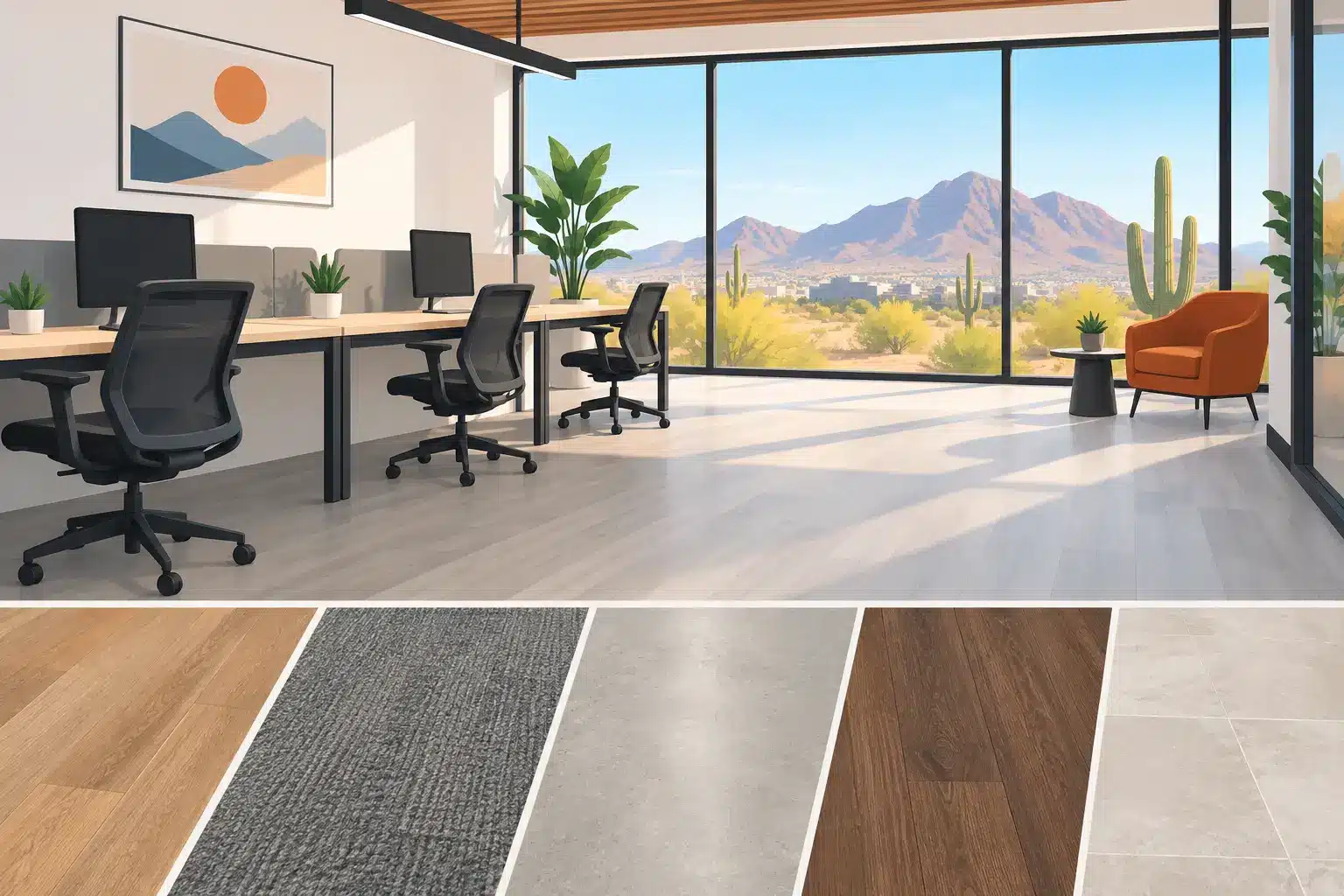
Luxury vinyl plank, often called LVP, has become a leading choice for homeowners who want a realistic wood appearance with easier maintenance. It is comfortable underfoot, quieter than tile, and available in many colors, plank widths, and textures. Many products are water-resistant or waterproof, depending on their construction and installation system.
LVP works especially well for busy households, remodels, and rooms where a hard surface is preferred without the upkeep of natural wood. Product quality varies, so do not select based on color alone. Wear layer thickness, core type, surface texture, warranty, and subfloor conditions all influence performance.
Vinyl tile offers similar practical benefits in a format that can resemble stone, ceramic, or concrete. It can be a smart option for laundry rooms, bathrooms, offices, and other spaces where moisture resistance and simple cleaning are priorities.
Hardwood and Engineered Wood
Wood flooring adds warmth and natural character that many homeowners value. Solid hardwood can be refinished over its lifetime, but it is sensitive to moisture and changing conditions. It is generally best suited for dry living spaces, bedrooms, dining rooms, and other areas away from routine water exposure.
Engineered hardwood has a real wood veneer over a layered base, offering greater stability than solid wood in many applications. It can be an excellent choice for homeowners who want authentic wood while accounting for concrete slab construction, which is common in Arizona homes.
Neither hardwood nor engineered wood is maintenance-free. Pet claws, dragged furniture, and standing water can cause damage. If you want wood in a household with heavy activity, choose a durable species, a suitable finish, and a color that will not show every scratch or speck of dust.
Carpet, Area Rugs, and Remnants
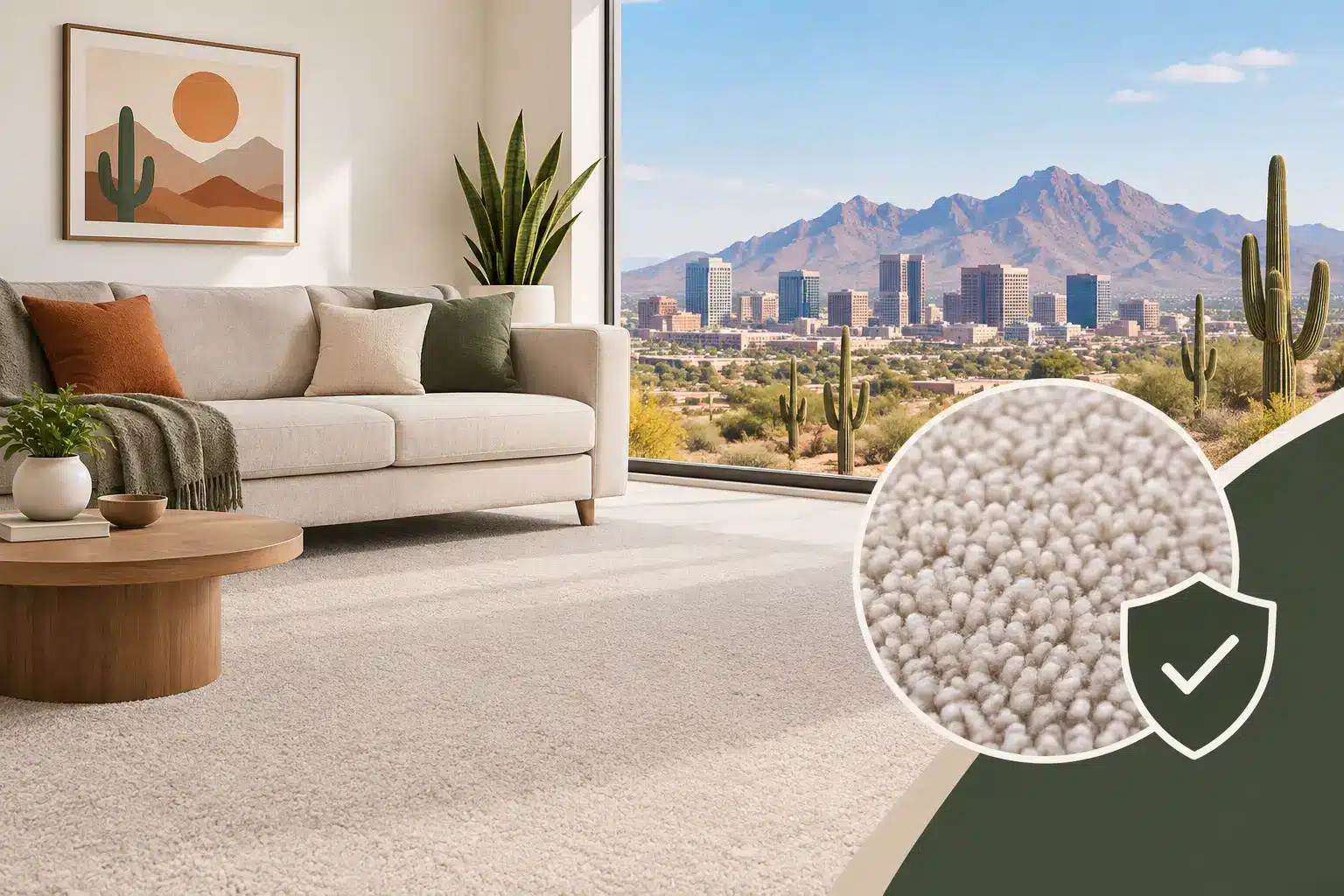
Carpet remains a practical choice where comfort, sound control, and warmth matter most. Bedrooms, media rooms, upstairs spaces, and home offices are common applications. Modern carpet offers stain-resistant fibers and a wide range of textures, from soft plush styles to patterned loop constructions designed for active households.
The pad beneath the carpet has a major effect on comfort and performance. A quality pad can help carpet feel better, wear more evenly, and provide additional sound absorption. For homes with pets or allergy concerns, ask about fiber type, stain treatment, and installation details that can support easier cleaning.
Carpet remnants can be a cost-effective solution for a smaller room, closet, office, or custom area rug. They are worth considering when you want quality material while working within a defined budget.
Residential Flooring Buying Guide: Budget Beyond the Material
Flooring budgets should include more than the price per square foot. Installation, removal of existing flooring, furniture moving, baseboards, transitions, subfloor preparation, underlayment, grout, trim, and disposal can all affect the final project cost.
Subfloor condition is often the biggest unknown. A floor may need leveling before tile, vinyl, or wood can be installed correctly. Skipping this step can lead to cracked tile, uneven planks, movement, or early wear. A professional in-home estimate helps identify these issues before the project is underway, rather than after materials have been ordered.
If budget is your main concern, focus on total value instead of the lowest material price. A less expensive floor that needs replacement quickly may cost more over time than a moderately priced product with better wear resistance and professional installation. On the other hand, it does not always make sense to install the most expensive material in every space. Matching the product to the room is often the smartest way to control costs.
Choose Color and Finish for Arizona Living
Floor color changes how a room feels, but it also affects how much daily dust, pet hair, and wear you see. Very dark floors can show dust and light-colored pet hair. Very light solid colors may reveal dirt in high-traffic areas. Mid-tone shades, natural variation, and textured finishes are often forgiving choices for active homes.
Take samples home and view them in your actual lighting. Phoenix sunlight can make colors appear warmer, brighter, or more washed out than they do under showroom lighting. Check samples near windows, in shaded rooms, and at different times of day. Consider your cabinets, wall color, countertops, and existing furniture before making a final selection.
For open floor plans, using one continuous hard-surface floor through the main areas can create a larger, more connected appearance. Bedrooms may still benefit from carpet or a softer material. Transitions should be planned early so different flooring types meet cleanly and safely.
Do Not Treat Installation as an Afterthought
Even premium flooring can disappoint when installation details are ignored. Proper measurement, acclimation when required, moisture testing, surface preparation, layout planning, and finishing work all affect the final result.
Tile installation requires attention to substrate, grout lines, pattern alignment, and expansion considerations. Wood and vinyl require correct preparation and installation methods for the product. Carpet needs accurate seams, stretching, and pad selection. These are not small details, especially in large rooms or homes with uneven concrete slabs.
Ask who will measure the project, what prep work is included in the estimate, how transitions and baseboards will be handled, and what warranty coverage applies to both material and installation. Clear answers before work begins make for a more predictable project.
Make the Final Choice With Real Samples and Expert Advice
A flooring purchase should feel informed, not rushed. Bring measurements, photos of the room, cabinet or paint samples, and an honest description of your household’s daily activity. This helps narrow the choices quickly and prevents selecting a floor based only on appearance.
Premium Carpet Tile Stone and Wood can provide product guidance, wholesale pricing, and a free in-home estimate to help homeowners compare options where they matter most: in the rooms they are actually updating. A few well-chosen samples and a professional assessment can turn a complicated decision into a floor you will be comfortable living with for years.



Leave A Comment