
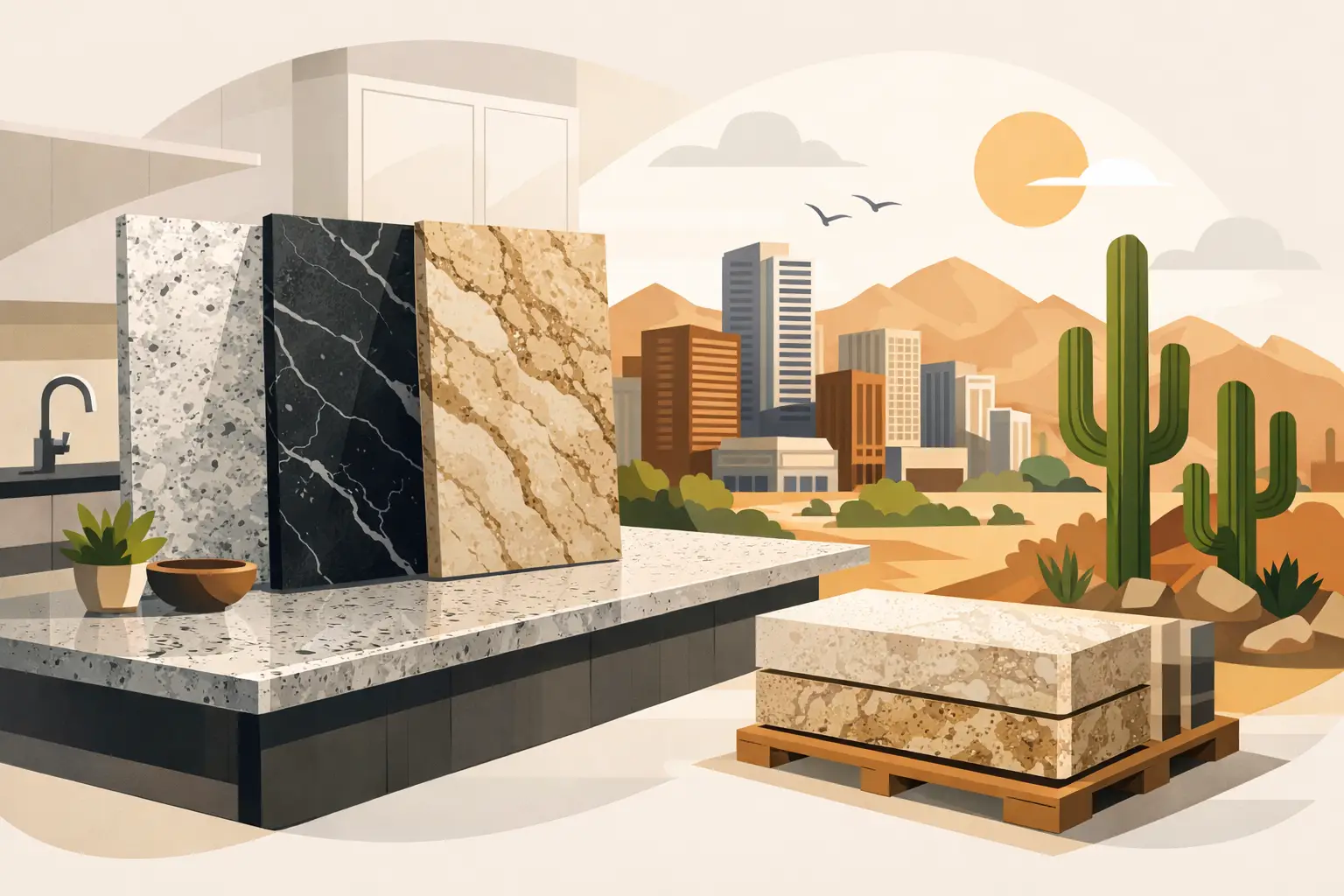
A granite countertop can change the feel of a kitchen, bathroom, or commercial space fast – but the real challenge is buying the right stone at the right price. If you are searching for granite countertops wholesale Phoenix property owners can rely on, it helps to know what affects cost, what separates one slab from another, and how to avoid surprises during installation.
In Phoenix and the East Valley, granite remains a strong choice because it handles daily use well, adds natural character, and works with a wide range of design styles. It fits upscale remodels, practical rental upgrades, and commercial projects where appearance and durability both matter. The key is not just finding granite. It is finding the right supplier and the right guidance.
Why granite countertops wholesale Phoenix buyers choose still makes sense
Granite has stayed popular for a reason. It is a natural stone with variation, depth, and movement that manufactured surfaces try to imitate. No two slabs are exactly alike, which gives each project a more custom look.
For homeowners, that usually means a kitchen or bath that feels more finished and higher end. For property owners and remodelers, it means a surface that holds up well under normal use and can improve the perceived value of a space. For commercial buyers, granite can offer a professional appearance in lobbies, break rooms, restrooms, and other customer-facing areas.
That said, granite is not the right answer for every job. Some buyers prefer the more uniform look of quartz. Others want a lower upfront material cost. Granite works best when you value natural beauty, want a broad selection of colors and patterns, and are comfortable with a product that has natural variation.
What wholesale really means when buying granite
The word wholesale gets used loosely, so it is worth clearing up. In many cases, wholesale pricing means access to more competitive slab pricing than traditional big-box retail, especially when you work with a local supplier that handles a large volume of material and offers quote-based pricing.
It does not always mean the cheapest possible stone on the market. It usually means better value for the quality, more options within your budget, and a clearer path from material selection to fabrication and installation. That matters because the slab itself is only one part of the final cost.
Edge profiles, cutouts, sink openings, backsplash details, seam placement, demolition, and installation conditions all affect price. A low advertised slab price can stop looking low once those items are added. Buyers who focus only on a square-foot number often miss that.
A dependable local supplier will walk you through the full scope, not just the headline price. That approach usually saves money in the long run because it helps avoid change orders, material waste, and design choices that do not fit the space.
How to compare granite slabs without guessing
Shopping for granite is visual, but it should not be only visual. Color and pattern matter, yet performance and layout matter too.
Start with how the space is used. A busy family kitchen has different needs than a guest bathroom. A rental property may need a neutral color that appeals to more people. A commercial project may need consistency across multiple areas. The best slab is not always the boldest one in the showroom. It is the one that fits the use case, design direction, and budget.
You also want to look at the slab as a whole, not a small sample alone. Granite can have large-scale movement, veining, mineral deposits, and shifts in tone from one end to the other. A sample may suggest one look while the full slab tells a different story.
Thickness and finish deserve attention as well. Polished granite is common and easy to maintain, while honed finishes can create a softer, more understated appearance. The right choice depends on the style you want and how much maintenance you are comfortable with.
Granite countertops wholesale Phoenix projects: what affects price most
In the Phoenix market, granite pricing usually comes down to four main factors: stone selection, project size, fabrication detail, and installation complexity.
Entry-level granites can offer strong value and still look excellent in many kitchens and baths. More exotic colors, rare patterns, or slabs with dramatic movement usually cost more. Larger kitchens naturally require more material, but layout matters too. An island, multiple seams, waterfall edges, or unusual shapes can increase labor and waste.
Fabrication details add up quickly. Undermount sink cutouts, cooktop openings, custom edge profiles, and matching backsplashes all affect the final quote. Installation conditions matter just as much. Stairs, tight access, older cabinets that may need adjustment, or uneven surfaces can create extra labor.
This is why accurate quoting matters. A free in-home estimate is valuable because it helps identify real job conditions before the project moves forward. It also gives buyers a chance to ask practical questions about timing, slab availability, and what is included.
Why local guidance matters more than online pricing
Online pricing can be useful for rough comparisons, but it rarely tells the whole story. Granite is not a packaged product pulled from a shelf. It is a natural material that needs proper selection, measuring, fabrication, and installation.
That is where working with a local, installation-focused company makes a difference. You are not just buying a slab. You are buying expertise on which colors work in Arizona homes, how stone pairs with flooring and cabinets, and what makes sense for your budget.
Local guidance also helps when you are coordinating a broader remodel. Countertops do not exist in isolation. They need to work with tile, wood, luxury vinyl plank, carpet transitions, paint, and lighting. Buyers often make better choices when they can compare materials with support from someone who sees the full project, not just one product category.
With more than 30 years of local service, Premium Carpet Tile Stone and Wood, LLC understands that most customers do not want a sales pitch. They want clear answers, honest pricing, and confidence that the finished result will look right in the actual space.
When granite is the better choice than quartz or other surfaces
Granite and quartz are often compared side by side, and both can be excellent. Granite usually wins when buyers want natural variation and a one-of-a-kind appearance. It can also be a smart value depending on the color and slab category selected.
Quartz often appeals to buyers who want a more consistent pattern and lower day-to-day maintenance concerns. Laminate or solid surface may make sense for tighter budgets. Porcelain can be attractive for specific modern designs.
The right answer depends on priorities. If you want natural stone character, strong durability, and a premium feel, granite remains one of the most dependable countertop choices available. If you want total pattern consistency, another surface may fit better. A good supplier should be willing to explain those trade-offs instead of forcing one answer.
What to expect from selection to installation
A smooth countertop project starts with conversation, not pressure. First comes a discussion about your goals, budget, timeline, and where the countertop is going. Then comes material selection, where viewing slabs in person can make a major difference.
After selection, measurements and jobsite details need to be confirmed. This step matters because small errors in layout can affect seam placement, overhangs, appliance fit, and sink alignment. Fabrication follows, then installation.
Professional installation is especially important with granite because stone is heavy and unforgiving. Cabinets need to be ready, surfaces need to be properly supported, and finished pieces need careful handling. This is not a category where cutting corners pays off.
For homeowners, the best experience is usually one where product guidance and installation support work together. That reduces communication gaps and helps keep expectations realistic from the start.
Choosing a granite supplier in Phoenix with confidence
When comparing suppliers, look beyond displays and promotions. Ask how pricing is structured, whether estimates are detailed, how slab selection is handled, and what support is available during installation. Experience matters, especially on projects with multiple materials or unusual layouts.
A showroom-by-appointment model can be a benefit because it allows for more focused attention. Instead of a rushed retail experience, buyers get time to discuss options, compare materials, and make decisions with guidance. That is especially helpful if you are balancing design goals with budget limits.
The best granite purchase is rarely the fastest one. It is the one where the slab, the quote, and the installation plan all make sense together.
If you are planning a kitchen, bath, rental upgrade, or commercial project, take the time to compare the full value – not just the material price. Good granite should look right, wear well, and fit the project without creating costly surprises later.




Leave A Comment