
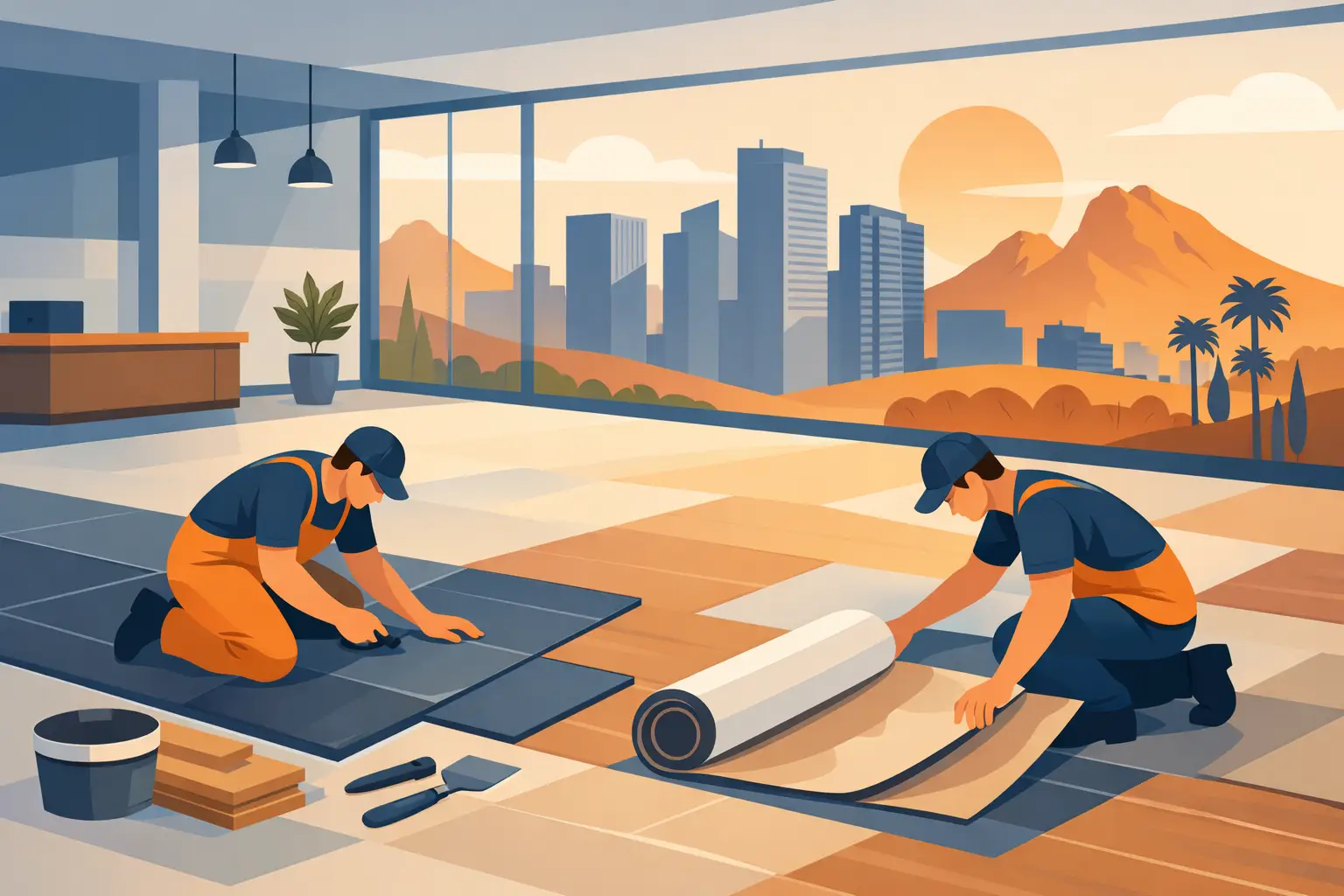
A floor in a commercial space has to do more than look good. It has to handle foot traffic, rolling carts, spills, cleaning chemicals, furniture movement, and the day-to-day wear that comes with doing business. That is why commercial flooring installation Phoenix projects need careful planning from the start, not just a quick material pick and a rushed install.
In Phoenix and the East Valley, business owners and property managers often have to balance appearance, durability, budget, and downtime. Those priorities do not always point to the same product. A medical office has different needs than a retail store, and a rental property common area is not the same as a corporate lobby. The right flooring decision comes from understanding how the space is used, what the subfloor condition looks like, and how long the owner expects the floor to perform.
What matters most in commercial flooring installation Phoenix
Commercial flooring is rarely a one-size-fits-all purchase. The product matters, but so does the installation method, the condition of the concrete, the schedule, and the long-term maintenance plan. If even one of those pieces is missed, the finished floor may not hold up the way it should.
In Phoenix, heat and dry conditions can affect materials, adhesives, and jobsite timing. Moisture in concrete can also create problems that are not obvious until after installation. That is one reason experienced guidance matters. A floor that looks fine on day one can fail months later if moisture testing, surface prep, or product selection were handled poorly.
Business owners also need to think beyond the sale price. A lower-cost floor can become more expensive if it needs frequent repairs, intensive maintenance, or early replacement. In many commercial settings, value comes from choosing a product that fits the use case well and installing it correctly the first time.
Choosing the right flooring for the space
Different commercial spaces call for different materials. The goal is not to find the “best” flooring in general. It is to find the best flooring for that specific environment.
Carpet tile for offices and flexible workspaces
Carpet tile remains a strong option for many office interiors because it helps with sound control, comfort, and design flexibility. It can create a more finished, professional feel in conference rooms, private offices, and collaborative areas. If one section is damaged, individual tiles can often be replaced without tearing out the whole floor.
That said, carpet tile is not ideal for every business. Heavy moisture exposure, food service use, or constant dirt from exterior entries can shorten its life if the wrong product is chosen. For businesses that want a softer look without giving up practicality, carpet tile is often a smart middle ground.
Luxury vinyl plank and vinyl tile for durability
Luxury vinyl plank and vinyl tile are popular in commercial settings for a reason. They offer strong wear resistance, straightforward maintenance, and a wide range of visuals that can resemble wood or stone. For retail, office corridors, waiting rooms, and rental property interiors, these products often provide a good balance between appearance and performance.
The trade-off is that subfloor prep becomes especially important. Vinyl products can show imperfections underneath if the slab is uneven or damaged. A quality installation depends on a properly prepared surface, not just the material itself.
Tile and stone for high-traffic or moisture-prone areas
For restrooms, break rooms, entryways, and some retail environments, tile and stone can be excellent choices. They are durable, easy to clean, and well suited for areas where spills and moisture are expected. They also offer a more permanent, upscale finish in the right setting.
Still, hard surface flooring is not always the most forgiving underfoot. In spaces where employees stand for long periods, comfort can become an issue. Tile also tends to be less forgiving when the subfloor moves or cracks, so preparation and product selection matter.
Hardwood for select commercial interiors
Hardwood is less common in commercial settings, but it can work in boutique spaces, executive offices, and certain professional environments where appearance is a top priority. It creates warmth and character that many other materials try to imitate.
The limitation is wear. Commercial traffic is tougher on wood than most residential use, and maintenance expectations need to be realistic. In many cases, a wood-look luxury vinyl product gives a similar visual impact with less upkeep.
Why installation quality changes the outcome
Even premium flooring can underperform if the installation is not handled correctly. This is where many commercial projects go off track. Buyers compare product samples and pricing but do not always ask enough questions about prep work, transitions, adhesives, layout, and scheduling.
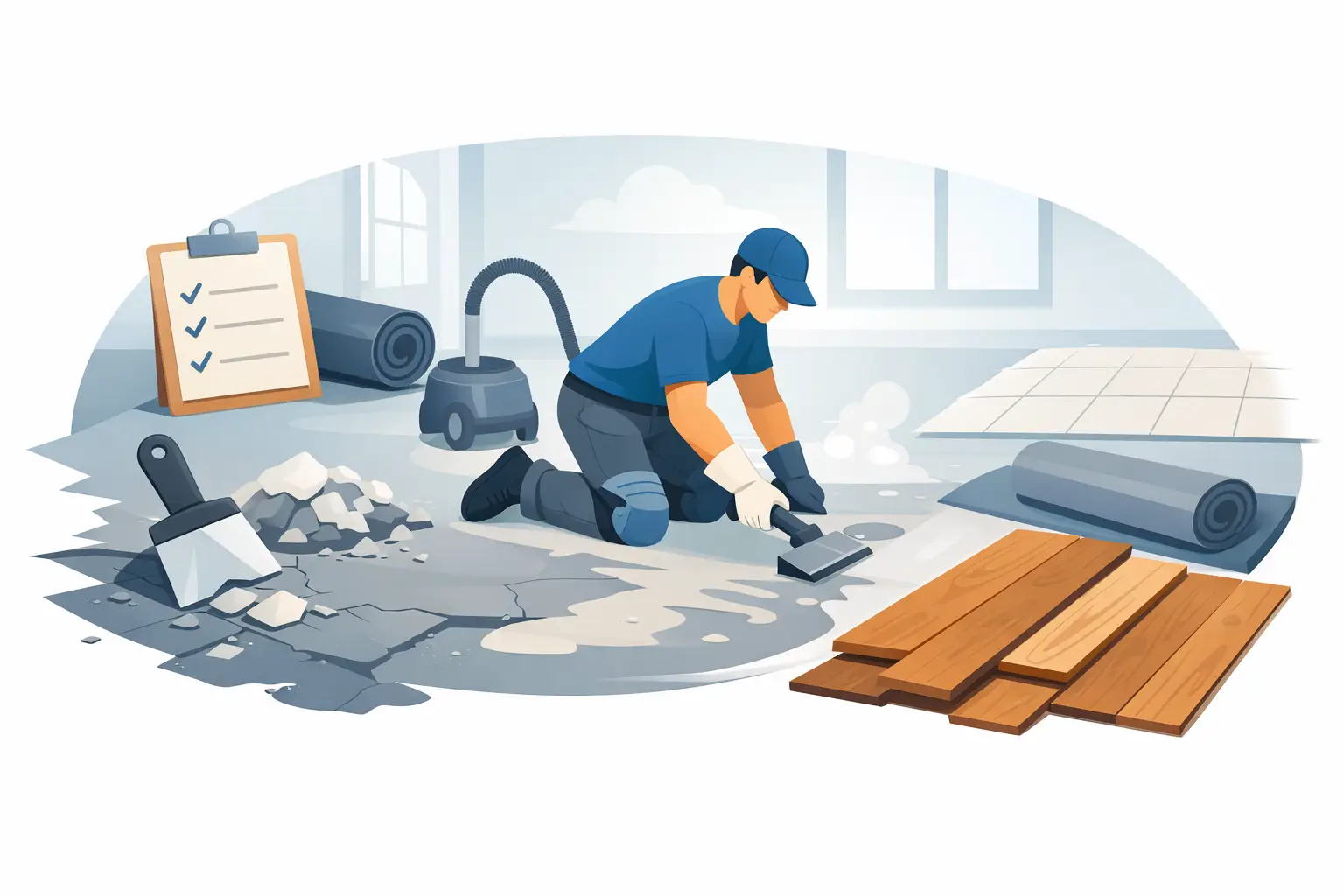
A professional commercial installation starts with evaluating the existing substrate. Cracks, uneven areas, old adhesive residue, moisture issues, and damaged surfaces all need attention before new flooring goes in. Skipping that step may save time upfront, but it usually costs more later.
Layout is another detail that affects the final look. In a commercial setting, poorly planned seams, awkward transitions, or inconsistent pattern alignment can make a space feel unfinished. Good installers think through traffic flow, room shape, sightlines, and product direction before installation begins.
Then there is timing. Many businesses cannot shut down for long. That means the installation plan has to match operational needs. Sometimes that requires phased work, after-hours scheduling, or material choices that allow for faster return to service. It depends on the space and the business, but planning around disruption is a real part of the job.
Budget, value, and where buyers should be careful
Commercial buyers usually have a target budget, and that is reasonable. The key is to understand what is included in the number. A low quote may not account for subfloor preparation, furniture moving, demolition, moisture mitigation, or trim and transition details. Those items can change the real project cost quickly.
A better approach is to compare proposals based on scope, not just price. Ask what prep is assumed, what material grade is being quoted, how installation challenges will be handled, and whether the recommended product truly fits the traffic level. Honest guidance can save a buyer from choosing a floor that looks affordable at first but becomes a problem after installation.
This is where a consultative process makes a difference. An experienced local flooring company should be able to walk through the options, explain the trade-offs clearly, and recommend products based on use, not guesswork. For some projects, the right answer is a more budget-conscious material with solid performance. For others, spending more upfront makes sense because the floor needs to hold up for years with minimal disruption.
Working with a local commercial flooring partner
For Phoenix-area businesses, local knowledge matters. Building types, concrete conditions, climate, and scheduling realities are not exactly the same as they are in other markets. A local team is more likely to understand what works well in the region and what issues tend to show up on commercial jobs.
That also helps with product selection. A company with broad product access can present real options instead of steering every client toward the same category. Premium Carpet Tile Stone and Wood, LLC takes that approach by helping customers compare materials across price points, performance levels, and design preferences while keeping installation practical and project goals in focus.
Buyers also benefit from seeing samples, asking direct questions, and getting recommendations tailored to the space. That is especially useful when the project involves multiple rooms, mixed-use areas, or a need to coordinate style with durability.
How to prepare for a commercial flooring project
The most successful projects usually start with a few clear decisions. First, define how the space is actually used, not how it looks on paper. Daily traffic, cleaning routines, moisture exposure, and furniture movement all affect what product makes sense.
Second, be clear about priorities. If minimizing downtime matters most, that may influence both material selection and installation sequencing. If long-term durability is the top concern, some lower-cost options may not be the best fit. If appearance is central to the brand experience, design and finish details may carry more weight.
Third, expect the installer to ask questions. A good commercial flooring provider should want to know about use conditions, schedule limitations, subfloor history, and performance expectations. That is not sales pressure. That is part of getting the job right.
Commercial flooring is a major surface in any business, and people notice it more than owners sometimes expect. When the material fits the space and the installation is handled with care, the result is a floor that works hard in the background while supporting the look, function, and day-to-day demands of the property. If you are planning a project in Phoenix, the best next step is simple: get expert eyes on the space before you choose the floor.






Leave A Comment