
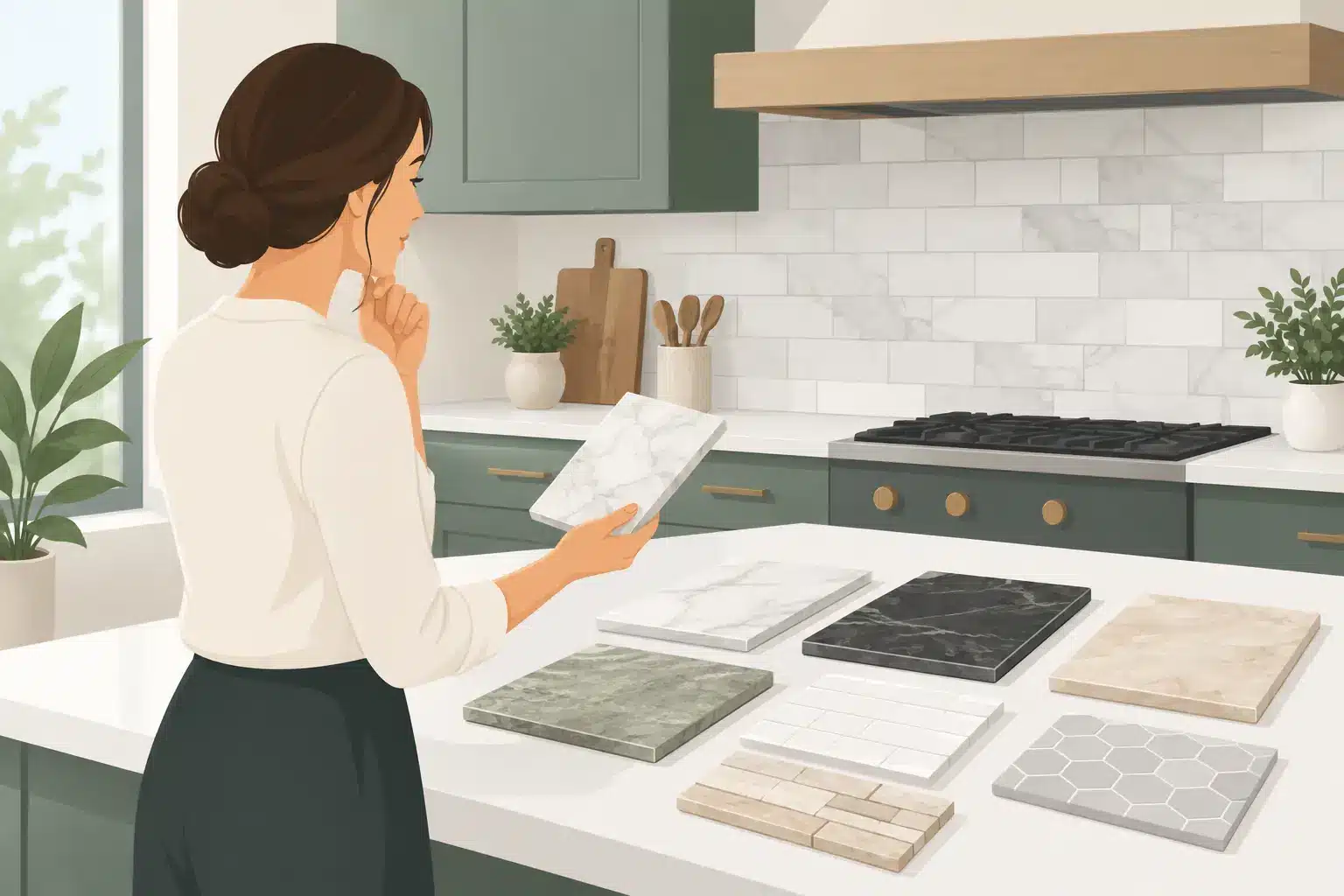
A backsplash may cover a relatively small area, but it has a major effect on how a kitchen feels. It sits between cabinetry and countertops, catches the strongest light in the room, and has to stand up to cooking splatter every day. When you select kitchen backsplash stone, the best choice is not simply the sample that looks good under showroom lighting. It is the stone that works with your countertop, cabinet color, household routine, and budget for years to come.
For homeowners in Phoenix and the East Valley, natural light and warm desert tones add another consideration. A stone that appears soft gray indoors can look much cooler beside a sun-filled window. Viewing full-size samples next to your actual cabinet and countertop materials helps avoid expensive surprises.
Start With the Countertop, Not the Backsplash
The countertop and backsplash share the same visual plane, but the countertop typically has more continuous surface area and stronger pattern movement. Choose the countertop first whenever possible, then select a backsplash stone that supports it rather than competes with it.
If you have a heavily veined granite countertop, a quieter stone backsplash often creates the most balanced result. A simple subway-style marble, travertine, or limestone can provide texture without adding another strong pattern. If your countertop is solid or lightly patterned, you have more room to consider mosaic stone, dimensional tile, or a bolder color variation.
Pay attention to undertones, not just the main color. White cabinetry may lean creamy, bright white, or cool gray. Beige granite may contain gold, pink, brown, or gray flecks. Bring samples together and look at them in morning, afternoon, and evening light. This small step is one of the most reliable ways to make a coordinated decision.
How to Select Kitchen Backsplash Stone by Material
Natural stone brings variation that manufactured tile cannot fully duplicate. Each piece has its own veining, mineral deposits, and color shifts. That character is appealing, but it also means the material needs to be selected with realistic maintenance expectations.
Marble
Marble is a classic choice for kitchens that need a clean, elevated look. It works especially well with white, black, navy, and warm wood cabinets. Its natural veining can make a simple backsplash feel custom without becoming overwhelming.
The trade-off is care. Marble can etch or stain if acidic foods, wine, or cooking oils are left on the surface. A backsplash receives less direct abuse than a countertop, but it should still be properly sealed and cleaned with a stone-safe product. Honed marble tends to hide minor marks better than a high-polish finish.
Travertine and limestone
Travertine and limestone offer warmth that fits many Arizona homes, particularly kitchens with cream cabinets, wood finishes, or earthy granite. Their softer movement and muted tones can make a remodel feel established rather than overly trendy.
These materials are porous, so sealing is essential. Filled and honed options are generally easier to maintain than deeply textured stone, especially behind a range where grease can settle into pits and crevices. Consider the amount of cooking your household does before choosing a rough split-face finish.
Slate
Slate has deeper tones and a more natural, textured appearance. It can be a strong fit for rustic, transitional, or contemporary kitchens with medium-to-dark cabinets. Depending on the variety, slate may show charcoal, rust, green, or blue undertones.
Because its cleft surface can be uneven, slate requires careful installation and grout selection. It is often better suited for homeowners who want visual texture and do not mind a less uniform finish. A smooth slate tile may be a more practical choice behind a cooktop.
Granite and quartzite
Granite and quartzite backsplash tile can offer excellent durability and dramatic natural patterning. They are worth considering when the kitchen needs a stone surface with strong resistance to heat and everyday wear. Quartzite, in particular, can give the appearance of marble while often being harder.
Still, not every slab or tile behaves the same way. Some light quartzites have more porosity than expected, and some granite patterns can feel busy when installed over a similarly patterned counter. Ask about the specific material, finish, and sealing needs rather than relying on the stone name alone.
Choose the Right Size and Layout
The tile format changes the room as much as the stone itself. Smaller mosaics add detail and work well in a compact feature area, such as behind the range. They also have more grout lines, which can mean more cleaning over time.
Larger-format stone tiles create a calmer appearance with fewer grout joints. They can make a smaller kitchen feel more open and are often easier to wipe down. A classic rectangular layout remains a dependable option, while a herringbone or chevron pattern adds movement. Patterned layouts cost more to install because they require additional layout work and cuts.
Consider where the backsplash will stop. Running stone from the countertop to the cabinets is standard, but taking it to the ceiling behind a range hood or open shelf can create a polished focal point. This approach is especially effective when the stone has attractive veining or dimensional texture. It also uses more material and may require more detailed installation planning around outlets and trim.
Think Honestly About Maintenance and Grout
A kitchen backsplash is easier to maintain than a stone floor or countertop, but it is not maintenance-free. Natural stone should be sealed according to the product and the sealant manufacturer’s recommendation. Sealing helps slow absorption, but it does not make stone immune to staining or etching.
Use a pH-neutral cleaner made for natural stone. Avoid harsh chemicals, abrasive scrubbers, and acidic cleaners that can dull or damage the finish. For most kitchens, prompt cleanup after cooking is enough to keep the surface looking good.
Grout deserves equal attention. Very light grout can look crisp, but it may show cooking residue over time. A medium neutral grout often gives a practical balance, especially in active family kitchens and rental properties. Narrow grout joints can create a refined look with rectified tile, while wider joints may better suit tumbled or irregular stone edges.
Set a Budget That Includes Installation Details
The stone price is only one part of the project. Installation costs can vary based on tile size, layout, wall preparation, demolition, outlet adjustments, edge finishing, and the number of cuts required. A simple stacked tile pattern is generally more economical than a detailed mosaic or diagonal layout.
Natural variation can also affect material quantities. Order enough stone from the same lot to allow for cuts, pattern selection, and a reasonable overage. This is particularly important with veined marble, slate, and travertine, where installers may need to sort tiles for the best overall blend.
For a more accurate estimate, bring cabinet, countertop, and paint samples to the selection appointment. A professional can help identify where a less expensive field tile can be paired with a special accent, or where choosing a practical stone format will free up budget for installation quality.
Do Not Skip the Sample Test
Before finalizing the material, take a sample home and place it vertically where the backsplash will be installed. Look at it under recessed lighting, pendant lighting, daylight, and evening light. Hold it against the countertop and cabinets instead of evaluating it alone.
Also ask yourself a practical question: Will you still like this surface after seeing it behind the stove every day? A dramatic mosaic can be beautiful in a display, while a quieter stone may feel more comfortable in a full kitchen. There is no universal right answer, but the choice should reflect how you use the room.
Premium Carpet Tile Stone and Wood can help homeowners compare stone options, full-size samples, installation requirements, and pricing before work begins. That guidance is valuable when several materials look similar but differ in porosity, finish, or labor needs.
Bring your countertop sample, a cabinet door, and a few photos of your kitchen to your selection appointment. Seeing those pieces together is often the moment the right backsplash stone becomes clear.




Leave A Comment